

ANU economists argue that Australian universities should have “skin in the game” on Higher Education Loan Program (HELP) debts.
Articles on Higher education policy
Displaying 101 - 120 of 219 articles

With a future that is not yet imaginable, how do universities prepare graduates for the world of work?
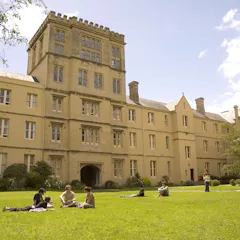
All of the universities in Australia are of a high standard, so what makes them so good, and how do you choose between them?

A highly educated workforce is for everyone’s benefit, but only if the graduates have broad skills.

We value the boosted career and wealth outcomes for graduates and what that does for our economy, but university has more value than that.

Knowledge for the sake of knowledge is important, but universities, as public institutions, have a responsibility to fulfil their public role too.

When universities began expanding, they became more inclusive. While this is a good thing, scholars often look at their large class sizes and lament that half of the students won’t set foot in the lecture theatres or libraries thanks to technology.

A government office to support teaching has been put out to tender, but will the university that wins the contract be fair in doling out funds and projects?

You could be forgiven for thinking that education was left largely untouched in Tuesday’s federal budget. But the tinkerings to last year’s education budget still mean a “fail” for education funding.
Today’s budget fails to provide any new incentives to a Senate that is going to need a strong reason to give the deregulation bill a third run.
The Finance Minister, Mathias Cormann promised on budget eve that the government remains committed to the package of changes to higher education reforms announced by Education Minister Christopher Pyne…

Unpaid HELP debts are a problem, while super contributions may be lost. Should students use super to repay HELP?
With the release of some universities’ annual reports over the last few weeks we’re able to see how the universities are really faring. Is the financial situation really as dire as vice-chancellors say, as rosy as their detractors say, or somewhere in between?
Currently law students pay about 80% of their degree cost, and nursing students only about 30%. Is it fairer if everyone pays the same?
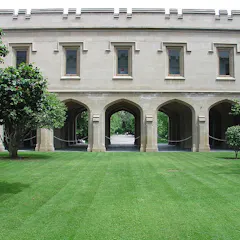
The Group of Eight have now withdrawn their support for fee deregulation, despite it already having caused fissures in the higher education system. But what are they worried about? And what sort of conversation do they want to have now?

The higher education sector needs more competition to ensure prices stay low. One way to encourage new entrants into the market is to separate funding for teaching and research.

Before the government tries a third time to secure support for university fee deregulation, it needs to learn from past mistakes in the tertiary education sector and come up with a plan.

Completing university is difficult for students who are the first in their family to enrol. They should be listed as one of the equity groups to receive more support.
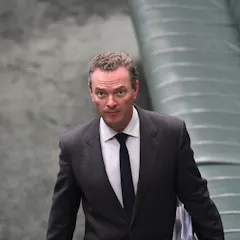
The voting down of the higher education bill stems from the government’s failure to sell the reforms. Here is a six step guide to successfully making big changes to higher education.

In recent years higher education enrolments have surged. This is triggering many policy issues including ballooning student debt.
Top contributors
-

Professor of Higher Education Policy, Monash University
-
Associate Professor, Melbourne Centre for the Study of Higher Education, The University of Melbourne
-
Adjunct Professor, Department of Leadership, Higher and Adult Education, OISE, University of Toronto
-
Honorary Senior Fellow, Melbourne School of Psychological Sciences, The University of Melbourne
-
Senior Research Fellow, Curtin University
-
Honorary Professorial Fellow, Melbourne CSHE, The University of Melbourne
-
Associate Professor & Academic Director, Widening Participation, La Trobe University
-
Professorial Fellow, University of Canberra
-
Adjunct Associate Professor in History, University of New England
-
Executive Director, IRU, La Trobe University
-
Fellow, Higher Education Program, Grattan Institute
-
Mitchell Professorial Fellow, Victoria University
-
Vice-Chancellor, Western Sydney University
-
Honorary Senior Fellow, The University of Melbourne
-
Vice Chancellor, Victoria University