

Australia and New Zealand should introduce a mandatory impact-risk statement for funds making explicit claims about their environmental or social impacts.
Articles on Greenwash
Displaying 1 - 20 of 93 articles

Data beats greenwashing. How a simple QR code connects you to a massive European database that exposes fake sustainability claims in seconds.

Orbital data centers, space habitats, mining the Moon – despite taking place in space, the practices many companies are imagining will still affect the Earth.

Tying executive pay to ESG metrics is now standard practice at most large companies. But new research finds that when the scoring methodology becomes predictable, it becomes easier to game.

Voluntary carbon markets have been dogged by controversy, lack of credibility and growing concerns about greenwashing.

Many companies today overpromise what they can do with AI. They should learn from efforts to combat greenwashing and tighten standards.

NZ’s world-first regime aimed to improve transparency in how institutions assess climate risk. So why are some choosing to say little about changes being made?

Fashion brands promise sustainability. But a formal investigation into Lululemon reveals a deeper problem: green claims that no one is required to prove.

Fashion made out of recycled polyester mostly uses plastic bottles. That’s not a good thing.
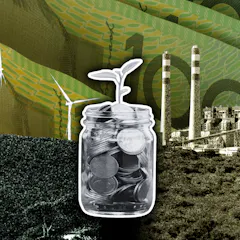
If you care about particular issues – from climate change to weapons of war – it’s worth looking more closely at where your money is really going.

Brands can imply a product inherits the cultural value of silk – even when the fibre itself is fossil-fuel derived or heavily chemically processed.

Hotels talk a lot about sustainability, but often it’s no more than a marketing ploy.

Some African countries have consumer protection laws that they could use to hold fossil fuel companies accountable for pretending to be green.

Why would companies be coy about doing good things?

The fashion industry is constantly in the spotlight for problems in its supply chains. Blockchain might be the answer.

Consumers are often willing to pay more for eco-friendly products – but are they getting what they paid for?

Next time you travel, select businesses certified by an organisation with a proven track record of verification and transparency.

Terms such as “vegan”, “plastic-free” and “biodegradable” currently lack standardised definitions and aren’t regulated rigorously.

How misleading marketing leads to greenwashed consumer behaviour and ineffective recycling of waste streams.

While regenerative agriculture might seem like a pioneering new approach, this term isn’t new. Here’s how it differs from organic.
Top contributors
-

Professor of Sustainable Science, Technology and Commerce and Business Economics, University of Michigan
-
Professor of Markets, Business, and Society, University of Bath
-
Agente de transfert de connaissances pour le Centre de recherche sur la boréalie (CREB), Université du Québec à Chicoutimi (UQAC)
-
Professeur titulaire Chaire en éco-conseil spécialiste des changements climatiques, Université du Québec à Chicoutimi (UQAC)
-
Associate Professor, Fashion and Textiles, RMIT University
-
PhD Candidate, Energy, University of Galway; Atlantic Technological University
-
Professor of Organisational Studies, University of Sydney
-
Lecturer in Advertising and Brand Creativity, Auckland University of Technology
-
Professor of Management, Newcastle Business School, University of Newcastle
-
Professor - Industrial ecology and climate change mitigation, Université du Québec à Chicoutimi (UQAC)
-
Director of the Centre for Responsible Business, University of Birmingham
-
Associate Professor and Program Manager, Master of Fashion (Entrepreneurship), RMIT University
-
Lecturer In Construction, Deakin University
-
Senior Lecturer in Operations and Supply Chain Management, Anglia Ruskin University
-
Emeritus Professor of Apiculture, University of Sussex