

For many firms, ESG-related social media activity appears to be more about managing their public image than signaling genuine environmental commitment.
Articles on Greenwash
Displaying 21 - 40 of 93 articles

So much complicated jargon makes it difficult to distinguish between environmentally ethical practices and mere feel-good marketing. Here’s how to spot greenwash.

The UK has banned tobacco adverts at sports games since 2002. There is no equivalent for climate-wreckers.

The fossil fuel industry uses universities to authenticate themselves as players in developing climate solutions, while they expand extraction and grow profits. Universities must disclose their ties.

Vague environmental claims are in breach of international best practice and Commerce Commission guidelines, which list the “dolphin friendly” label as a claim that should not be used.
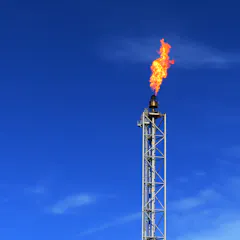
Japan is splashing cash for Australian gas to keep fossil fuels flowing under its net zero plan for South East Asia . But this undercuts Australia’s green export vision

Can mega-sporting events ever be truly sustainable? For New Zealand sports bodies the question is doubly hard to answer.

The Paris games are shaping up as the greenest games yet. But some critics say even more needs to be done.

Many firms now report how they are doing along economic, environmental and social lines in what is called a sustainability report. But how effective are they, really?
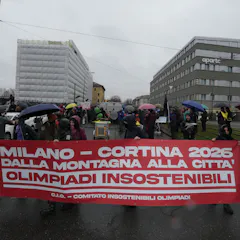
Despite the IOC’s optimistic rhetoric, environmental exploitation by host nations, and the suppression of opposition to such exploitation, have remained a troubling feature of the Olympic Games.

Formula One has announced some significant changes aimed to reduce the sport’s environmental impact. Will it make a difference, or is this an example of ‘greenwashing’?
Fossil fuel ad bans are gaining traction overseas, but New Zealand has so far shown few signs of wanting to be at the forefront of the movement.

Offsetting greenhouse gas emissions can be an effective tool for limiting global warming. But many offset projects fail to meet their GHG reduction targets.

Sustainability reporting isn’t about producing marketing material. It’s an opportunity for companies to honestly share the risks of doing business and present an action plan for addressing them.

Consumer NZ’s case against Z Energy under the Fair Trading Act may be a sign of things to come. But new legislation would be a cleaner way to regulate fossil fuel advertising.

Airlines and airports face increased scrutiny – and possibly legal action – over the contradictions between their sustainability claims and the reality of their high-emissions businesses.

The UK is joining the small club of countries with sustainability labels for investment products.

How to lay the foundations for success when companies collaborate with charities.

Many ‘green’ claims on social media ads are claims only. We need legislation to ensure green terms are clearly defined and based on the truth.

As detailed in a June 2023 event in Grenoble, France, business schools hold partial responsibility for the longstanding behaviour of multinational corporations (MNCs) in indigenous territories.
Top contributors
-

Professor of Sustainable Science, Technology and Commerce and Business Economics, University of Michigan
-
Professor of Markets, Business, and Society, University of Bath
-
Agente de transfert de connaissances pour le Centre de recherche sur la boréalie (CREB), Université du Québec à Chicoutimi (UQAC)
-
Professeur titulaire Chaire en éco-conseil spécialiste des changements climatiques, Université du Québec à Chicoutimi (UQAC)
-
Associate Professor, Fashion and Textiles, RMIT University
-
PhD Candidate, Energy, University of Galway; Atlantic Technological University
-
Professor of Organisational Studies, University of Sydney
-
Lecturer in Advertising and Brand Creativity, Auckland University of Technology
-
Professor of Management, Newcastle Business School, University of Newcastle
-
Professor - Industrial ecology and climate change mitigation, Université du Québec à Chicoutimi (UQAC)
-
Director of the Centre for Responsible Business, University of Birmingham
-
Associate Professor and Program Manager, Master of Fashion (Entrepreneurship), RMIT University
-
Lecturer In Construction, Deakin University
-
Senior Lecturer in Operations and Supply Chain Management, Anglia Ruskin University
-
Emeritus Professor of Apiculture, University of Sussex