
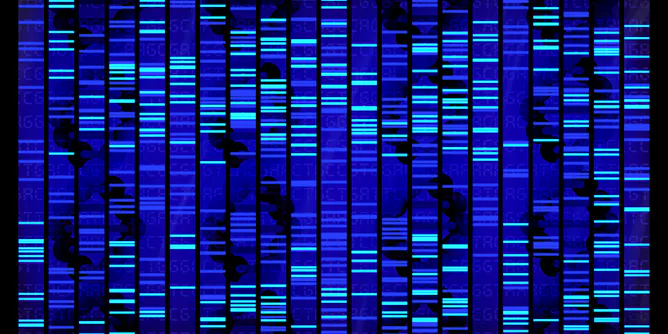
Do you own your own genetic data? The future of genomic databases is almost here, and now is the time to figure out how we are going to allow this information to be used.
Articles on Genome
Displaying 141 - 160 of 208 articles

Genome sequencing is transforming the way we diagnose disease. But lack of diversity in genomic data means only some Canadians will benefit from this revolutionary technology.
If you could take a test that would reveal the diseases you and your family might be more likely to get, would you want to do it?

I try to learn who are the ancestors of Indonesian people through genetics. The genetics of Indonesian people are a mix between different groups of humans.
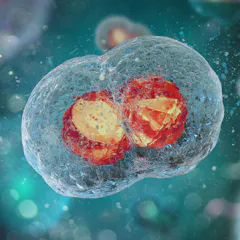
A new gene editing experiment explores human development. With this comes new ethical questions: How do scientists acquire embryos and how are their projects approved?

Anthill 17: Science by the seaside
CC BY-ND44.8 MB (download)
From the man who gave away his genome under open consent, to the 'Mathematikado', this episode of the podcast features highlights from the British Science Festival in Brighton.
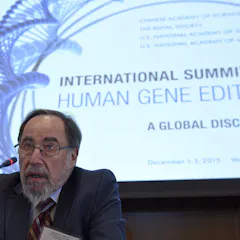
Ability expectations are what people rely upon as they seek out productive and satisfying lives. They need to be a key part of the debate over gene-editing and other major scientific breakthroughs.

Most people will be much better off putting the money spent on a genetic test towards a gym membership, or a pair of trainers.
We may be heading for a future where it will be considered immoral to have a child with a partner who isn’t ‘genetically compatible’.
A team in the U.S. is said to have safely and effectively altered human embryos. The news is a reminder that citizens must be consulted on developments potentially affecting the future of the species.
Research laboratories are dominated by men, and that’s not only bad for lab culture, it can be dangerous for science.
William Isdale speaks with University of Queensland Professor Peter Koopman about CRISPR technology.
New genetic technologies are letting us look at flu evolution right where it starts: within individual people, while they’re sick.

Professor Samir Brahmachari’s innovative Open Source Drug Development allows thousands of researchers to work together to discover novel therapies for under-studied diseases.
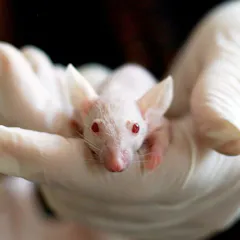
A new research paper reports dangerous side effects in CRISPR-edited mice. Some scientists are pushing back, placing blame for the unwanted mutations on the experiment, not the technique.
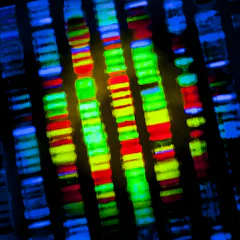
The advent of genetic technologies has been reducing the time and cost attached to diagnosing rare genetic diseases.
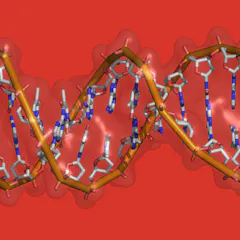
Researchers are starting to harness the potential of this much-hyped gene editing technique – with coming applications in medicine, biology and agriculture.

How do scientists figure out when evolutionary events – like species splitting away from a common ancestor – happened? It turns out our DNA is a kind of molecular clock, keeping time via genetic changes.

How can the same basic genome produce such different forms in the two sexes of a single species? It turns out one gene can encode for various things, depending on the order its instructions are read.

Diabetes, which afflicts 29 million people in the U.S., remains a difficult disease to treat. Read how an algorithm devised by MIT researchers could help.
Top contributors
-

Distinguished Research Professor, Emerita, Dalhousie University
-
Emeritus Robert Reford Professor and Professor of Medicine, McGill University
-
Professor, Chemistry and Biochemistry, Laurentian University
-
Vanier Scholar and Ph.D. Candidate in Microbiology and Immunology, Dalhousie University
-
Junior Fellow, MacEachen Institute for Public Policy and Governance; Medical Student, Dalhousie University
-
Distinguished Research Professor, Dalhousie University
-
Professor and Chair of Genomic Diversity, Queen Mary University of London
-
Associate Professor and Canada Research Chair, Department of Chemistry and Biochemistry, University of Lethbridge
-
Principal Scientist and Canada Research Chair in Zoonotic Virus and Animal Reservoirs at the Vaccine and Infectious Disease Organization and Co-Lead of One Health at the University of Saskatchewan, University of Saskatchewan
-
Professor in Medicine, Ethics and Society, University of Warwick
-
Masters Student, Biomolecular Interactions and Biophysical Modelling of RNA viruses, University of Lethbridge
-
Reader in Genetics, University of Aberdeen
-
Assistant Professor/Canada Research Chair in emerging viruses, University of Manitoba
-
Professor of Medicine and Vice President, Research, McMaster University
-
Doctoral Student in Biochemistry, University of Washington