
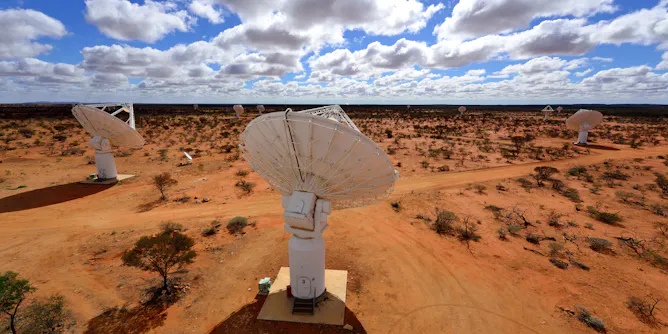
One of the few examples of a fast radio burst and the slow-moving, star forming gas in its origin galaxy has been linked together – thanks to observations from a CSIRO telescope.
Articles on Galaxies
Displaying 41 - 60 of 137 articles
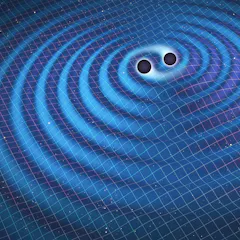
Upgrades to the hardware and software of the advanced observatory should allow astrophysicists to detect much fainter gravitational waves than before.
Artificial intelligence tools are making waves in almost every aspect of life, and astronomy is no different. An astronomer explains the history and future of AI in understanding the universe.
Machine learning is becoming an indispensable tool in astronomy by sorting through enormous datasets from telescopes.
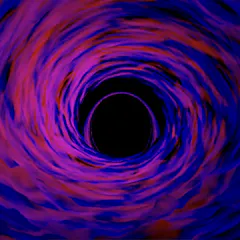
Astronomers have found that mysterious dark energy may originate in black holes.
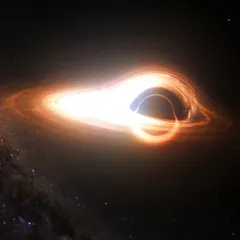
While we can’t see inside a black hole, we can spot the intensely bright glowing disc that surrounds one. Now, we might better understand why these discs appear to ‘twinkle’.

It has been one year since the launch of the James Webb Space Telescope and six months since the first pictures were released. Astronomers are already learning unexpected things about the early universe.
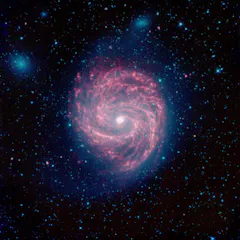
A comparison of star-forming galaxies suggests, surprisingly, that dark matter and visible matter do interact – taking us closer to understanding what keeps the galaxies together.
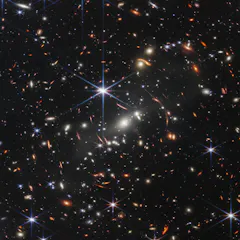
James Webb has spotted extremely distant galaxies formed soon after the Big Bang, but are they old or young? Or is this the wrong question to ask?
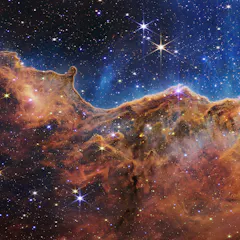
Long before the James Webb telescope brought us these deep field images, artists have been capturing notions of space.
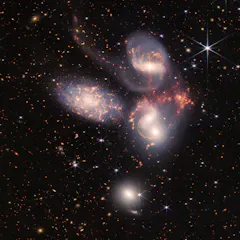
NASA released five new images from the James Webb Space Telescope, revealing incredible details of ancient galaxies, stars and the presence of water in the atmosphere of a distant planet.

Even experts were not prepared for the crispness of the new images from the James Webb space telescope.
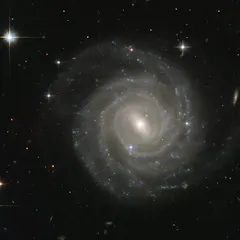
Recent results cast doubt on dark matter.
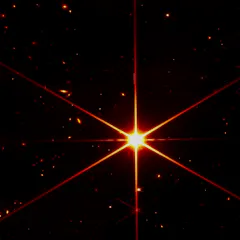
It has taken eight months to test and calibrate all of the instruments and modes of the James Webb Space Telescope. A scientist on the team explains what it took to get Webb up and running.
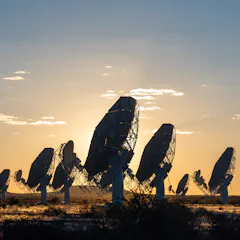
Complementary science will be at the heart of the Square Kilometre Array.
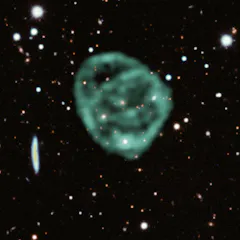
Next-generation radio telescopes unravel the mysteries of ghostly circles in the sky.
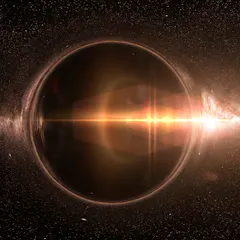
Some black holes are isolated in space and therefore near impossible to detect.
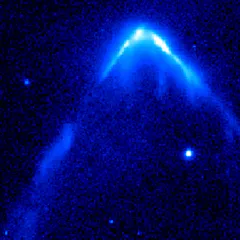
Hypervelocity stars were discovered only 15 years ago and are the closest things in existence to real shooting stars. They travel at millions of miles per hour, so fast that they can escape from galaxies.
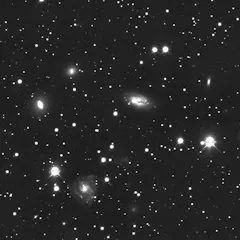
Anyone with an internet connection can search the universe and possibly discover never-before-seen galaxies.
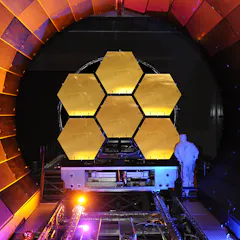
JSWT may be able to discover signs of life on planets around other stars.
Top contributors
-

Associate Professor in Astronomy, Monash University
-
Professor of Astrophysics and Royal Society University Research Fellow, University of Hertfordshire
-
Senior Curator (Astronomy), Museums Victoria Research Institute; The University of Melbourne
-
Post-doctoral researcher in Astrophysics, University of the Western Cape
-
Honorary Fellow, Space and Astronomy, CSIRO; Western Sydney University
-
Senior research scientist, CSIRO
-
Associate Dean of Innovation and Engagement, Swinburne University of Technology
-
University Distinguished Professor of Astronomy, University of Arizona
-
Professor of Astronomy, Liverpool John Moores University
-
Professor and Director of the Centre of Excellence for Data Science, AI and Modelling, University of Hull
-
Professor (Astrophysics), University of Southern Queensland
-
ARC DECRA Fellow in Astronomy, University of Sydney
-
Professor, The University of Queensland
-
ARC DECRA Fellow in Astronomy, University of Sydney
-
SKA Postdoc in Observational Cosmology, University of the Western Cape