

New Zealand’s well-documented fossil and living marine fauna allows scientists to explore drivers of extinction risk that are relevant globally.
Articles on Fossil record
Displaying 1 - 20 of 36 articles
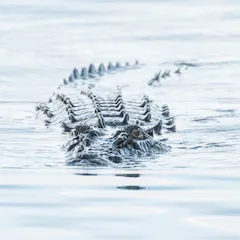
Ancient crocs didn’t just hunt in water – some may have dropped out of trees to catch their prey.
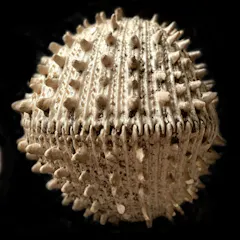
Not everything dies in a mass extinction. Sea life recovered in different and surprising ways after the asteroid strike 66 million years ago. Ancient fossils recorded it all.
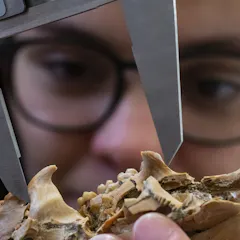
Modern North American porcupines are at least twice the size of their southern cousins and have stronger jaws. But how long have they looked that way?

Reconstructions suggest that rainfall rates may exceed 1.4m per year as a new norm. This would have massive implications for the future of food security in the UK and Ireland.
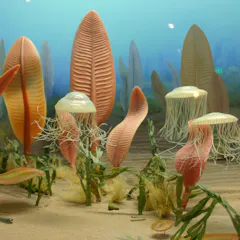
Fossil traces of the oldest complex ecosystems are found in precious few locations worldwide, including Australia. Newly dated fossils from Wales now join the ranks.
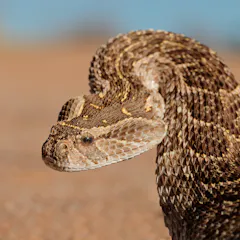
The trace was probably made between 93,000 and 83,000 years ago, almost certainly by a puff adder.
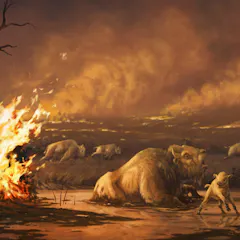
New findings from the La Brea Tar Pits in southern California suggest human-caused wildfires in the region, along with a warming climate, led to the loss of most of the area’s large mammals.
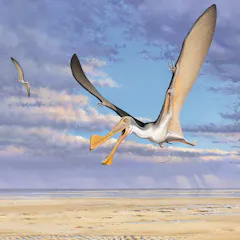
In the dinosaur era, flying reptiles soared in the skies of what is now Australia – but we have barely any fossil records of them.

Spectacular finds of the world’s oldest jawed fishes from China push back the origins of jaws and teeth, and suggest how limbs might have evolved.
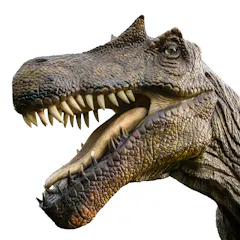
The African continent is a rich repository for dinosaur fossils, including teeth and track marks.
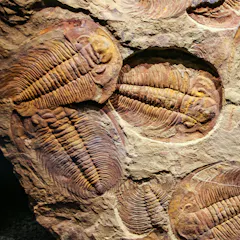
Australia has them, so why doesn’t New Zealand have national or regional fossil emblems? A campaign to change that kicks off today.
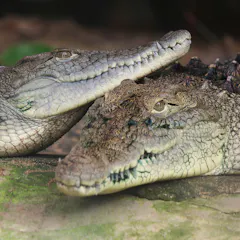
While crocodiles are not native to Canada, fossil traces have been found in northern British Columbia that indicate that during the Cretaceous Period, giant crocodiles roamed.
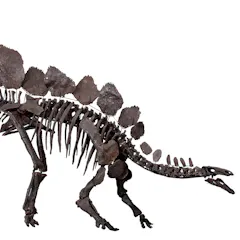
The lack of large numbers of fossils makes it hard to study sexual dimorphism in dinosaurs. But a new statistical approach offers insight into this question and others across science.
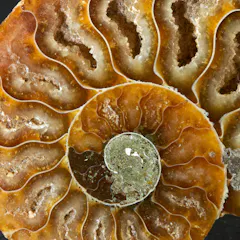
While current extinction rates remain lower than during previous mass extinction events, the number of species under threat of dying out is growing, reflecting the true scale of loss.
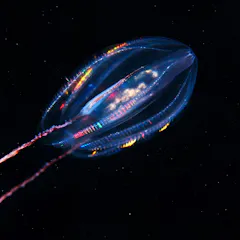
Fossilized comb jellies, or ctenophores, are rare because the creatures are almost completely soft-bodied. Rare fossil finds are helping us learn more about ancient animals and evolution.
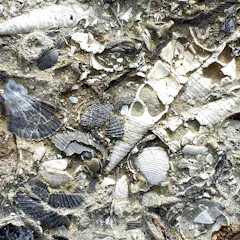
New Zealand’s conservation needs to consider the long-term impact of climate change and focus not only on protecting native species but on preserving ecological richness.
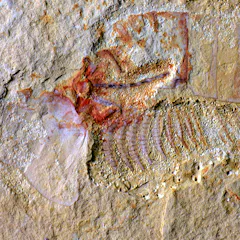
Researchers have found a new way by which the brains of ancient animals can be preserved.
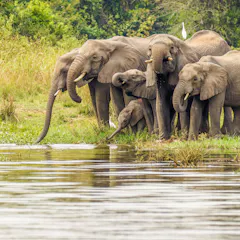
There are no body fossils of elephants from this time period, so the available information of how these gigantic animals moved through the ancient landscapes depends entirely on the track record.
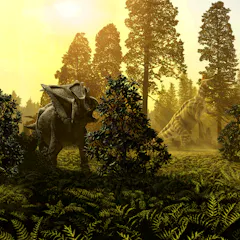
Today, Earth’s biodiversity is highest at the equator – but it hasn’t always been this way.
Top contributors
-

Research Associate, African Centre for Coastal Palaeoscience, Nelson Mandela University
-
Professor of Earth Sciences, University of New England
-
Associate professor in Vertebrate Palaeontology, University of the Witwatersrand
-
Researcher and curator, Jurassica Museum
-
Professor of Paleontology and Stratigraphy, Te Herenga Waka — Victoria University of Wellington
-
Reader in Vertebrate Biology, Liverpool John Moores University
-
Associate Professor of Biology, Scripps College
-
Senior Professor of Paleontology, Chinese Academy of Sciences
-
Professor, Northwest University, Xi'an
-
Paul Braterman is a Friend of The Conversation.
Hon. Research Fellow; Professor Emeritus in Chemistry, University of Glasgow
-
Postdoctoral Researcher in Palaeontology, Utrecht University
-
Professor of Micropalaeontology, UCL
-
Postdoctoral Researcher, Earth Surface Process Modelling, GFZ Helmholtz Centre for Geosciences
-
Chair professor, Queen's University Belfast
-
