
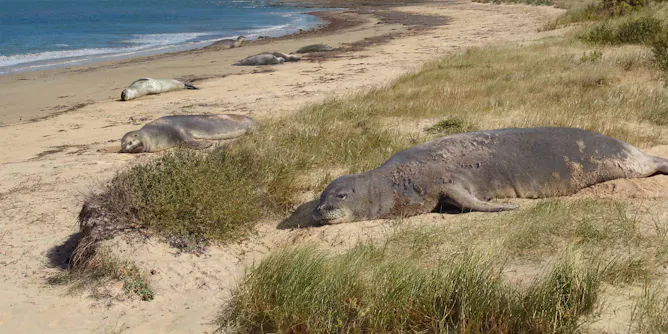
Our new research has more than doubled the known fossil record of seals in Australia.
Articles on Fossil record
Displaying 21 - 36 of 36 articles
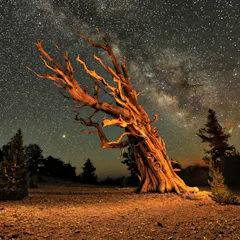
The updated methods are providing a clearer picture of how Earth and its inhabitants evolved over the past 60,000 years - and thus, providing new insight into its future.
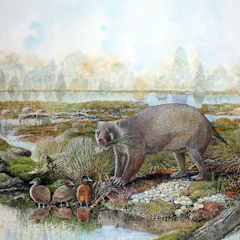
The extinct Mukupirna - which translates to ‘big bones’ - is estimated to have been more than four times larger than any living wombat.
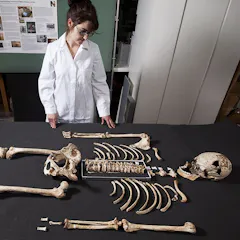
You can’t own a human, so why can you own their remains? We need to stop treating human fossils as objects.
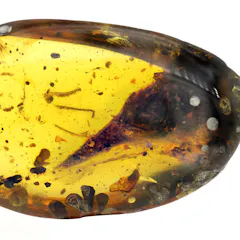
The skull of Oculudentavis, found encased in amber, provides new clues into the transition from dinosaurs to birds and may be smallest of either ever found.
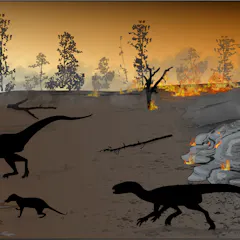
These trackways offer rare insights about ancient life in a stressful, hostile environment during the Early Jurassic.
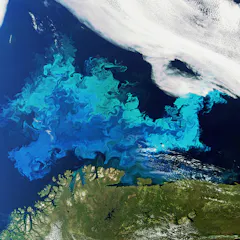
Populations of plankton are in decline. If we push this critical foundation of the marine food chain to extinction, we could cripple ecosystems for millions of years.
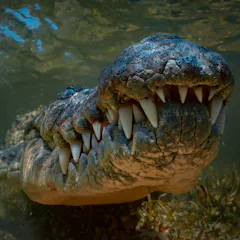
Paleontologists created an evolutionary map of how croc body size changed over the last 200 million years – with some interesting implications for today’s species.
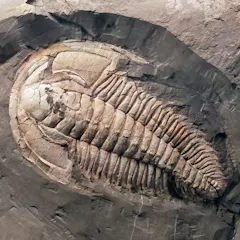
There is evidence to show this monster of the ancient sea was a cannibal, feeding on its own kind.
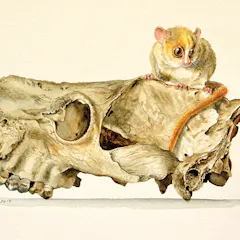
A series of new studies sheds light on the population crash and extinction of the giant birds, lemurs and more that roamed the island until around A.D. 700-1000.
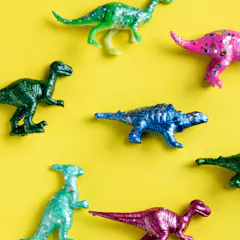
Death is inevitable for individuals and also for species. With help from the fossil record, paleontologists are piecing together what might make one creature more vulnerable than another.

Little skates that ‘walk’ across the ocean floor show how fish brains evolved to pave the way for working legs.
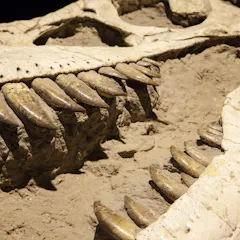
Scientists believe since 2010 we have entered the sixth period of mass extinction. CO2 emissions will change the lives of plants and animals in the next three to four decades.
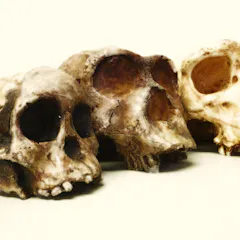
Recent research suggests that humankind’s origins lay outside of Africa. This is the nature of science: a paradigm that cannot be questioned on a regular basis becomes a dogma.
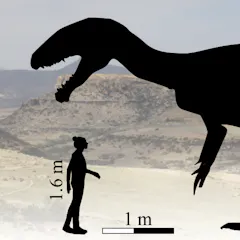
Until this discovery, theropod dinosaurs were thought to be considerably smaller, at three to five metres in body length, during the Early Jurassic.
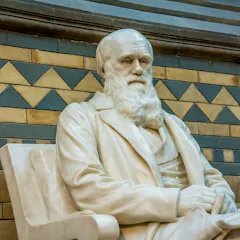
Rather than castigate those who deny evolution, it is more useful to consider their arguments to help science explain it better
Top contributors
-

Research Associate, African Centre for Coastal Palaeoscience, Nelson Mandela University
-
Professor of Earth Sciences, University of New England
-
Associate professor in Vertebrate Palaeontology, University of the Witwatersrand
-
Researcher and curator, Jurassica Museum
-
Professor of Paleontology and Stratigraphy, Te Herenga Waka — Victoria University of Wellington
-
Reader in Vertebrate Biology, Liverpool John Moores University
-
Associate Professor of Biology, Scripps College
-
Senior Professor of Paleontology, Chinese Academy of Sciences
-
Professor, Northwest University, Xi'an
-
Paul Braterman is a Friend of The Conversation.
Hon. Research Fellow; Professor Emeritus in Chemistry, University of Glasgow
-
Postdoctoral Researcher in Palaeontology, Utrecht University
-
Professor of Micropalaeontology, UCL
-
Postdoctoral Researcher, Earth Surface Process Modelling, GFZ Helmholtz Centre for Geosciences
-
Chair professor, Queen's University Belfast
-
