

New Zealand’s well-documented fossil and living marine fauna allows scientists to explore drivers of extinction risk that are relevant globally.
Articles on Sixth mass extinction
Displaying 1 - 20 of 26 articles
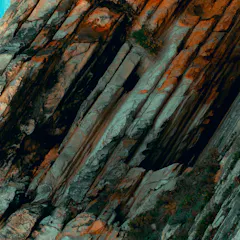
Poetry and palaeontology both work with strata.
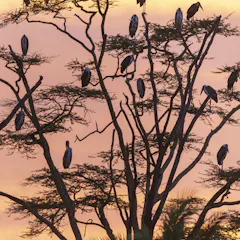
As a major conference on the global biodiversity crisis opens in Montreal, a conservation biologist explains how ideas about protecting nature have evolved over the past 40 years.
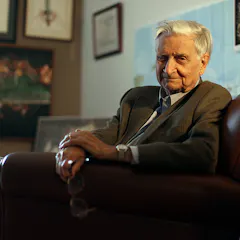
E.O. Wilson was one of the world’s leading experts on ants, but his other passion was convincing humans to see themselves as part of the natural world.
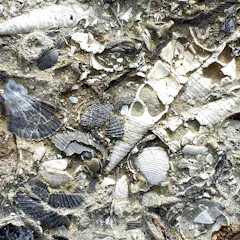
New Zealand’s conservation needs to consider the long-term impact of climate change and focus not only on protecting native species but on preserving ecological richness.
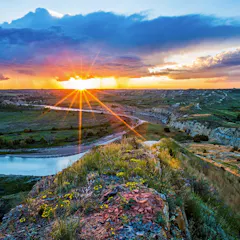
When something is free, people use a lot of it. Economists are urging governments to compute values for natural resources – wildlife, plants, air, water – to create motives for protecting them.
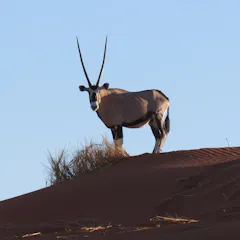
Wildlife populations have plummeted by 68% since 1970. But we have a plan to turn things around.

A new plan targets areas around the world that can store carbon and protect large numbers of species. It calls for preserving these lands, working with Indigenous peoples and connecting wild areas.

Framing cats as responsible for declines in biodiversity is based on faulty scientific logic and fails to account for the real culprit – human activity.
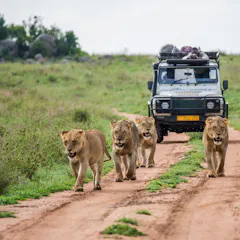
Evolution seems to lead to increasing complexity of species. But perhaps a dominant, intelligent species like humans will always end up destroying itself.
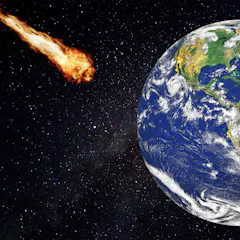
The risks to nature from man-made global warming – and the imperative to act – are clear.

300,000 years ago, there were lots of different species of human. Now it’s only us – and we’re probably the reason why.

The conventional channels for scientists to inform and influence policy are not addressing the climate and ecological crises quickly enough.
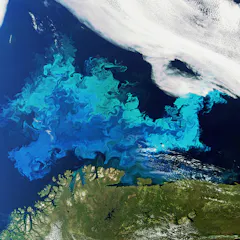
Populations of plankton are in decline. If we push this critical foundation of the marine food chain to extinction, we could cripple ecosystems for millions of years.
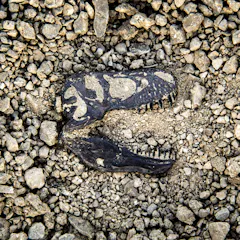
Every cloud has a silver lining – even the debris cloud from an asteroid impact
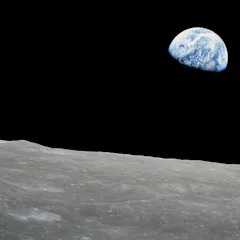
Realising the silence of outer space was what made us appreciate our precarious position down on this pale blue dot – so beginning our obsession with extinction.

Not all of the solutions to the climate and ecological crisis have to be painful.
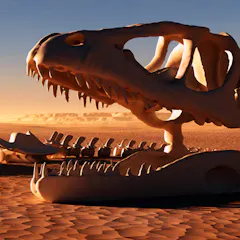
Growing evidence suggests that the extinction of the dinosaurs involved profound, complex and interconnected changes to the global systems that support life. Much like we are facing today.
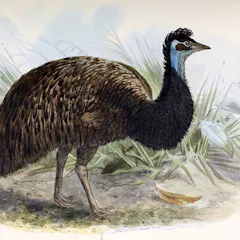
Australia is losing mammals faster than any other country, as well as plenty more plants and animals besides. Extinction is theft from future generations – it’s time to treat it as such.

Ecosystems can collapse suddenly and totally. Frozen zoos are trying to create archives of genetic material to prevent total extinctions.
Top contributors
-

Senior Lecturer in Paleontology and Evolutionary Biology, Life Sciences at the University of Bath, University of Bath
-
-
Research Fellow Biodiversity and Science-Society Interactions, Iddri
-
Professor, Northwest University, Xi'an
-
Assistant lecturer, Monash University
-
Professor in Geology, Institut Teknologi Bandung
-
Lecturer in Geology, Institut Teknologi Bandung
-
Professor of Paleontology and Stratigraphy, Te Herenga Waka — Victoria University of Wellington
-
Professor, Leverhulme Centre for Anthropocene Biodiversity, University of York
-
Senior Lecturer in Environment, Science & Society, King's College London
-
Postdoctoral Researcher, University of Wisconsin-Madison
-
Associate Senior Lecturer, Durrell Institute for Conservation and Ecology, University of Kent
-
Professor of Entomology, University of Delaware
-
PhD Candidate, Te Herenga Waka — Victoria University of Wellington
-
Distinguished Research Professor and Australian Laureate, James Cook University
