
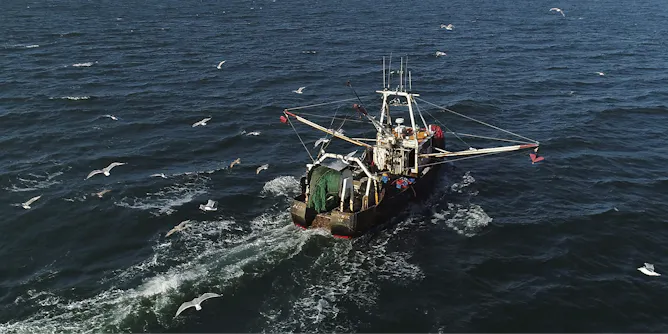
Bottom trawling operates by dragging large, weighted nets across the ocean floor, sweeping up most of the life they encounter along the way and destroying habitats.
Articles on Fish
Displaying 21 - 40 of 495 articles

Research shows that wildfires are causing more debris, sediment and chemicals to enter waterways, harming fish and other aquatic life.
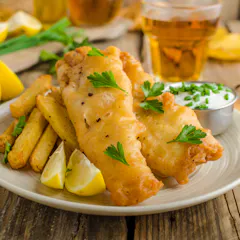
Even where quotas are reduced, cod recovery is hampered by how many fisheries operate in practice.

Paracetamol has been detected in rivers around the world.

A new report finds 325 migratory fish species in urgent need of help, including some of the world’s most iconic freshwater giants.

The newly discovered fish fossil fills a key gap in our understanding of the evolution of vertebrate diversity.

Being left- or right-handed – and the paw, eye, fin and wing equivalents – is a product of genes, development and the environment.
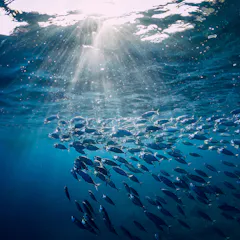
Fish that appear to hang motionless in water are working harder than expected.
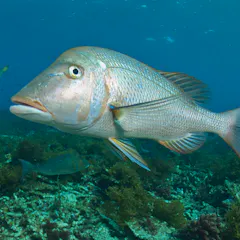
New research found this approach meant an increase in spawning fish. This is good news for fishers.
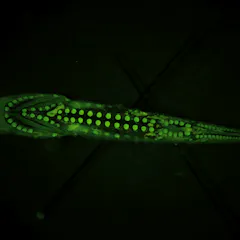
Deep-sea fish larvae combine features of both rods and cones into a single, highly specialised cell that is optimised for life in between light and darkness.
Some of these ‘forever chemicals’ are toxic at very low levels. They can get into water systems and bioaccumulate in fish, ultimately posing risks to people.
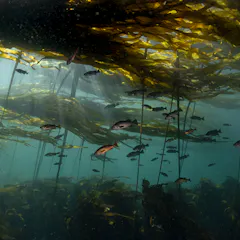
Researchers have known for centuries that some fish make sounds. Now, using special underwater acoustics, researchers have been able to identify sounds from eight different species.

The teeth of white sharks are not static weapons but living records of a shark’s changing lifestyle.
The expansion of Arctic shipping, scramble for seafloor mining and overfishing are all straining international relationships. But the powers of diplomacy go beyond ocean treaties.
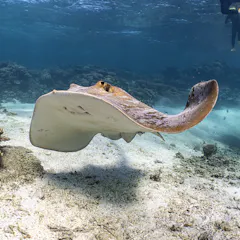
In stingray nurseries, competition for food can be fierce – and it helps to not be a picky eater.

Fish bones are among the most common reasons people end up in the emergency room.

A new statistical approach to tagging has been trialled on skates in Scottish waters.
The people who manage America’s aquifers, wetlands, shorelines and recreation areas rely on federal science as they face new and rising risks in a changing climate.
Scientists warn escaped farmed salmon could interbreed with wild fish, further endangering Scotland’s fragile populations.

River heat waves are rising faster than the pace of air heat waves. That’s a problem for fish, drinking water quality, and food and energy production.
Top contributors
-

Emeritus Strategic Professor in Palaeontology, Flinders University
-
Professor, Macquarie University
-
Executive Director and Professor of Fisheries and River Management, Gulbali Institute (Agriculture, Water and Environment), Charles Sturt University, Charles Sturt University
-
Matthew Flinders Professor of Biodiversity Genomics, Flinders University
-
Adjunct associate in freshwater fisheries ecology and management, University of Canberra
-
Associate Professor in Ecology, Charles Sturt University
-
Postdoctoral Fellow in Vertebrate Palaeontology, Flinders University
-
Research Associate in the College of Science and Engineering, Flinders University
-
Postdoctoral Research Associate at the School of Biosciences, Cardiff University
-
Chief Research Scientist - Environment, CSIRO
-
Professor, University of Wollongong
-
Associate Professor of Neuroscience and Behavioural Analysis, University of Surrey
-
Professor of Marine biology, The University of Melbourne
-
Freshwater Ecologist, Charles Sturt University
-
Associate Professor in Marine Biology, Swansea University