
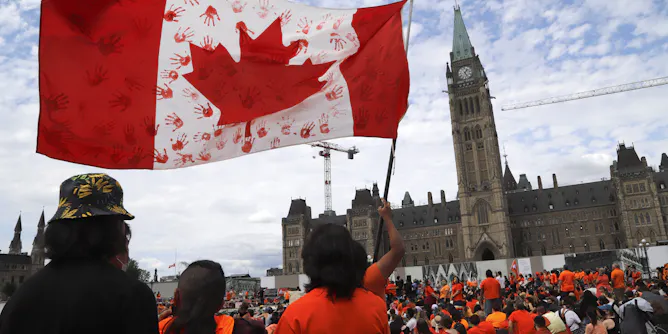
People often decry words and call for action after tragic events. But words are action and they’re fundamental to Canadian democracy.
Articles on First Nations
Displaying 341 - 360 of 434 articles
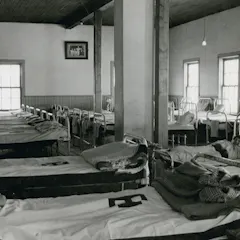
We must recognize and understand the harms that malnutrition and nutrition experiments on Indigenous people caused and the legacy they have left.
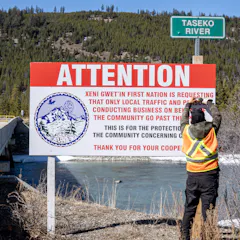
The minutiae of bureaucratic policy and procedure perpetuates colonialism and undermined a fully Tŝilhqot’in-led pandemic response.

Acts of genocide were strategically implemented by church and the Canadian government to remove Indigenous people from their land and, in turn, their culture.

The MMIWG Inquiry two years later: What’s changed and what still needs to be done?
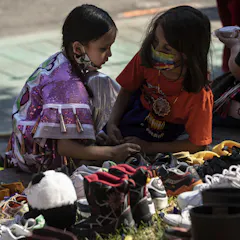
An Indigenous lawyer makes the case that what happened to Indigenous children who went to residential schools is genocide and the case should be tried by the International Criminal Court.

A commitment to eliminating racism must be reflected in accountability mechanisms that focus on the impacts of coordinated and consistent anti-racist action.

Ground-penetrating radar located the remains of 215 First Nations children in a mass unmarked grave, revealing a macabre part of Canada’s hidden history.
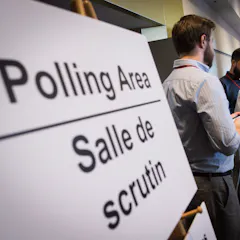
The federal government needs to amend the necessary regulations of the Indian Act and First Nations Elections Act to allow First Nations to choose their own voting methods.
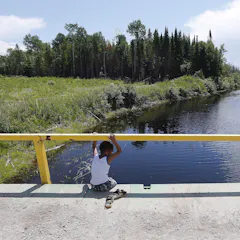
The federal government’s announcement that boil-water advisories on First Nations won’t end until 2023 at the earliest isn’t surprising. The true crisis is much greater than widely known.

These issues matter to our strategic allies, particularly in the Pacific. Dutton’s climate change scepticism and attitudes toward First Nations people could have a damaging effect.

To combat the biodiversity crisis, we need to fundamentally shift our economy and society and make nature conservation the norm.

Budget 2021 includes significant investment in Indigenous communities. Moving forward, post-pandemic recovery and future budgets need to address systemic inequalities.

Does it really matter that Indigenous people and other racialized people experience microaggressions? The short answer: Yes.
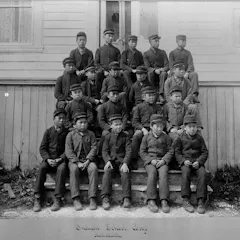
The destruction of IAP residential school records and media reports that continually emphasize compensation will ensure that if remembered, the process will be remembered through a colonial gaze.
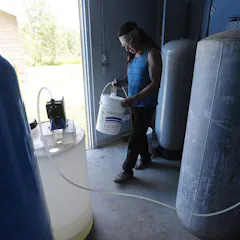
While investments are important, what’s more important is the process and mechanisms through which Indigenous people access funding.
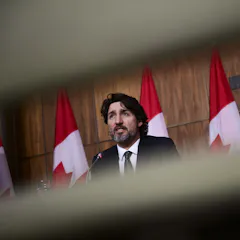
Narratives that historicize colonialism are not new. Canadians and our leaders have a long history of denying our settler colonial present.

Student respondents to a survey discussed memories of historical trauma of infectious disease and displacement, financial hardship related to Alberta tuition hikes and mental health concerns.
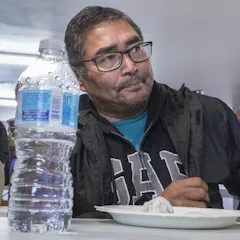
A tax on sugar-sweetened beverages may be intended to improve health, but for Indigenous consumers, such a tax would be unethical, contravene tax law and undermine Indigenous rights.
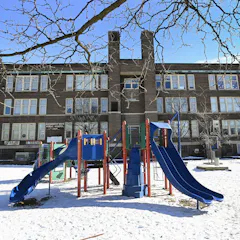
COVID-19 has exposed how systemic racism affects the lives of many racialized students in Canada. But what are some possible solutions?
Top contributors
-

Professorial Fellow, University of Canberra
-
Professor, Australian and Aboriginal History, Faculty of Arts, Design and Architecture, Convenor: Indigenous Land & Justice Research Group, UNSW
-
Professor of Law, University of Technology Sydney
-
Director of Monash Indigenous Studies Centre, Chief Investigator for the Australian Research Council Centre of Excellence for the Elimination of Violence against Women (CEVAW), School of Philosophical, Historical & International Studies, School of Social Sciences (SOSS), Monash University
-
Executive Co-Director, UNU Hub on Empowering Communities to Adapt to Environmental Change, United Nations University; University of Calgary
-
Associate professor, Faculty of Law, L’Université d’Ottawa/University of Ottawa
-
Adjunct Professor, Stout Research Centre, Victoria University of Wellington and Auckland University of Technology, Professor of Political Science, Charles Sturt University
-
Associate Dean of Business (Indigenous Leadership & Engagement); Director, UTS Centre for Indigenous People and Work, University of Technology Sydney
-
Senior Lecturer, School of Geography, Earth and Atmospheric Sciences, The University of Melbourne
-
York Research Chair in Environmental Law & Justice in the Green Economy, York University, Canada
-
Research Fellow in Disaster Resilience, Monash University
-
Senior research fellow, Curtin University
-
Adjunct Senior Research Fellow, Department of Archaeology and History, La Trobe University
-
Associate Professor of Public Policy, Crawford School of Public Policy, Australian National University
-
Assistant Professor, Indigenous Methodologies, Chanie Wenjack School of Indigenous Studies, Trent University