
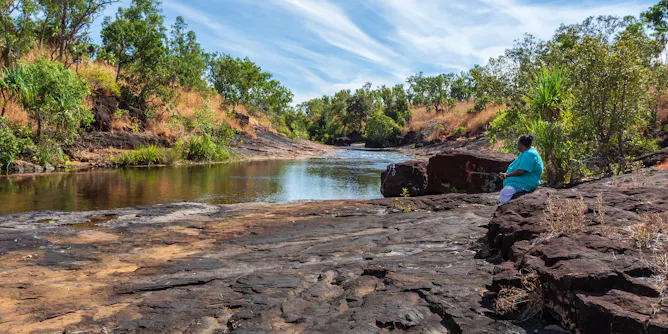
First Nations people have almost no say in how water is used in Australia. The Productivity Commission’s latest report does little to address that.
Articles on First Nations
Displaying 361 - 380 of 434 articles
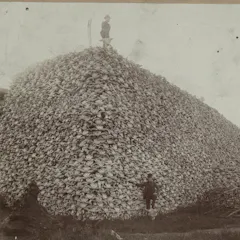
Historical photographs of bison extermination are a window into a history of relationships between humans, bison and the environment.

The federal government’s focus on eliminating long-term drinking-water advisories diverts attention from other water-related issues.
Infrastructure for the mining industry has been prioritized over community-infrastructure for essential human needs.
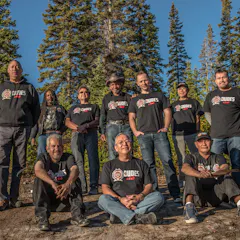
DUDES Club, with a little help from Movember, has shown how a grassroots health and mental health initiative could be mobilized to work by, for and with Indigenous men.
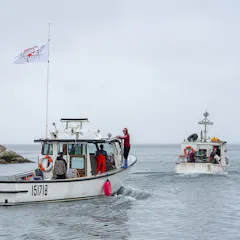
The dispute over the Mi'kmaw lobster fishery isn’t only about money — it’s about who has the authority to govern and define these activities.

Warlpiri people in Yuendumu have been strident in their demands for justice for Walker and protections from ongoing police violence.
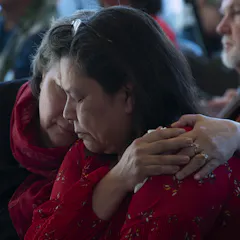
Canada is accepting claims emerging from a settlement with survivors of Indian day schools, but there has yet to be a public inquiry. There is an urgent need to hold Canada accountable.
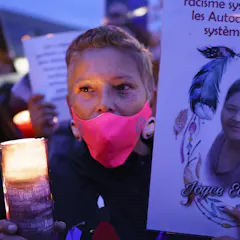
Joyce’s Principle seeks to shift the way health services are provided to Indigenous communities and ensure they are free of discrimination.
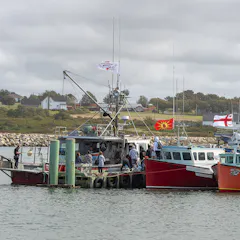
The message from commercial fishers is that fishing in St. Marys Bay outside the commercial season is illegal and a conservation concern. In fact, it is neither.
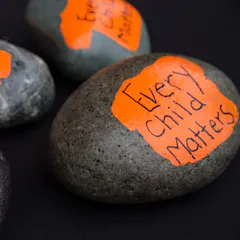
A study in one Alberta school board found racism contributes to poor attendance of on-reserve Indigenous students in public schools, despite educators not recognizing this as a barrier.
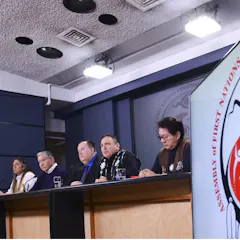
Measures to control the spread of COVID-19 within Indigenous communities represent less than one per cent of Canada’s funding to limit the impacts of the virus.

NFL teams like the Washington Redskins changing names that demean First Nations and Native Americans is a long overdue step in the right direction.
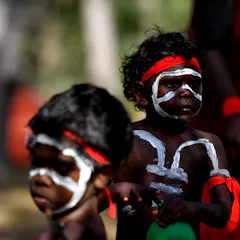
Rather than continually focusing on the “gap” between Indigenous and non-Indigenous Australians, we should look at pathways to success within First Nations communities.
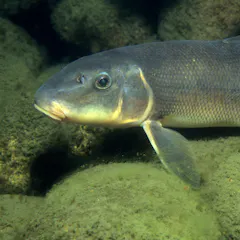
Children in an Oji-Cree northern First Nation are learning traditional teachings about ‘Namebin’ (suckers) and working on literacy skills at the same time through a community literacy project.

Indigenous communities are connecting over digital communities to survive and resist.

As we emerge from the pandemic, we need to rebuild our justice system to invest more in First Nations communities, not prisons. It is vital we not return to the status quo.
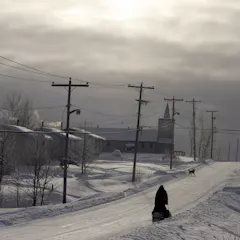
Canada’s public health-care system is one of the most well-developed in the world. And yet, many remote Indigenous communities are still not getting what they need.

Many remote Indigenous communities in British Columbia rely on expensive generators that run on diesel despite having the potential to tap into renewable energy.

The books chosen as finalists in this year’s Stella Prizes can help us draw on our innate resources. We can seek inner truths and explore ways to support each other thanks to these gifted writers.
Top contributors
-

Professorial Fellow, University of Canberra
-
Professor, Australian and Aboriginal History, Faculty of Arts, Design and Architecture, Convenor: Indigenous Land & Justice Research Group, UNSW
-
Professor of Law, University of Technology Sydney
-
Director of Monash Indigenous Studies Centre, Chief Investigator for the Australian Research Council Centre of Excellence for the Elimination of Violence against Women (CEVAW), School of Philosophical, Historical & International Studies, School of Social Sciences (SOSS), Monash University
-
Executive Co-Director, UNU Hub on Empowering Communities to Adapt to Environmental Change, United Nations University; University of Calgary
-
Associate professor, Faculty of Law, L’Université d’Ottawa/University of Ottawa
-
Adjunct Professor, Stout Research Centre, Victoria University of Wellington and Auckland University of Technology, Professor of Political Science, Charles Sturt University
-
Associate Dean of Business (Indigenous Leadership & Engagement); Director, UTS Centre for Indigenous People and Work, University of Technology Sydney
-
Senior Lecturer, School of Geography, Earth and Atmospheric Sciences, The University of Melbourne
-
York Research Chair in Environmental Law & Justice in the Green Economy, York University, Canada
-
Research Fellow in Disaster Resilience, Monash University
-
Senior research fellow, Curtin University
-
Adjunct Senior Research Fellow, Department of Archaeology and History, La Trobe University
-
Associate Professor of Public Policy, Crawford School of Public Policy, Australian National University
-
Assistant Professor, Indigenous Methodologies, Chanie Wenjack School of Indigenous Studies, Trent University