
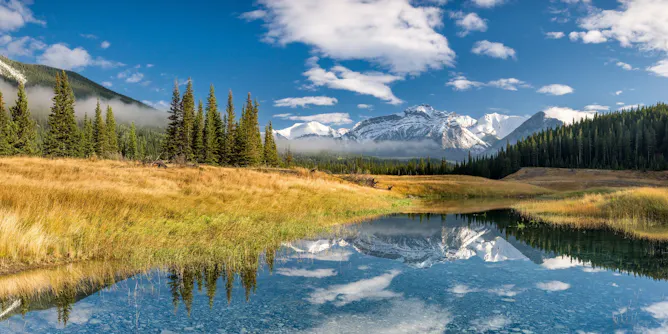
Indigenous-led conservation economies have immense reconciliatory potential and need to be respectfully supported and engaged in order to create a new shared and equitable economic system.
Articles on First Nations
Displaying 281 - 300 of 434 articles

These two new romances starring bold, culturally connected heroines from Redfern and Western Sydney break the genre mould – but remain faithful to what readers love about romance.
Challenging Indigenous identity fraud in academia must name and focus explicitly on structures of whiteness, white entitlement and settler colonialism so we don’t recreate the harms of past policies.

Beyond revamping misleading terminology, some library science scholars and Indigenous knowledge holders are looking at how to index library materials in ways that reflect Indigenous knowledge.
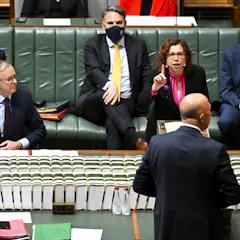
By keeping the BasicsCard, the federal government seems not to have taken on board the lessons from the soon to be scrapped cashless debit card
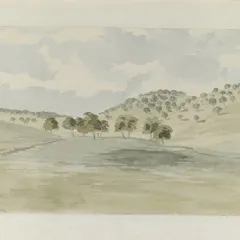
Kudnarto was the first Aboriginal woman to legally marry, under colonial law in South Australia. Her descendants include prominent Kaurna people like Gladys Elphick and Michael O'Loughlin.

What do popular ‘settler’ Australian stories like The Castle and Trent Dalton’s books say about who we are? What do they evade? Jeanine Leane investigates the state of post-Mabo Australian literature.
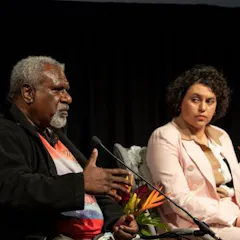
Watch 30 years since Mabo, a live-streamed event hosted by State Library of Queensland and The Conversation honouring the activism of Eddie Mabo.

The Aboriginal Coalition to End Homelessness opened British Columbia’s first culturally supportive housing on Vancouver island — a model that can be replicated across Canada.

Under international law, children have the right to be heard in legal proceedings directly or indirectly affecting them. Canada must step up to ensure all human rights apply to kids as they do adults.
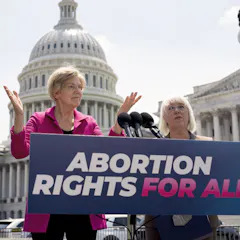
Are the same forces that threaten the right to abortion in the United States coming to Australia?

The DIALOG network forms a bridge between scientific and Indigenous knowledge. It renews the relationship between the university and the Indigenous world, which has for too long been one-sided.

Access to safe water means more than building treatment plants: A study sheds light on water consumption and perceptions of water in Indigenous communities in the Northwest Territories and Yukon.
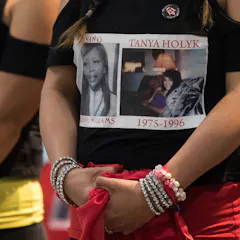
The government needs to implement its proposed action plan. The families of the missing and murdered put their trust in a federal inquiry process, but have yet to receive that justice.

What might our future look like? Together, these speculative fiction stories offer a First Nations response to this burning question.

Our analysis revealed the relative attention our news and opinion pieces gave to First Nations peoples began to grow steadily from around 2005, with a huge peak in 2007.

In today’s episode of Don’t Call Me Resilient, we take a look at what has happened since the unmarked graves of 215 Indigenous children were found in Kamloops B.C.

Incorporating lessons from Ryerson University’s renaming process could help Canadian institutions address colonization.

Priority should be given to improving municipal solid waste management in First Nation communities because they currently lack financial resources, infrastructure and solid waste diversion programs.

When a patriarchal society is combined with a history of colonialism, women in that country are at heightened risk of gender-based violence.
Top contributors
-

Professorial Fellow, University of Canberra
-
Professor, Australian and Aboriginal History, Faculty of Arts, Design and Architecture, Convenor: Indigenous Land & Justice Research Group, UNSW
-
Professor of Law, University of Technology Sydney
-
Director of Monash Indigenous Studies Centre, Chief Investigator for the Australian Research Council Centre of Excellence for the Elimination of Violence against Women (CEVAW), School of Philosophical, Historical & International Studies, School of Social Sciences (SOSS), Monash University
-
Executive Co-Director, UNU Hub on Empowering Communities to Adapt to Environmental Change, United Nations University; University of Calgary
-
Associate professor, Faculty of Law, L’Université d’Ottawa/University of Ottawa
-
Adjunct Professor, Stout Research Centre, Victoria University of Wellington and Auckland University of Technology, Professor of Political Science, Charles Sturt University
-
Associate Dean of Business (Indigenous Leadership & Engagement); Director, UTS Centre for Indigenous People and Work, University of Technology Sydney
-
Senior Lecturer, School of Geography, Earth and Atmospheric Sciences, The University of Melbourne
-
York Research Chair in Environmental Law & Justice in the Green Economy, York University, Canada
-
Research Fellow in Disaster Resilience, Monash University
-
Senior research fellow, Curtin University
-
Adjunct Senior Research Fellow, Department of Archaeology and History, La Trobe University
-
Associate Professor of Public Policy, Crawford School of Public Policy, Australian National University
-
Assistant Professor, Indigenous Methodologies, Chanie Wenjack School of Indigenous Studies, Trent University