
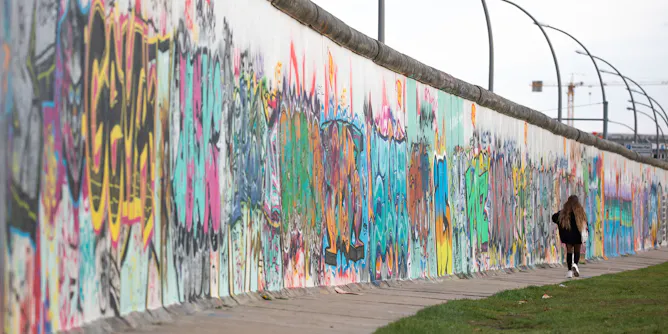
Marking the end of the Cold War offers the chance to reflect on the changes and continuities in African politics and international relations since 1989.
Articles on Fake news
Displaying 161 - 180 of 375 articles
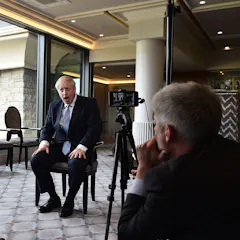
Research suggests that people still depend on the mainstream media for their news. It’s more important than ever that journalists earn that trust.
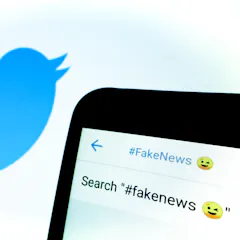
Studying Twitter in advance of the federal election has shown that the hashtag #FakeNews is being used to discredit Canadian mainstream media and create echo chambers.

The world faces a collision between facts and alternative facts – so how do experts get their message heard over the din of fake news?

Research shows that hiding the popularity of posts can change what people consume, and even improve the overall quality of content.
The UK’s public broadcaster is struggling to maintain its values in a news environment being remade by digital technology.

A new study reveals that politicians are only too happy to use the term ‘fake news’ against the media – to the great detriment of journalism and public debate.
Every day, new “alternative facts” are peddled in the public realm. But misinformation is not solely a modern problem - its origins are as old as humanity.
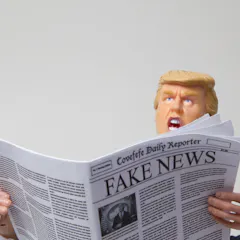
Sometimes it feels like everybody on social media is fighting about what’s “right” and what’s “wrong”. Well, figuring out why we all have such unique opinions is now helping experts tackle fake news.
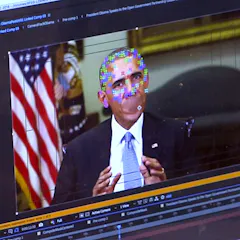
Fake videos pose a risk to democratic representation, participation, and discussion. Canadians need to be mindful of their existence as we head towards the federal election.
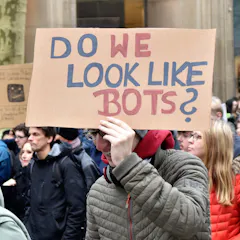
Claims that tweets on the Canadian election are the work of bot accounts, without empirical evidence or verification, need to be taken with a grain of salt.
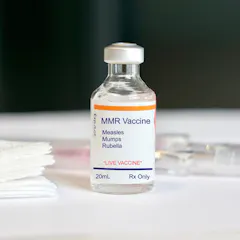
If you want to know where measles is a problem, look for countries with rising populist parties.

You might see a headline from The Onion or The Babylon Bee and, for a split second, think it’s true. But many social media users don’t get the joke – and share these articles as if they’re real.
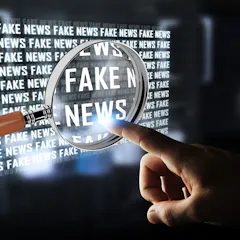
Using machine learning and natural language processing, researchers are developing an algorithm that can distinguish between real and fake news articles.

New evidence suggests most YouTube videos on climate change deny its existence.
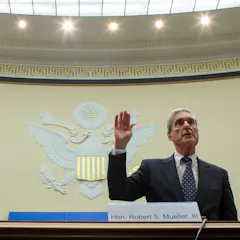
To one scholar of the post-truth era, tuning in to Robert Mueller’s testimony Wednesday was to hear a duel over the facts. Not what the facts imply – but what the facts are.
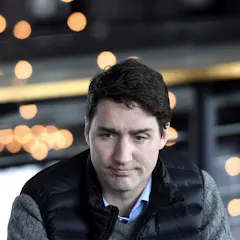
An examination of the Twitter activity after the Québec mosque murders reveal that the majority showed sympathy towards the victims, but Russian trolls worked to spread antagonism and fake news.

Human rights activists, legal experts and others fear these laws have the potential to be misused to stifle free speech or unintentionally block legitimate online posts and websites.
We are, as Snyder is urgently reminding us, perilously close to the edge of the fascist cliff

Students – and indeed all of us – must learn to ask questions about what stories are told, and the implications of what stories are not being told.
Top contributors
-

Professor of Social Psychology in Society, University of Cambridge
-
Professor and Chair, Department of Journalism, Stellenbosch University
-
Professor of Political Communication; Director CAJII, The University of Melbourne
-
Professor in Digital Media, Western Sydney University
-
Senior Research Fellow, Centre for Advancing Journalism, The University of Melbourne
-
Lecturer in Psychology, University of Cambridge
-
Associate Professor of Interdisciplinary Studies, Royal Roads University
-
Associate Professor, News, Social Media, and Public Communication, Simon Fraser University
-
Professor of Media Industries, University of Nottingham
-
Professor of Policy Impact, University of Leeds
-
Vice-Chancellor and Principal of the University, University of Pretoria
-
Associate Professor of Psychology, Vanderbilt University
-
Associate professor in the Faculty of Business, Government, and Law, University of Canberra, University of Canberra
-
Professor, Digital Media Research Centre, Queensland University of Technology
-
Caxton Professor of Journalism, University of the Witwatersrand