
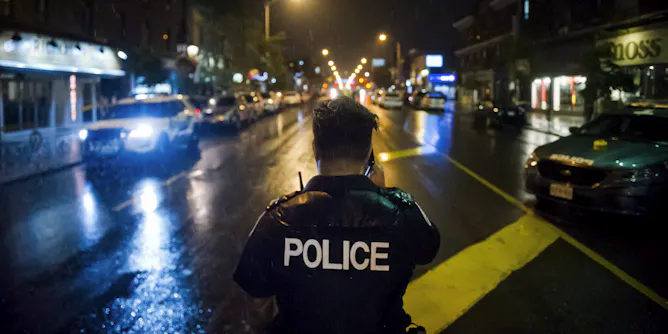
Social media abhors informational vacuums and speed eclipses accuracy. That allows pseudo-experts, agitators and even liars to circulate rumours and poisonous information when big news breaks.
Articles on Fake news
Displaying 241 - 260 of 375 articles
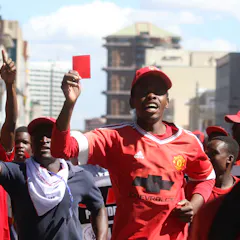
Zimbabwe’s upcoming elections potentially marks the start of a new order in the country, where the stakes are extremely high.
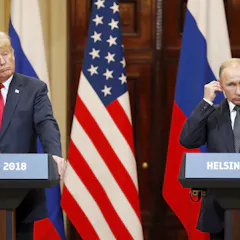
The ideals of liberal democracies are under threat – and not just in the US and Russia.
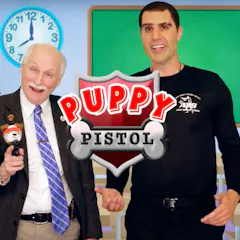
The undercover comic has been criticised for tricking public figures into saying stupid things – but that doesn’t mean they didn’t want to say them.
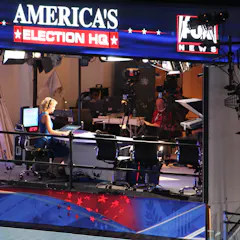
Are Americans ready for a new media model? A new survey indicates that, surprisingly, those who are more willing to pay for news include women and the young.

Scientists have never been more needed to challenge division, misinformation and harassment online.

The British comedian’s sly docu-comedy format is perfect for helping people understand and navigate the proliferation of fake news.
We used the latest techniques from artificial intelligence to study how support for or opposition to a piece of fake news can spread within a social network.
Local news is in peril. Here’s what can be done to save it.
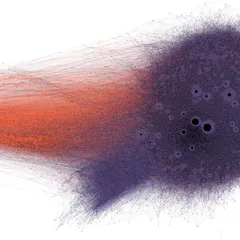
Information on social media can be misleading because of biases in three places – the brain, society and algorithms. Scholars are developing ways to identify and display the effects of these biases.
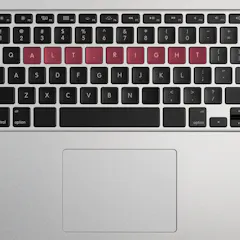
A researcher discovered that many US students cite alt-right websites in their research papers. Should teachers discuss the websites to help students tell fact from fiction?
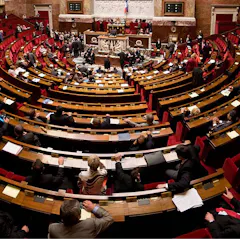
France’s parliament is debating a law that would allow “fake news” to be censored. While the outcome is uncertain, the precedent is dangerous.
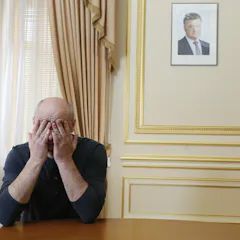
Whatever the reason for faking Arkady Babchenko’s death, this episode will not make journalists any safer.

Journalism needs to rebuild public trust, but it won’t be easy.
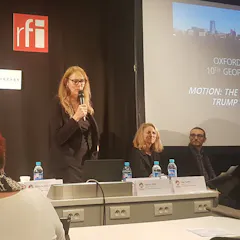
As part of the Grenoble École de Management’s 2018 Geopolitics Festival, four scholars explored the art of debate – an antidote for toxic conversations in the fake-news era.

Many are wondering what Facebook, Twitter and even the government can do to stop the spread of fake news. Behavioral science has an answer: the Pro-Truth Pledge.
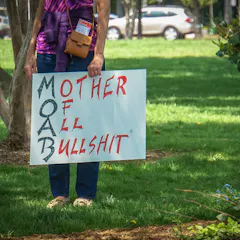
The bullshitter may do even more damage than the liar in politics.
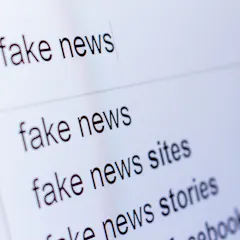
Simulation models show just how effectively fake news and propaganda can shift opinions.
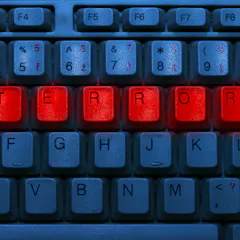
The internet may provide the forum, but radicalisation remains a social process.
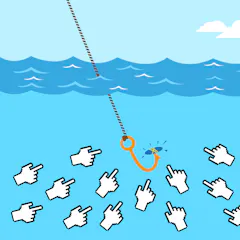
By 2022, people in developed countries may see more fake news than accurate information. Artificial intelligence may be to blame – but could also help people sort out the truth from lies.
Top contributors
-

Professor of Social Psychology in Society, University of Cambridge
-
Professor and Chair, Department of Journalism, Stellenbosch University
-
Professor of Political Communication; Director CAJII, The University of Melbourne
-
Professor in Digital Media, Western Sydney University
-
Senior Research Fellow, Centre for Advancing Journalism, The University of Melbourne
-
Lecturer in Psychology, University of Cambridge
-
Associate Professor of Interdisciplinary Studies, Royal Roads University
-
Associate Professor, News, Social Media, and Public Communication, Simon Fraser University
-
Professor of Media Industries, University of Nottingham
-
Professor of Policy Impact, University of Leeds
-
Vice-Chancellor and Principal of the University, University of Pretoria
-
Associate Professor of Psychology, Vanderbilt University
-
Associate professor in the Faculty of Business, Government, and Law, University of Canberra, University of Canberra
-
Professor, Digital Media Research Centre, Queensland University of Technology
-
Caxton Professor of Journalism, University of the Witwatersrand