
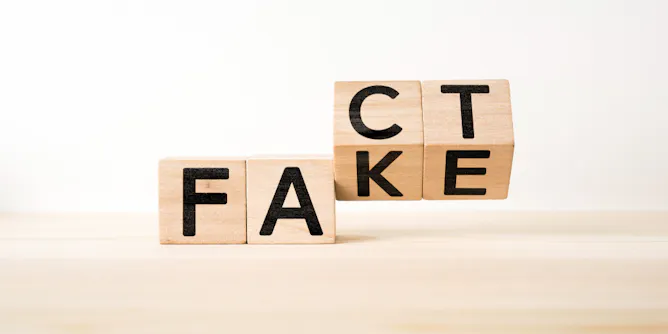
Science is not the absolute truth. Scientific findings are the beginning, not the end, of the quest for truth.
Articles on Fake news
Displaying 201 - 220 of 375 articles

India has more WhatsApp users than any other democracy – and a worrying history of ‘fake news’.
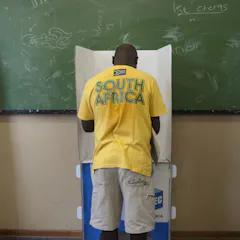
Concern at the role of fake sites in influencing South African public opinion has been growing over time.
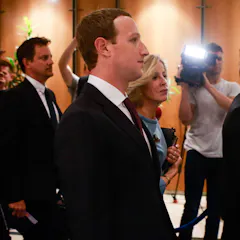
Are you annoyed at Facebook? You’re not alone – and momentum is growing across the world to use regulation and the law to rein in the behaviours of this and other digital platforms.
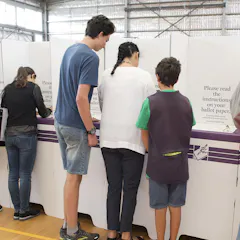
If another country wants to weaponise data hacked through Australia’s parliament, we’ll likely see them try to inflame religious and ethnic differences, and drive votes to minor parties.
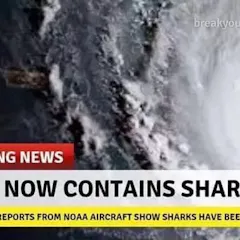
It’s easier than ever to create a fake image and spread it far and wide online. But there are steps that you can take to protect yourself from fishy photos.

Research in Indonesia shows that people’s age, education levels and gender do not determine their likelihood to share fake news. Internet spending does.
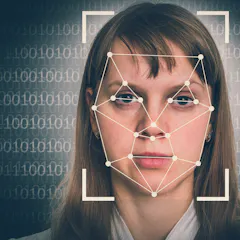
More democratic forms of politics, journalism and fact-checking will be needed when we can no longer trust any video footage.
Coach students to analyze the credibility of sources, but teaching them how genre and experiential patterns can be manipulated is also relevant.
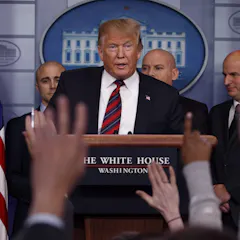
“Solutions journalism” aims to give more prominence to solution-oriented narratives. It reports on responses to social problems by moving the solutions out of the footnotes.
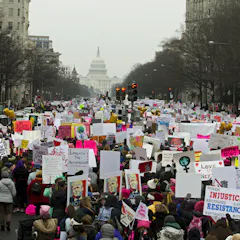
A parody of ‘the Washington Post’ announcing that Donald Trump had resigned was recently handed out in Washington, D.C.
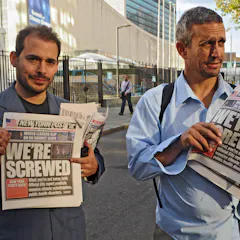
For media activists The Yes Men, hoaxes have emerged as a proven tactic to generate public discourse on social justice issues that are not generally given space and time in mainstream news media.

WhatsApp has become a haven of misinformation in developing countries.
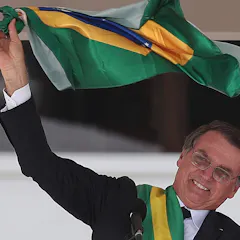
The Brazilian president used WhatsApp and other social media to smear his opponents and sow division in the electorate.
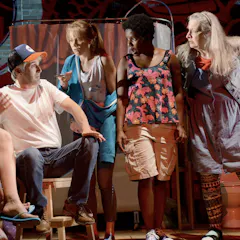
Reality based theatre is one way artists are challenging the lies put out by politicians like U.S. President Donald Trump, who exploits our contemporary insecurities.
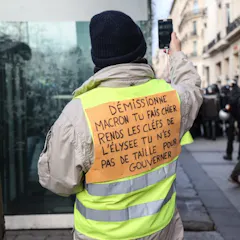
There’s an orderly fashion to so-called disruptive “manifestations”, as they’re called in French. But the “gilets jaunes” didn’t follow the rules. So who exactly broke the rules?

New media platforms have changed the way people create, consume and relate the news.
The Melbourne Declaration is now ten years old. It acts as a national guide for education policy, practice and delivery in Australian schools.
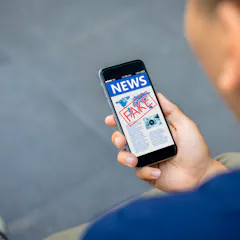
We used game theory to show you only need a small amount of fake news to disrupt any group discussion. But we also found a way you can fight back.
A recent survey found that Americans trust local media outlets far more than national ones.
Top contributors
-

Professor of Social Psychology in Society, University of Cambridge
-
Professor and Chair, Department of Journalism, Stellenbosch University
-
Professor of Political Communication; Director CAJII, The University of Melbourne
-
Professor in Digital Media, Western Sydney University
-
Senior Research Fellow, Centre for Advancing Journalism, The University of Melbourne
-
Lecturer in Psychology, University of Cambridge
-
Associate Professor of Interdisciplinary Studies, Royal Roads University
-
Associate Professor, News, Social Media, and Public Communication, Simon Fraser University
-
Professor of Media Industries, University of Nottingham
-
Professor of Policy Impact, University of Leeds
-
Vice-Chancellor and Principal of the University, University of Pretoria
-
Associate Professor of Psychology, Vanderbilt University
-
Associate professor in the Faculty of Business, Government, and Law, University of Canberra, University of Canberra
-
Professor, Digital Media Research Centre, Queensland University of Technology
-
Caxton Professor of Journalism, University of the Witwatersrand