

In the age of fake news and deep fake videos, how can documentary making be used for research and other purposes that demand authenticity and credibility?
Articles on Fake news
Displaying 101 - 120 of 375 articles
With a limited number of fact-checkers in Southeast Asia, fact-checking content becomes a challenging task to complete.
Delivering media literacy in a comics format can help readers develop the skills to identify fake news and counter its effects.

As more comes to light about the money-making tactics of social media platforms we need to reevaluate our relationship with them.

No news isn’t necessarily good news. News is powerful, and helps us to stay connected and informed. But it’s important we regulate our news consumption - particularly during times of crisis.
Independent community publishers are helping to restore trust in journalism - but they need support.
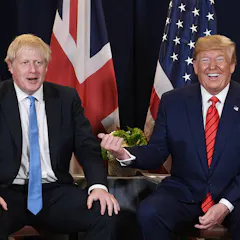
‘Prozac leaders’ believe their own rhetoric that “everything is going well”. But this wishful thinking can quickly contaminate organisations, and has been disastrous during the pandemic.
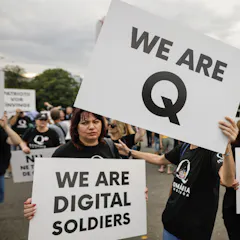
Combating conspiracy theories with correct information is not enough.
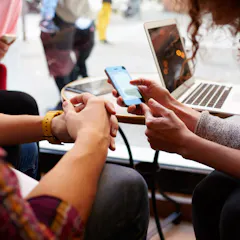
Social media makes it easy to spread ‘fake news’.
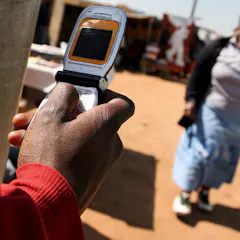
The full benefits of digital democracy are being thwarted by digital exclusion that is driven by the high cost of data.

The Conversation Africa runs a WhatsApp service that sends to subscribers selected articles from our site. To subscribe to the service, save the number in your contacts and send us the word “subscribe…
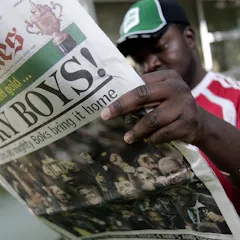
Media self-criticism is not just important to improve journalism, it is a political, professional and moral imperative.

It’s easy to edit video of public figures to make them appear asleep, confused, drunk or cognitively impaired when they are not. The technique is being used to undermine Joe Biden’s campaign.

Extremists are playing on people’s health fears to normalise their views.
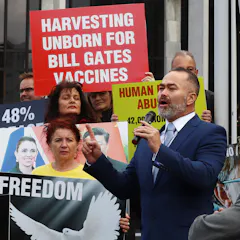
Using the law - or changing it - to stop the spread of dangerous disinformation should be a last resort.
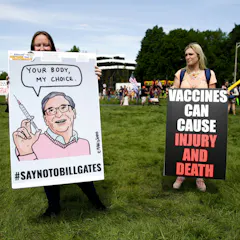
Those opposing vaccinations often mistrust government, science and the news media. There may be better ways to persuade them than by offering facts only.

Amid global chaos and uncertainty, Instagram offers up the world as stable, simple and good-looking. No wonder it is set to overtake Twitter as a news source.
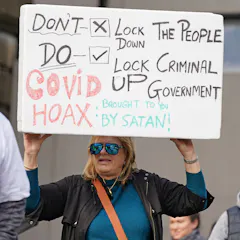
When it comes to COVID-19 misinformation, not all nations are the same. Some are peddling a larger variety of myths than others - and each seems to have its own personal favourite.
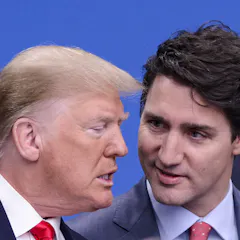
A tale of two leaders on Twitter in the age of COVID-19.
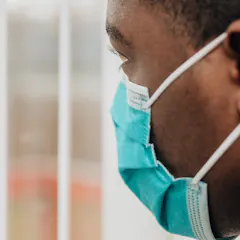
New research shows how a lack of basic information caused by the language barrier can lead to the spread of fake news in refugee communites.
Top contributors
-

Professor of Social Psychology in Society, University of Cambridge
-
Professor and Chair, Department of Journalism, Stellenbosch University
-
Professor of Political Communication; Director CAJII, The University of Melbourne
-
Professor in Digital Media, Western Sydney University
-
Senior Research Fellow, Centre for Advancing Journalism, The University of Melbourne
-
Lecturer in Psychology, University of Cambridge
-
Associate Professor of Interdisciplinary Studies, Royal Roads University
-
Associate Professor, News, Social Media, and Public Communication, Simon Fraser University
-
Professor of Media Industries, University of Nottingham
-
Professor of Policy Impact, University of Leeds
-
Vice-Chancellor and Principal of the University, University of Pretoria
-
Associate Professor of Psychology, Vanderbilt University
-
Associate professor in the Faculty of Business, Government, and Law, University of Canberra, University of Canberra
-
Professor, Digital Media Research Centre, Queensland University of Technology
-
Caxton Professor of Journalism, University of the Witwatersrand