
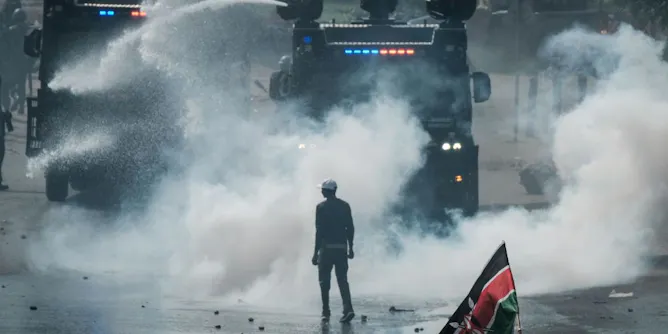
Our research found that Kenyan students dislike ethnic-based politics in principle, but feel the pressures of tribalism.
Articles on Fake news
Displaying 61 - 80 of 375 articles

South Africa has no comprehensive national media literacy programme. Often it comes down to individual teachers and schools to make learners more media literate.

Concerns about misinformation spreading among Chinese communities are once again prominent, as they were during the 2019 election campaign.

The Russian Embassy in Canada is active in spreading disinformation and promoting the Russian perspective on the events taking place in Ukraine.
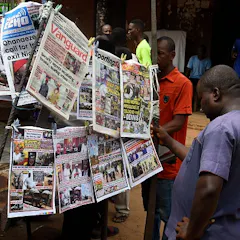
By linking different issues together, organisations show the importance of approaching information disorder as a complex problem requiring various responses.

The transmission of truth about the war against Ukraine is a criminal offense in Russia. Without access to the complete information about the war, Russian population continues to support it.

Russia’s propaganda signalled a full-scale invasion of Ukraine a long time ago.

Increased media literacy education and government regulations are necessary to combat fake information on social media platforms.

The vacuum created by a drop in public trust in mainstream platforms has given rise to new media players who don’t always play by the rules.

Empowering current and future generations to detect and dismiss false and misleading information will be pivotal in developing a democracy resilient to the threat of online misinformation.

Our age of agnosis is increasingly coming into contact in ways beyond historical standards and recorded memory. Empathy, not apathy, is needed now more than ever before.
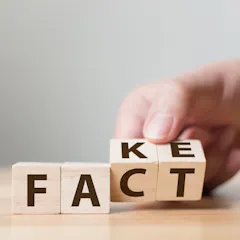
It can be easy to despair about the problem of misinformation. But the problem is smaller than you might think.

Artificial intelligence is becoming increasingly sophisticated. But we’re still a long way off from AI being able to discern what’s fake news.

If bad or irrelevant news has you considering avoidance, a suggestion: just as we’ve been taught that moderation is the key to so many habits, it’s the same for news.
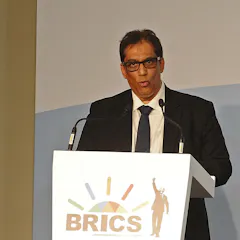
Using state resources to sue media for spreading fake news is not the answer, and sets a bad precedent.

The internet has created new threats to national security and population welfare. The Canadian government needs an oversight department to address cybersecurity and educate their citizens.

Academics are among the most trusted sources for news about climate change.
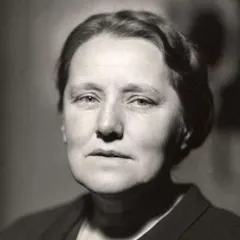
In our “post-truth” political era, there is a lot we can learn from an under-appreciated philosopher who focused on “thinking clearly.”

Despite fake news commonly being cited as a danger to society, very little research has been conducted on its ability to alter what people think.
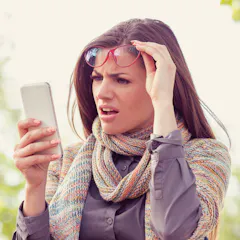
Many scientists believe attention is the key to tackling fake news – and that a form of ‘priming’ can help.
Top contributors
-

Professor of Social Psychology in Society, University of Cambridge
-
Professor and Chair, Department of Journalism, Stellenbosch University
-
Professor of Political Communication; Director CAJII, The University of Melbourne
-
Professor in Digital Media, Western Sydney University
-
Senior Research Fellow, Centre for Advancing Journalism, The University of Melbourne
-
Lecturer in Psychology, University of Cambridge
-
Associate Professor of Interdisciplinary Studies, Royal Roads University
-
Associate Professor, News, Social Media, and Public Communication, Simon Fraser University
-
Professor of Media Industries, University of Nottingham
-
Professor of Policy Impact, University of Leeds
-
Vice-Chancellor and Principal of the University, University of Pretoria
-
Associate Professor of Psychology, Vanderbilt University
-
Associate professor in the Faculty of Business, Government, and Law, University of Canberra, University of Canberra
-
Professor, Digital Media Research Centre, Queensland University of Technology
-
Caxton Professor of Journalism, University of the Witwatersrand