

When you stop treating AI as another human, you’ll get on with it better.
Articles on Evolution
Displaying 301 - 320 of 1206 articles
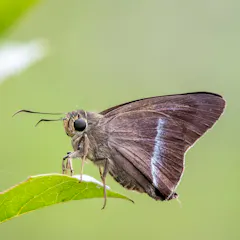
The most detailed evolutionary tree of butterfly species ever created reveals the precise origins of the nectar-sipping gadabouts.
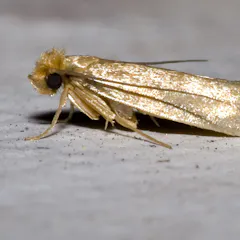
An appreciation for the moths that chomp holes in your clothes. They eat the inedible, occupy the uninhabitable and overcome every evolutionary obstacle in their way.
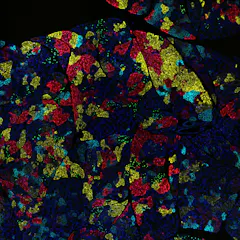
There is no one-size-fits-all approach to treating cancer. Understanding how cancer cells evolve could help researchers develop more effective drugs.

What fossil records tell us about when the Earth was first covered by plants.
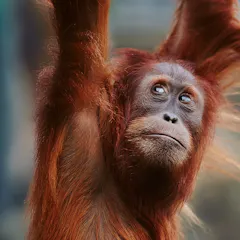
Orangutans, gorillas and chimpanzees seem to enjoy the buzz of getting dizzy.
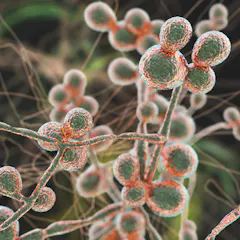
Candida auris is a relatively new addition to a family of fungi that can infect people. Most of these infections occur in sick, hospitalized patients and can be deadly.

Many older people tend to trim their social circles and focus their social efforts on family and close friends. New research on our close primate relatives may help explain why.
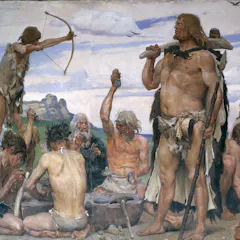
From Aristotle to Darwin, inaccurate and biased narratives in science not only reproduce these biases in future generations but also perpetuate the discrimination they are used to justify.

Life may be using quantum mechanics to its advantage.
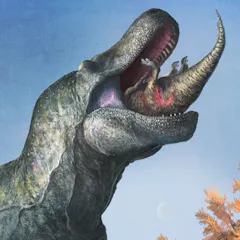
Although we’re used to seeing lipless dinosaur carnivores, our new data suggests they had lizard-like lips and probably couldn’t snarl.
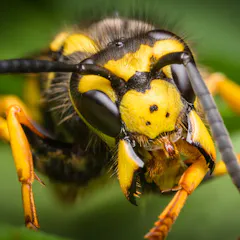
Think your social life is complicated? Consider the wasp.
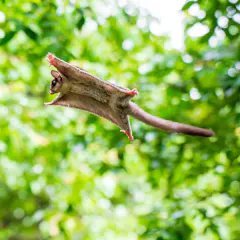
Mammals have evolved flight more often than birds. By studying the genes of the sugar glider, biologists have found a ‘molecular toolkit’ for flight membranes that’s been in us all along.
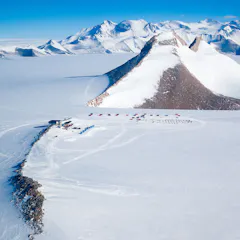
Unravelling the mystery of how life in Antarctica survived past ice ages involved sampling some of the oldest museum records. When combined with a dating database, a familiar story is revealed.
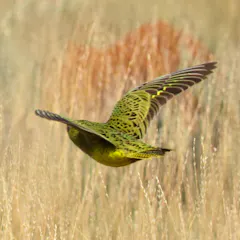
A wonky skull. Enlarged ear chambers. Asymetrical ears. It looks like the elusive night parrot has traded off vision for excellent hearing

Antarctic minke whales are elusive and hard to track – but a new study of their behaviour offers clues to their evolution and the limits of their filter-feeding behaviour.

In 2022 we detailed the discovery of 1,500 stone points in France’s Madrin cave. Experiments now show that they could were used as arrowheads, pushing back evidence of archery in Eurasia by 40,000 years.
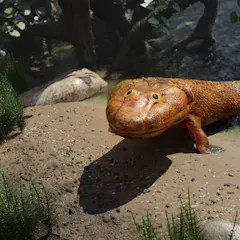
We can trace our human evolutionary lineage back to fish.
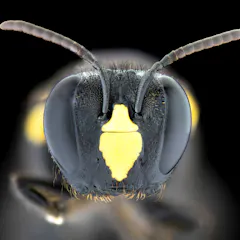
New research provides insights into the evolution and ecology of Australian bees. The capricious masked bee employs female nest guards in a cooperative social structure. Meanwhile, fussy feeders abound.

Using a mathematical model, researchers found that good hygiene can reduce the harmful effects of antibiotic use.
Top contributors
-

Scientia Professor of Evolution, UNSW
-
Emeritus Strategic Professor in Palaeontology, Flinders University
-
Senior Research Scientist, South Australian Museum; Flinders University
-
Honorary Associate Professor, UNSW
-
Professor of Evolutionary Palaeobiology at the Milner Centre for Evolution, University of Bath
-
Senior Lecturer in Paleontology and Evolutionary Biology, Life Sciences at the University of Bath, University of Bath
-
Associate Professor, Department of Physiology, Monash University
-
Associate professor in Vertebrate Palaeontology, University of the Witwatersrand
-
Principal Lecturer in Wildlife Conservation, Nottingham Trent University
-
Research Associate in the College of Science and Engineering, Flinders University
-
Jenny Graves is a Friend of The Conversation.
Distinguished Professor of Genetics and Vice Chancellor's Fellow, La Trobe University
-
Adjunct Research Associate, Monash University
-
Mark Elgar is a Friend of The Conversation.
Emeritus Professor of Evolutionary and Behavioural Ecology, The University of Melbourne
-
Professor, School of Biological Sciences, Monash University
-
Professor of Earth System Science, UCL