
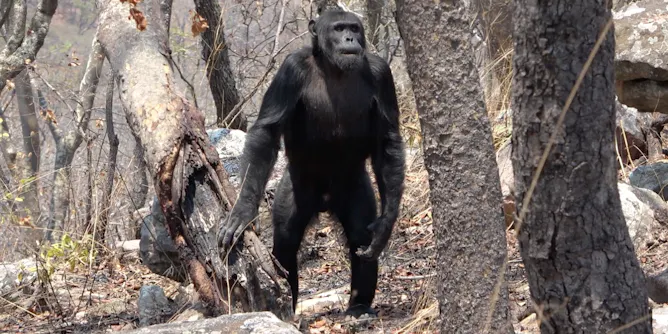
Almost all theories of human bipedalism explain it as a terrestrial adaptation. A new study does not support that view.
Articles on Evolution
Displaying 341 - 360 of 1206 articles
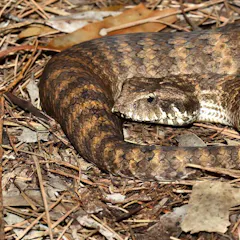
The first description of the snake clitoris may change what we think we know about mating and courtship among the slithering reptiles.

The first speech sounds were uttered about 70,000 years ago and not hundreds of thousands of years ago as is sometimes claimed.
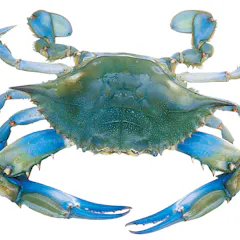
In different parts of the world evolution often comes up with the same or similar solutions to life’s problems.
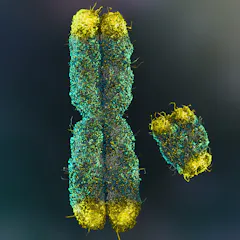
The human Y chromosome could disappear over time, putting our species in jeopardy. But some rodents have managed just fine without it – and we now know how.

There may be humans who look more or less like us in the year million, but they won’t be alone.
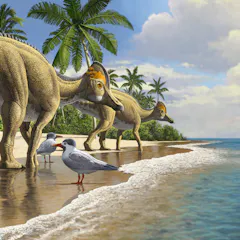
It’s hard to imagine the world without Homo sapiens. But it’s unlikely we would be here if it wasn’t for a chance asteroid collision.
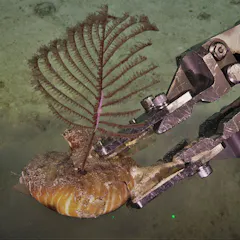
Black corals provide critical habitat for many creatures that live in the dark, often barren, deep sea, and researchers are learning more about these rare corals with every dive.
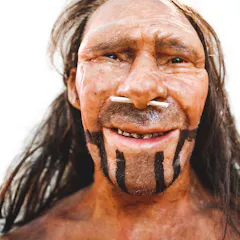
Neanderthals were wiped out by chance changes in the environment. The rise of Homo sapiens wasn’t inevitable.

Only insects populations can compare to rising human numbers.
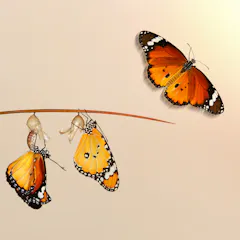
There is more to evolution than the genes species inherit.
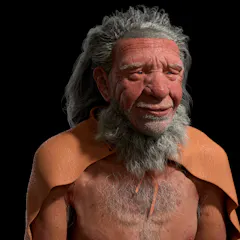
Zinc in their bones reveal that these early humans were top of the food chain.
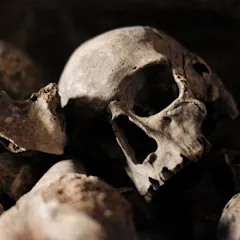
New genetic research shows humans’ famed ability to adapt our behaviour and develop new tools and techniques has not always been enough to survive when times have grown tough.
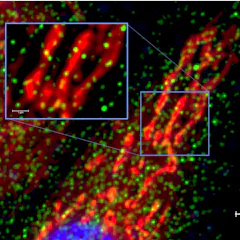
COVID-19 causes lung injury and lowers oxygen levels in patients because the SARS-CoV-2 virus attacks cells’ mitochondria. This attack is a throwback to a primitive war between viruses and bacteria.

In this week’s episode of The Conversation Weekly, we speak with three scientists who study the ways plants and animals evolve in a world dominated by humans.
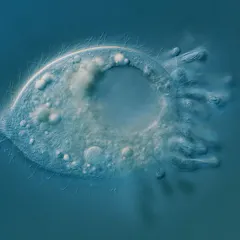
Microbes are so tiny humans can’t see them without special equipment. But the discovery of 20 new species will help scientists map the evolutionary tree of life.

Bits of viral genes incorporated into human DNA have been linked to cancer, ALS and schizophrenia. But many of these genes may not be harmful, and could even protect against infectious disease.
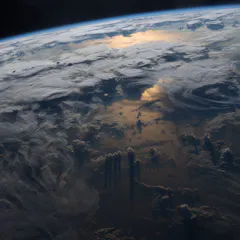
We should not rule out taking a closer look at exoplanets that have a poorly oxygenated atmosphere.
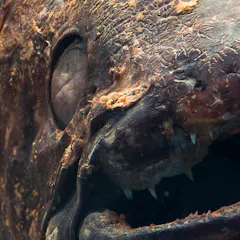
Deep in the oceans dwell creatures that can evade many of the evolutionary drivers of life on land – and they remain seemingly unchanged through time.
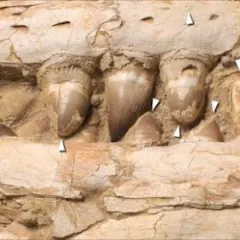
Fossils of a giant killer mosasaur have been discovered, alongside the fossilised remains of its prey.
Top contributors
-

Scientia Professor of Evolution, UNSW
-
Emeritus Strategic Professor in Palaeontology, Flinders University
-
Senior Research Scientist, South Australian Museum; Flinders University
-
Honorary Associate Professor, UNSW
-
Professor of Evolutionary Palaeobiology at the Milner Centre for Evolution, University of Bath
-
Senior Lecturer in Paleontology and Evolutionary Biology, Life Sciences at the University of Bath, University of Bath
-
Associate Professor, Department of Physiology, Monash University
-
Associate professor in Vertebrate Palaeontology, University of the Witwatersrand
-
Principal Lecturer in Wildlife Conservation, Nottingham Trent University
-
Research Associate in the College of Science and Engineering, Flinders University
-
Jenny Graves is a Friend of The Conversation.
Distinguished Professor of Genetics and Vice Chancellor's Fellow, La Trobe University
-
Adjunct Research Associate, Monash University
-
Mark Elgar is a Friend of The Conversation.
Emeritus Professor of Evolutionary and Behavioural Ecology, The University of Melbourne
-
Professor, School of Biological Sciences, Monash University
-
Professor of Earth System Science, UCL