
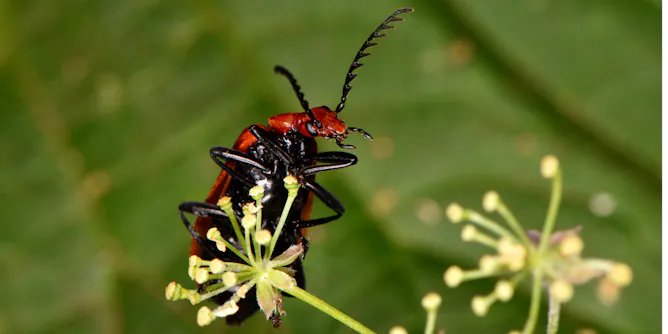
Climate change is exposing animals to temperatures outside of their normal limits – a new study has found that insects have a particularly weak ability to adjust.
Articles on Evolution
Displaying 361 - 380 of 1206 articles

Research on Chernobyl frogs has shown that the ionising radiation caused by the accident triggered a process of natural selection among these animals.
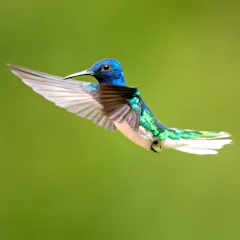
Narwhals, hummingbirds and the Asian sheepshead wrasse have opened scientists’ eyes to the complexity of nature.
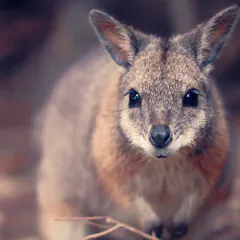
The teeth of the tammar wallaby don’t grow in the way you’d expect – and scientists want to know why.
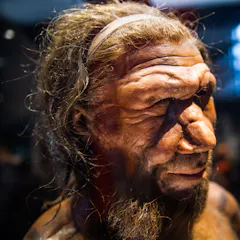
You may have heard science has reconsidered its view of Neanderthals but did you know human hybrid species played a key role in our evolution?
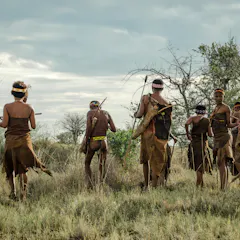
Not all human societies throughout history have been patriarchal.

As early modern humans spread across the globe, their gut microbes genetically changed with them. Understanding the origins of gut microbes could improve understanding of their role in human health.
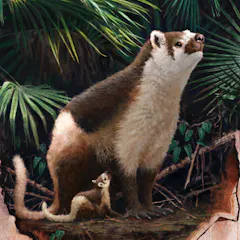
Palaeontologists studied Pantolambda fossils in forensic detail to learn about its lifestyle.

Our ancient ancestors didn’t have clothes or houses – but that constant exposure to the sun helped their skin protect itself from the worst sun damage.
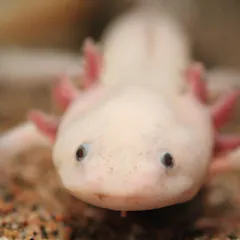
Axolotls are amphibians known for their ability to regrow their organs, including their brains. New research clarifies their regeneration process.
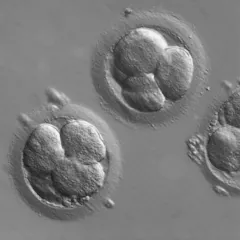
Human embryos are far more likely to die than come to term, an evolutionary trait seen across species. Laws granting personhood at conception ignore built-in embryo loss, with potentially grave consequences.
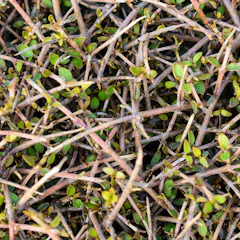
The most controversial feature of the New Zealand flora is the plethora of small-leaved trees and shrubs with wiry interlaced branches. Can a synthesis of competing explanations solve this mystery?

A vast array of species, including people, use slime for a variety of essential bodily functions. Studying the genetic ancestry of slime surprisingly showcases the role of repetitive DNA in evolution.

The pickle-obsessed can now order a pickle pizza with a side of pickle potato chips, wash it down with a pickle beer and have pickle ice cream for dessert.
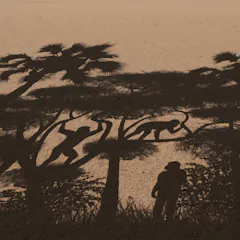
New research shows our oldest ancestors were able to walk as well as evolve in trees.
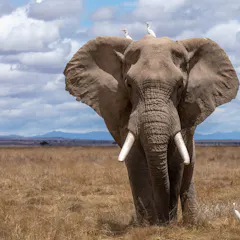
A new theory linking metabolism and size shows how evolution, not physics, is the driving force behind many of life’s patterns.

A language scientist explains that talking was never invented but has evolved over hundreds of thousands of years.
Lovelock’s Gaia hypothesis suggested that Earth could be considered a single, self-regulating organism.
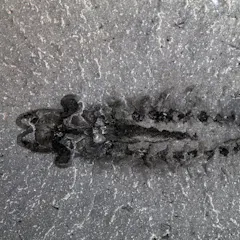
The discovery of a fossil over 500 million years old reveals new information. Its brain and nervous system are remarkably preserved, filling in some gaps in what we know about arthropod evolution.
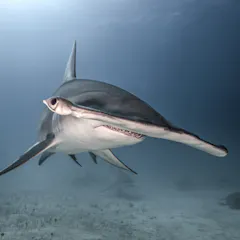
The first hammerhead shark was likely the result of a genetic deformity. A biologist explains how shark DNA reveals hammerheads’ history.
Top contributors
-

Scientia Professor of Evolution, UNSW
-
Emeritus Strategic Professor in Palaeontology, Flinders University
-
Senior Research Scientist, South Australian Museum; Flinders University
-
Honorary Associate Professor, UNSW
-
Professor of Evolutionary Palaeobiology at the Milner Centre for Evolution, University of Bath
-
Senior Lecturer in Paleontology and Evolutionary Biology, Life Sciences at the University of Bath, University of Bath
-
Associate Professor, Department of Physiology, Monash University
-
Associate professor in Vertebrate Palaeontology, University of the Witwatersrand
-
Principal Lecturer in Wildlife Conservation, Nottingham Trent University
-
Research Associate in the College of Science and Engineering, Flinders University
-
Jenny Graves is a Friend of The Conversation.
Distinguished Professor of Genetics and Vice Chancellor's Fellow, La Trobe University
-
Adjunct Research Associate, Monash University
-
Mark Elgar is a Friend of The Conversation.
Emeritus Professor of Evolutionary and Behavioural Ecology, The University of Melbourne
-
Professor, School of Biological Sciences, Monash University
-
Professor of Earth System Science, UCL