

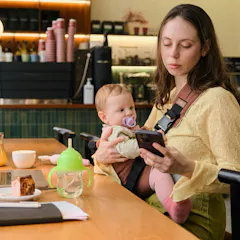
A study finds that in the moments when parents checked their phones or smart watches they were almost six times more likely to miss their children’s signals.
Articles on Early childhood education
Displaying 1 - 20 of 265 articles

This free program mails an age-appropriate book monthly to each enrolled child from birth to age 5.
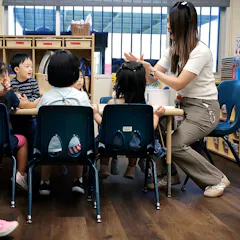
There is research showing that there are numerous benefits for a low-income child to attend a Head Start program, though these effects are less clear as the child ages.
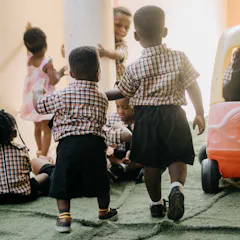
Why are some pre-primary education programmes more successful than others?

In an early childhood program, everyday encounters remind participants that acknowledging land is something we live through relationships and responsibilities.
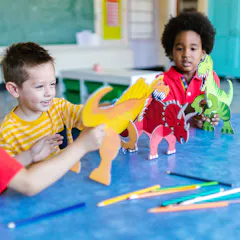
Teachers should capitalize on opportunities for oral language development through play in French immersion instruction.

New research shows that YouTube is used not just as an occasional supplement, but as a staple of classroom instruction.

Math achievement gaps begin in kindergarten and persist through Grade 9, highlighting the importance of investing in children’s early development.
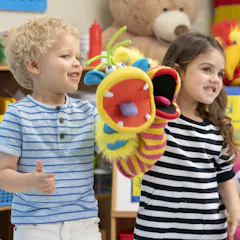
Play-based early childhood programs can help young kids develop emotional regulation and problem-solving skills, traits that can serve them well throughout childhood.
A new report shows Canada’s $10-a-day child care has generated real returns, but unlocking more benefits depends partly on bolstering the child-care workforce.
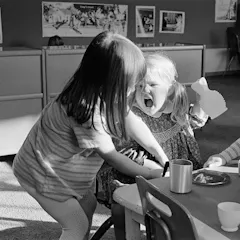
Caring for a toddler can be challenging and requires patience. Understanding the psychology behind a toddler’s actions can help weather some of the rockier days.

Reform needs to address liscencing regulation, curriculum frameworks, standards of practice for early childhood educators and post-secondary preparation.

Ontario’s revised kindergarten program asks teachers to use both explicit literacy instruction and play-based learning.
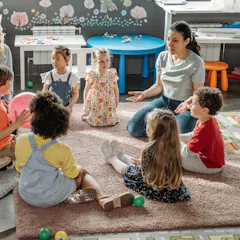
The federal government has set aside $3.6 billion over the next two years for early educator pay. But what happens after that is not yet clear.

Kindergarten programming fulfils critical learning needs of the child.

If we want cities where all children can thrive, we need to create conditions where play is part of daily life, not something that must be scheduled or purchased.

Exaggerating phrases and talking in a sing-song way can actually help, not make it harder, for young children to master speaking a language.

Feeding toddlers can be hard, but research sheds insight into how to help children learn to enjoy a variety of foods and recognize when they are hungry and full.
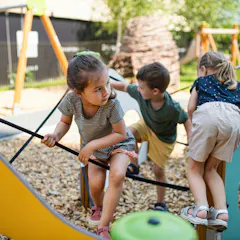
Habitually practising different motor skills can help ensure young children have the key competencies and abilities to move and use their bodies in ways that prepare them to lead healthy lives.

Daily moments like the fluency and accuracy with which educators pronounce children’s names are essential in shaping classroom and school belonging.
Top contributors
-

Fellow in Early Childhood Policy, Atkinson Centre, Ontario Institute for Studies in Education, University of Toronto
-
Professor of Applied Psychology and Human Development, University of Toronto
-
Adjunct Professor, Department of Applied Psychology and Human Development at Ontario Institute for the Study of Education (OISE) and Executive Director at the Atkinson Centre, University of Toronto
-
Associate Professor, Flinders University
-
Adjuct Faculty University of Guelph, Former Chair, Early Childhood Studies and Founder of The Love Model Inc.
-
Assistant Researcher, Perlman Lab, Ontario Institute for the Studies of Education, University of Toronto
-
Professor, Department of Pediatrics, University of British Columbia
-
Professor and Head of School, School of Early Childhood and Inclusive Education, Queensland University of Technology
-
Associate Head of Early Childhood Studies, University of Guelph-Humber
-
PhD Candidate, Doctor of Social Sciences, Royal Roads University
-
Professor, Werklund School of Education, University of Calgary
-
Professor, Canada Research Chair in Determinants of Child Development, Owerko Centre at the Alberta Children’s Hospital Research Institute, University of Calgary
-
Policy Fellow, Mitchell Institute, Victoria University
-
Professor, Queensland Brain Institute, The University of Queensland
-
Professor, Special Education, Memorial University of Newfoundland