
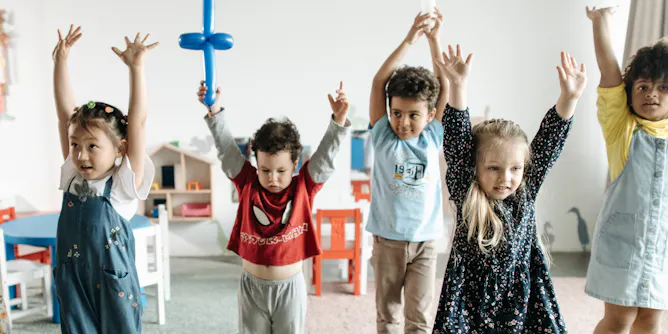
A study of students across Canada between 2004 and 2015 provides an estimate of anxiety symptoms in kindergarteners, and can serve as a baseline for comparing children’s anxiety after COVID-19.
Articles on Early childhood education
Displaying 81 - 100 of 265 articles

Kindergarten educators who taught from home during COVID-19 and who were primarily responsible for their own children self-reported poorer mental health than those without these responsibilities.

Researchers and educators with the Climate Action Childhood network are generating responses to climate change alongside young children.
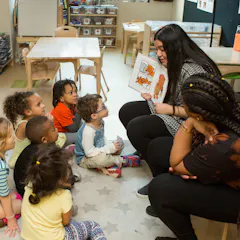
Staff recruitment and retention challenges aren’t seen in public child-care centres, where educators are paid substantially more, are unionized and have professional development opportunities.
Among provinces, Ontario is the least generous supporter of its childhood educator workforce. Parents pay the price in available child-care spaces if a staffing recruitment crisis does not improve.
The new learning and child care agreement requires a paradigm shift as we begin to consider early learning and child care as a public service.

A chasm has opened up between early childhood learning and the first years of compulsory schooling. Kids go from playing to being tested in the blink of an eye, and their learning is poorer for it.

Early exposure to everyday math at home predicts children’s school mathematics outcomes.
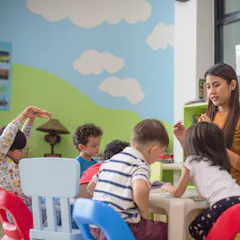
The pandemic highlighted Australia’s reliance on early childhood educators, while adding to their existing stresses. A study of how educators fared identifies three key factors in their well-being.
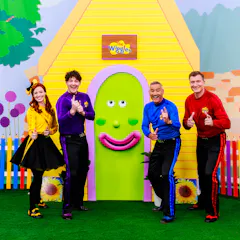
50% of Wiggles merchandise sales are attributed to Emma alone. Here’s what she meant to audiences – and what happens next.

A renewed model for oversight and support of all home child-care providers would ensure that our society’s youngest and most vulnerable people have access to safe and higher-quality home child care.
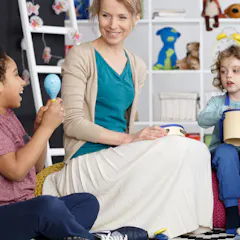
They’re among the lowest-paid in the country but are working many hours unpaid to meet the demands of accreditation. With 73% wanting to leave the profession in the next three years, change is needed.
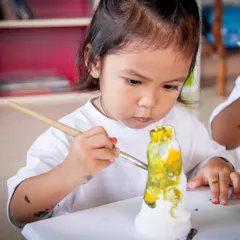
Encouraging a child to hold their paint brush to develop a pincer grip while the child is involved in painting is one example of guided play.
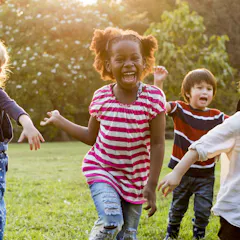
Communicating clearly with children and providing space for them to play will be vital during back-to-school and beyond as children manage stressors associated with COVID-19.
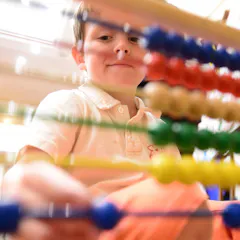
We enter this election with eight signed child-care agreements and question marks over the fate of those deals if the Liberal’s gamble on a majority government fails.
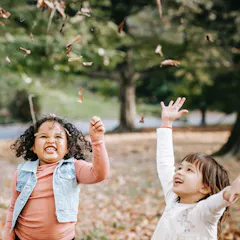
Planning outdoor early learning and child care has implications for training and recruiting educators as well as for planning, developing and funding physical spaces.
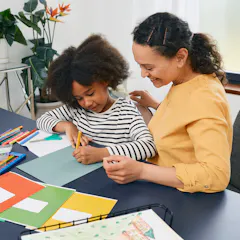
Not every child with mental health difficulties has a diagnosis. An approach that focuses on symptoms rather than diagnostic labels can help support children who could benefit from treatment.
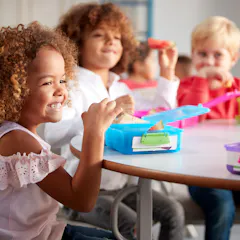
Not being able to attend nurseries due to lockdown has affected children’s growth in emotional, linguistic and physical terms. The longterm effect could heighten inequality
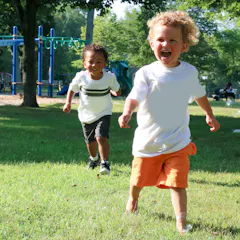
Restructuring children’s outdoor play in child care centres into shorter, more frequent bouts helps maximize children’s physical activity.
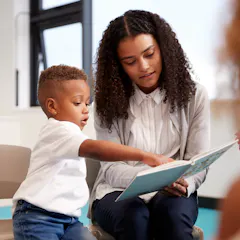
Beyond addressing key staffing issues, developing high-quality early childhood programs must involve using school boards to expand access and grow spaces while offering more affordable fees.
Top contributors
-

Fellow in Early Childhood Policy, Atkinson Centre, Ontario Institute for Studies in Education, University of Toronto
-
Professor of Applied Psychology and Human Development, University of Toronto
-
Adjunct Professor, Department of Applied Psychology and Human Development at Ontario Institute for the Study of Education (OISE) and Executive Director at the Atkinson Centre, University of Toronto
-
Associate Professor, Flinders University
-
Adjuct Faculty University of Guelph, Former Chair, Early Childhood Studies and Founder of The Love Model Inc.
-
Assistant Researcher, Perlman Lab, Ontario Institute for the Studies of Education, University of Toronto
-
Professor, Department of Pediatrics, University of British Columbia
-
Professor and Head of School, School of Early Childhood and Inclusive Education, Queensland University of Technology
-
Associate Head of Early Childhood Studies, University of Guelph-Humber
-
PhD Candidate, Doctor of Social Sciences, Royal Roads University
-
Professor, Werklund School of Education, University of Calgary
-
Professor, Canada Research Chair in Determinants of Child Development, Owerko Centre at the Alberta Children’s Hospital Research Institute, University of Calgary
-
Policy Fellow, Mitchell Institute, Victoria University
-
Professor, Queensland Brain Institute, The University of Queensland
-
Professor, Special Education, Memorial University of Newfoundland