
The news a former childcare worker has been charged with more than 1,600 child abuse offences has sent shivers through the Australian community.
Articles on Early childhood education
Displaying 61 - 80 of 265 articles
Having a vast and deep vocabulary affords precision and nuance in making meaning of the world, and this is key to children becoming proficient readers.
A unique dataset from 32 children on 36 different play dates provided the opportunity to study how young children develop peer relationships, and how consistent they are with different children.

How should we understand what toys or ‘loose part’ materials support children’s play, and what’s the relationship of parents’ education and income to this? A study aims to find out.
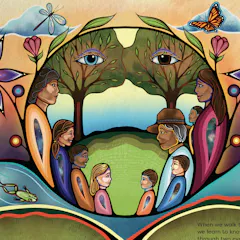
‘Etuaptmumk’ or Two-Eyed Seeing is the gift of multiple perspectives in the Mi’kmaw language. A key practice of this in an early childhood outdoor program is walking together and sharing stories.
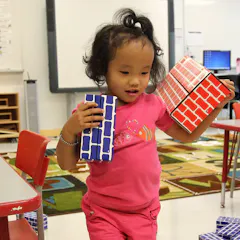
A study following Ontario students between 2004 and 2012 can help policymakers ensure all students get the supports they need when they need them.
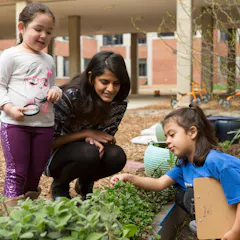
Early childhood education isn’t about warehousing children so adults can go to work. There is an ethical imperative to support a paradigm shift in how our society values educating young children.

It’s counterproductive to push your child to read a whole chapter book independently if they are not ready. You might turn them off reading altogether. Here’s what to do instead.

A new study by early childhood researchers looks at four important features of a centre’s physical environment.
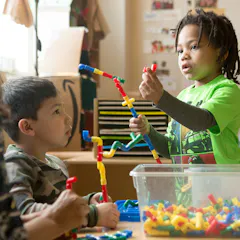
People, policies, practice and place all matter in publicly funded, school-based children’s early learning programs.

Given the clear importance of language skills for lifelong outcomes, it is critical to set children up early for language success.
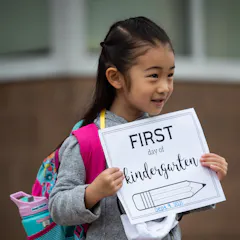
Parents and caregivers are vital partners in education, and together, educators and families can ease back-to-school jitters and help make this an exciting and positive transition for children.
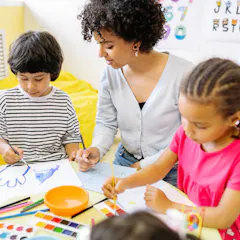
Canada has much to learn from other countries about better ways of providing learning and care for children.

Where new early learning and child-care programs are located, how they are designed, built and resourced, and what they teach can either add to the problem of climate change or help mitigate it.
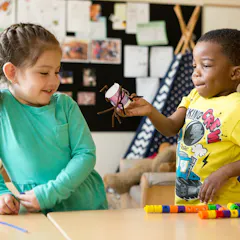
The lack of a fully interactive environment in kindergarten due to pandemic school closures may negatively impact some children’s learning in later grades.

Stable child care can protect kids in the face of major life stressors — so should subsidy policies.
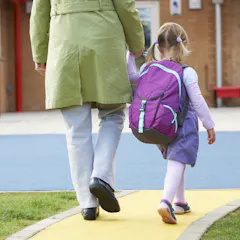
The system has several elements and many problems. Making it fit for purpose will take a lot of work and even more resources than those that have just been announced.

Ontario’s flat fee for child care should be replaced by an income-tested fee reflecting family incomes.
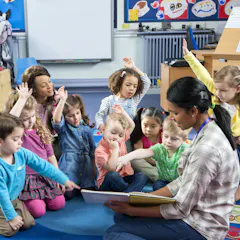
This week’s announcements will add to the need to train more early childhood workers and to ensure they are more diverse in a way that better reflects our multicultural society.

Dads and caregivers play important roles in supporting the development of loving relationships.
Top contributors
-

Fellow in Early Childhood Policy, Atkinson Centre, Ontario Institute for Studies in Education, University of Toronto
-
Professor of Applied Psychology and Human Development, University of Toronto
-
Adjunct Professor, Department of Applied Psychology and Human Development at Ontario Institute for the Study of Education (OISE) and Executive Director at the Atkinson Centre, University of Toronto
-
Associate Professor, Flinders University
-
Adjuct Faculty University of Guelph, Former Chair, Early Childhood Studies and Founder of The Love Model Inc.
-
Assistant Researcher, Perlman Lab, Ontario Institute for the Studies of Education, University of Toronto
-
Professor, Department of Pediatrics, University of British Columbia
-
Professor and Head of School, School of Early Childhood and Inclusive Education, Queensland University of Technology
-
Associate Head of Early Childhood Studies, University of Guelph-Humber
-
PhD Candidate, Doctor of Social Sciences, Royal Roads University
-
Professor, Werklund School of Education, University of Calgary
-
Professor, Canada Research Chair in Determinants of Child Development, Owerko Centre at the Alberta Children’s Hospital Research Institute, University of Calgary
-
Policy Fellow, Mitchell Institute, Victoria University
-
Professor, Queensland Brain Institute, The University of Queensland
-
Professor, Special Education, Memorial University of Newfoundland