

A better understanding of the factors driving kindergarten school absences is needed, as are policies aimed at reducing the number of missed days.
Articles on Kindergarten
Displaying 1 - 20 of 61 articles
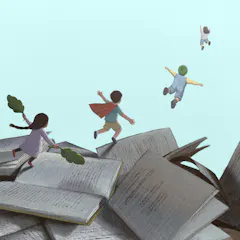
A children’s writer explains how ‘Where the Wild Things Are,’ ‘The Rabbit Listened’ and other stories can help prepare kindergarten students for this next phase of life.
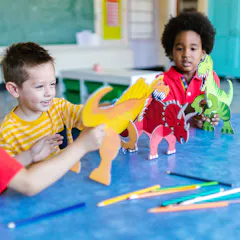
Teachers should capitalize on opportunities for oral language development through play in French immersion instruction.
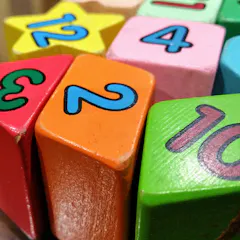
Math achievement gaps begin in kindergarten and persist through Grade 9, highlighting the importance of investing in children’s early development.
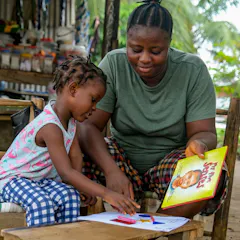
Reading together and taking an interest in homework makes a difference to young children’s learning.

Ontario’s revised kindergarten program asks teachers to use both explicit literacy instruction and play-based learning.

Kindergarten programming fulfils critical learning needs of the child.

The best part of having fun with rhymes and words, noticing letters and reading together is that interactions build both early literacy skills and family connections.
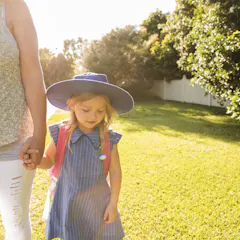
Starting school can be a stressful time for little kids. Watch out for big feelings when they come home in the afternoons.
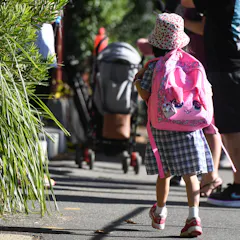
‘Big school’ can sound grown up. But if a child is anxious about starting school, it can make the change loom larger in their minds.
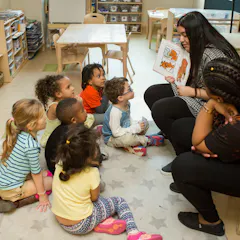
Results of a study suggest policy improvements are needed to provide educators with strategies to reduce bias around race, gender and socioeconomic status.

The state, once ranked near the bottom of education standings, dramatically improved student literacy rates while using little money.

They’re crying, but you have to leave and get to work. You spend the rest of the day feeling absolutely wretched. Sound familiar?
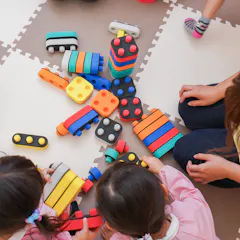
A study pertaining to more than 1.4 million kindergarteners across Canada finds the occurrence of health disorders higher as the socio-economic status of a neighbourhood decreases.
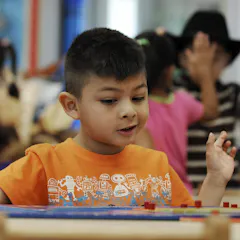
Kindergarteners’ literacy and active play are both grounded in the science of learning.
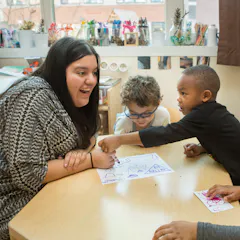
We need to ensure the best scientific research in play-based learning and early reading is leveraged, and teachers receive supports to meet children’s developmental and academic needs.
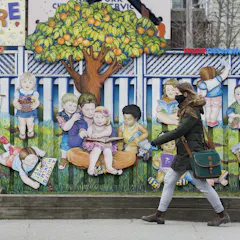
It makes good economic sense to lean on the neighbourhood public school in the push to expand early learning.

Access to schooling for four-year-olds is inconsistent across Canada. Families need to know children are immersed in high-quality early learning, and they shouldn’t be exhausted searching for it.

Parents need to directly hear from teachers and administrators via open houses or parent advisory councils to lift the fog of confusion and concern surrounding this change.
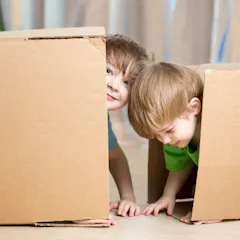
How should we understand what toys or ‘loose part’ materials support children’s play, and what’s the relationship of parents’ education and income to this? A study aims to find out.
Top contributors
-

Professor, Department of Pediatrics, University of British Columbia
-
Fellow in Early Childhood Policy, Atkinson Centre, Ontario Institute for Studies in Education, University of Toronto
-
Research Associate, Offord Centre for Child Studies, McMaster University
-
Associate Professor, Early Childhood Education, Queen's University, Ontario
-
Research Associate, Department of Psychiatry and Behavioural Neurosciences, McMaster University
-
Professor, Special Education, Memorial University of Newfoundland
-
Professor, Werklund School of Education, University of Calgary
-
Professor, Ontario Institute for Studies in Education, University of Toronto
-
Associate Professor, Faculty of Education, Queen's University, Ontario
-
Assistant Professor of Pediatrics, The University of Texas Medical Branch
-
Associate Lecturer in Education , Southern Cross University
-
Associate Professor, Department of Educational Studies, University of British Columbia
-
Doctoral Student in Applied Developmental Psychology, University of Maryland, Baltimore County
-
Professor of Applied Developmental Psychology, University of Maryland, Baltimore County
-
Senior Lecturer and researcher in Education, University of Technology Sydney