

From scary headlines to recycled eruption videos, new research reveals how common misconceptions can fuel misinformation about volcanoes.
Articles on Disaster risk
Displaying 1 - 20 of 43 articles

The federal government’s role in disaster management has been to provide some funding. However, that limited role can lead to poor co-ordinaton.
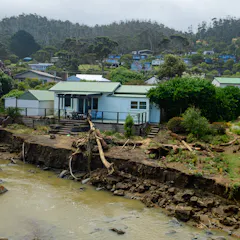
We have for too long persisted with approaches that seek to persuade, instruct, or direct people toward predetermined behaviours. Here’s a better way.

Since Dolgarrog, the UK has had an excellent reservoir safety record but disasters do still occur.

Malawi’s experience of the strongest cyclone ever in 2023 shows that communities, government, and donor agencies must plan together for future floods and mudslides.

When volcanoes like Alaska’s Mount Spurr erupt, the ash can damage people’s lungs, smother crops and kill animals, and the harm can continue to spread long afterward.
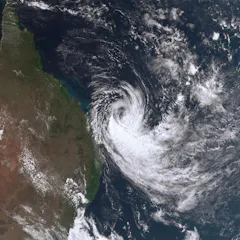
Talk to your neighbours. Do they have a generator or a camping fridge you can use? This is an opportunity to get to know your community and pool your resources.
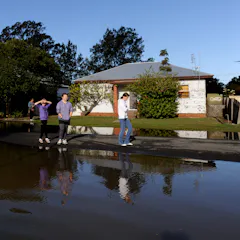
Researchers examined how disaster risk informs decisions about new housing. They found crucial problems that leave communities exposed.
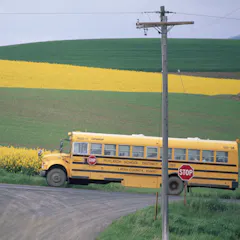
Floods, hurricanes, fires and pandemics are hard for any school district to deal with. But in rural districts the struggle to recover is even harder.
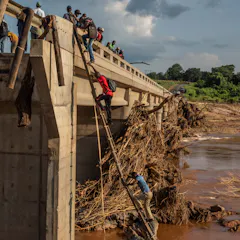
Getting aid to countries before the storm or drought hits is one response increasingly being used to limit the damage.
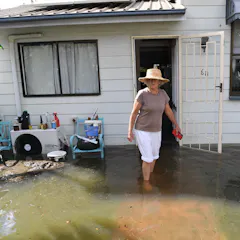
Low-income households are attracted to more affordable housing in areas at higher risk of floods and other extreme events. But many then find they cannot afford soaring insurance premiums.
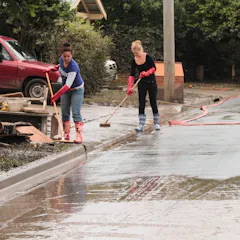
The recommendations of the senate inquiry into Australia’s disaster resilience mainly focus on volunteers involved in the immediate disaster response. This will not make Australians more resilient.
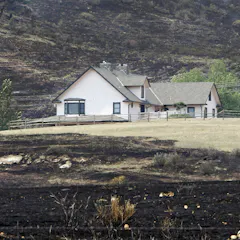
Roofs, windows and siding all affect how vulnerable a home is and how likely it is to survive a wildfire. So does what’s around it in the ‘home ignition zone.’
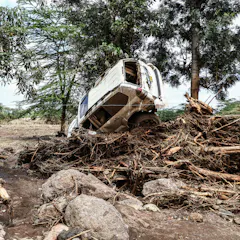
Massive damage to key infrastructure and croplands means the effects of Kenya’s devastating floods will be felt for a long time.

Cities and towns have been devastated by the impact of the 6.8 magnitude quake – the largest recorded in the country’s history.
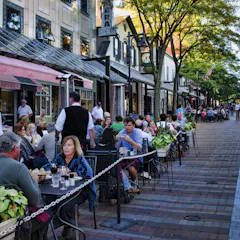
Even ‘climate havens’ face a riskier future, and infrastructure often isn’t built to handle climate change. But there are steps cities can take to prepare.
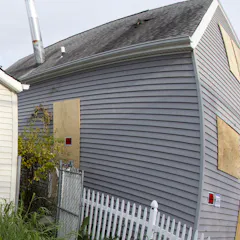
FEMA runs the largest managed retreat program in the country, Two disaster response experts looked at the demographics of who gets those buyouts and where they go.

The ‘stickering’ of houses under section 124 of the Building Act, and decisions about when it’s safe to return, need to be informed by science. Affected communities should be involved at every stage.
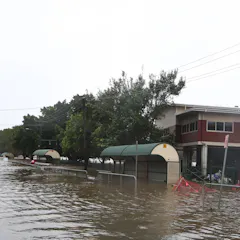
COP27 wraps up with Solutions Day, focusing on sustainable cities and transport, green buildings and resilient infrastructure. Climate-related disasters show the urgency of urban planning responses.
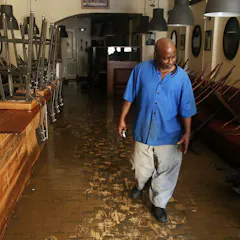
Research shows that coastal businesses’ hurricane recovery depends on workers being able to return.
Top contributors
-

Research chair, University of the Witwatersrand
-
Honorary Professor of Hazards and Disaster Risk Sciences, University of Sydney
-
Professor of Globalisation and Development; Director of the Oxford Martin Programmes on Technological and Economic Change, The Future of Work and the Future of Development, University of Oxford
-
Researcher, Department of Geography, Environment and Population, Adelaide University
-
Clark Distinguished Chair and Professor of Civil and Environmental Engineering, University of Maryland
-
Associate Professor of Meteorology, Penn State
-
Earthquake Scientist, Monash University
-
Professor in Digital Construction and Fire Engineering, Te Kunenga ki Pūrehuroa – Massey University
-
Associate Professor, School of Science, University of Newcastle
-
Senior Research Fellow, Centre for Resilient and Inclusive Societies, Alfred Deakin Institute for Citizenship and Globalisation, Deakin University, Deakin University
-
Clinical Teacher/Solicitor, University of Newcastle
-
Professor of Occupational and Environmental Health Sciences, Florida International University
-
Emeritus Professor of Urban & Regional Planning, University of Canberra
-
Thermal Physiologist, National Critical Care and Trauma Response Centre; University Fellow, Charles Darwin University
-
Professor of Criminology, Griffith University