
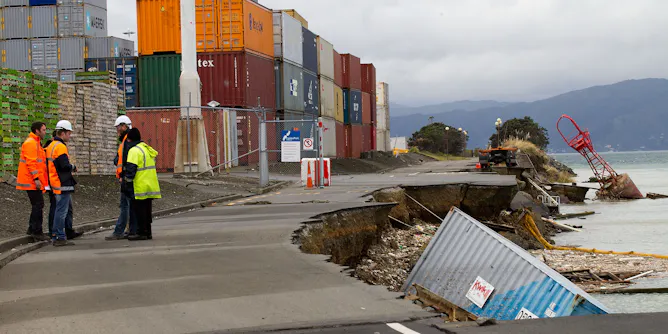
New research reveals a magnitude 8.5 earthquake is likely to trigger a cascade of problems for NZ’s freight networks. But how many are avoidable?
Articles on Disaster resilience
Displaying 1 - 20 of 34 articles
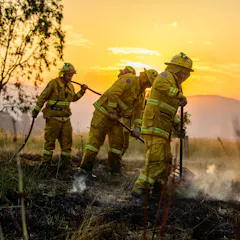
People who work in emergency services, such as firefighters, are more likely than others to develop symptoms of anxiety, depression and post-traumatic stress.
Australians are installing home batteries at record rates. They could be used not just to cut bills but as a backup after a natural disaster.
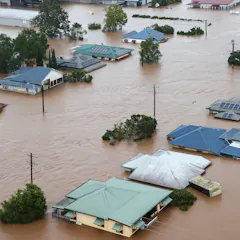
Now is the time for government to act – before the next disaster strikes.

Research shows hospital administrators can better plan for how they’d cope if a disaster or terrorist attack impacts a hospital’s ability to function as normal.

The LA wildfires may have faded from the headlines, but for thousands of children, recovery is only just beginning.
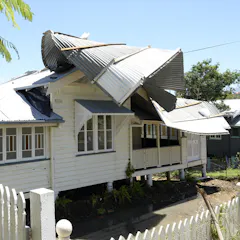
When a cyclone hits, the wind is trying very hard to pull the roof off your house. It’s vital the roof stays on – but one weak link can spell disaster.
This is a particularly tough time for people who have lived through other disasters. Here are some signs of retraumatisation to watch out for.
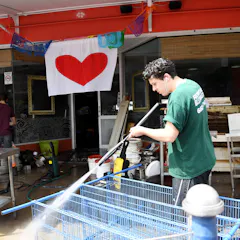
Northern Rivers residents are preparing for Cyclone Alfred’s arrival – and drawing lessons from the 2022 floods.
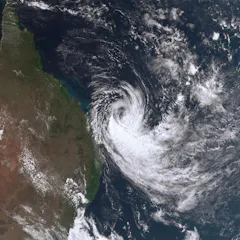
Talk to your neighbours. Do they have a generator or a camping fridge you can use? This is an opportunity to get to know your community and pool your resources.
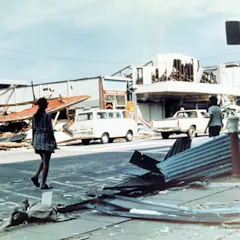
Cyclone Tracy reshaped Darwin and marked a turning point in Australia’s approach to disaster resilience.
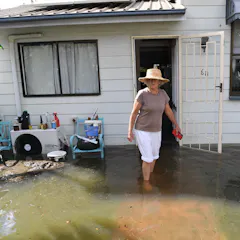
Low-income households are attracted to more affordable housing in areas at higher risk of floods and other extreme events. But many then find they cannot afford soaring insurance premiums.
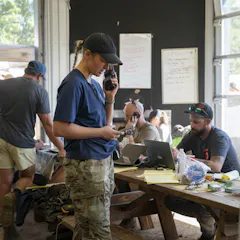
They aren’t just operating boats and helicopters. Others serve as dispatchers, handle logistics, and run social media operations.

Just 14 of Auckland’s largest building rooftops add up to the same area as the biggest solar farm – but they could generate electricity where it’s most used to keep the lights on during disasters.
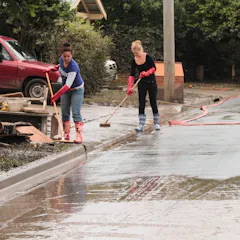
The recommendations of the senate inquiry into Australia’s disaster resilience mainly focus on volunteers involved in the immediate disaster response. This will not make Australians more resilient.

Small renewable energy systems are replacing dirty diesel generators in remote communities. This study of 20 Australian microgrid feasibility projects reveals widespread benefits.
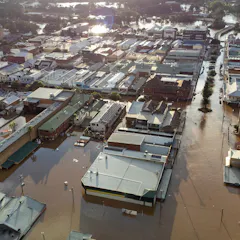
Climate change is making some parts of Australia unliveable or uninsurable. We need a national conversation about the planned relocation. A proposed National Relocation Authority can lead the way.
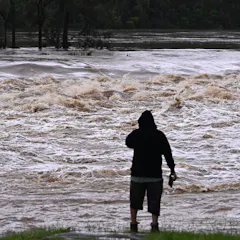
Whether it’s pamphlets aimed at prevention or text alerts, mass communication is often relied on during disasters. This flawed approach can be improved by engaging meaningfully with communities.

The North Queensland floods remind us of the need to build community resilience to disasters – during the event, in the immediate aftermath and beyond.
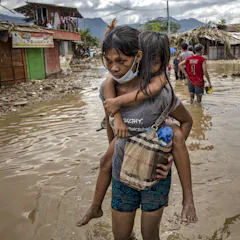
The agreement still leaves many unanswered questions, as well as concerns from vulnerable countries about who will qualify, who pays and who is in charge.
Top contributors
-

Associate Professor and Principal Fellow in Urban Risk and Resilience, The University of Melbourne
-
Senior Lecturer, School of Global, Urban and Social Studies, RMIT University
-
Research Fellow, Rural and Remote Health, University of Sydney
-
Bachelor of Design (Honours) Convenor and Lecturer, School of Art and Design, Australian National University
-
Professor of Environmental Studies, Political Science and International Relations, USC Dornsife College of Letters, Arts and Sciences
-
Course Director, Centre for Social Impact, Swinburne University of Technology, Swinburne University of Technology
-
Associate Professor, University of Sydney
-
Research Fellow, Australian National University
-
Honorary Professor, Institute for Climate, Energy & Disaster Solutions, Australian National University
-
Professor of Computer Science, Rice University
-
Professor of Social Work, Dean (Sustainable Development Goals Performance), Griffith University
-
Researcher, Griffith University
-
Associate Professor, Institute for Global Prosperity, UCL
-
Head, Disaster Solutions, Australian National University
-
Academic Director Living Lab Northern Rivers, University of Technology Sydney