
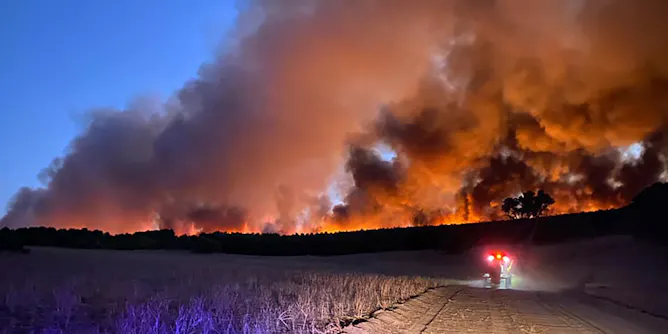
Instead of telling people to buy more of the right type of insurance, we should be asking how insurance can work better for people.
Articles on Disaster & Resilience series
Displaying 41 - 51 of 51 articles
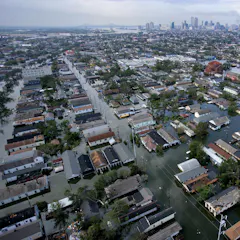
We can design parks, open space and public infrastructure to hold excess water when flood strikes. That means better control of where floodwater ends up, reducing the risk to lives and property.
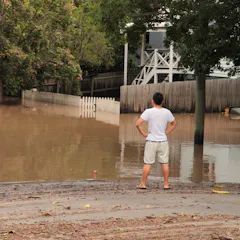
The climate is changing and extreme weather disasters are becoming increasingly frequent and severe. It’s more important than ever to examine who is bearing the brunt of this change.
Following the 2009 Victorian Black Saturday bushfires, more than half the women in one study reported experiencing domestic and family violence. Many had never experienced it before.
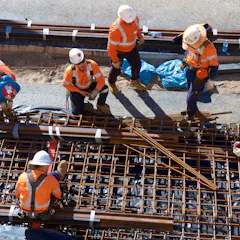
As the climate changes and heatwaves become more frequent and severe, it’s vital we do more to understand who is most vulnerable and how we can reduce their risk.
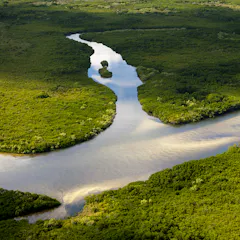
Wetlands bear the brunt of much storm damage to the coast. But over the past 300 years, 85% of the world’s wetland area has been destroyed.
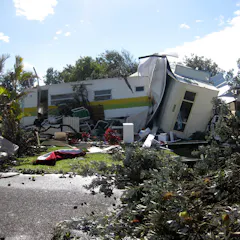
Communities living at the margins are often more vulnerable to disaster risk, a problem likely to be exacerbated by climate change.
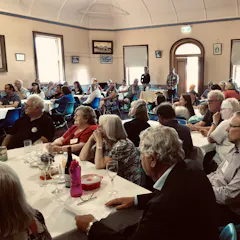
The small fire and heatwave prone town of Tarnagulla got together, applied for funding and co-produced a resilience action plan so they’re better prepared for the next disaster.
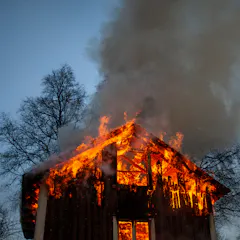
What if we had a system, like Medicare, where costly fire prevention measures were subsidised?
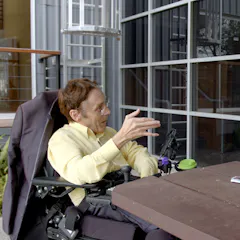
Disability-inclusive disaster planning means people get support matched to their needs, frees up emergency services and makes emergency managers’ jobs easier. It boosts disaster resilience for everyone.
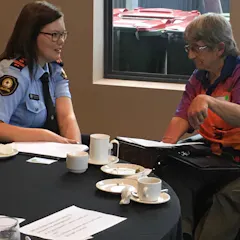
One interviewee told us: ‘It would’ve been lovely if somebody had cared.’
Top contributors
-

Associate Professor, University of Sydney
-
Honorary Professor of Hazards and Disaster Risk Sciences, University of Sydney
-
Lecturer, RMIT University
-
Garry Stevens is a Friend of The Conversation.
Program Director in Humanitarian and Development Studies, Western Sydney University
-
Senior Ecological Economist, Charles Darwin University
-
Academic Director Living Lab Northern Rivers, University of Technology Sydney
-
Associate Professor of Human Geography, University of Tasmania
-
Research Fellow in Disaster Resilience, Monash University
-
Lecturer and Research Fellow, School of Geography, Planning, and Spatial Sciences. Coordinator, Education for Sustainability Tasmania, University of Tasmania
-
Professor of Health Economics, Monash University
-
Professor of Globalisation and Development; Director of the Oxford Martin Programmes on Technological and Economic Change, The Future of Work and the Future of Development, University of Oxford
-
Research Fellow, Australian National University
-
Research Associate, Sydney Policy Lab, University of Sydney
-
Doctoral student in economics, Te Herenga Waka — Victoria University of Wellington
-
Associate Professor, International Research Institute of Disaster Science, Tohoku University