

Businesses across the world are beginning to face the kind of complexity that entrepreneurs in African townships have navigated for years.
Articles on Development finance Africa
Displaying 21 - 40 of 109 articles
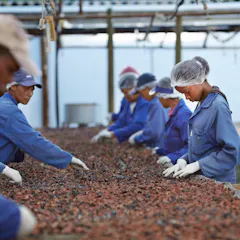
Chinese lenders have invested billions in African agriculture. But new research shows the money often misses what’s needed to modernise the sector.
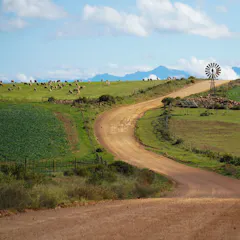
Previous rains and grain stocks could reduce the impact of the expected drought.

Factories that process crops and agricultural products need training and support to help them face climate risks.

There have been notable examples of rating agencies differing significantly in their decisions on African institutions and countries.
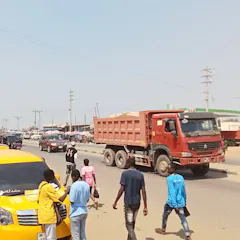
In South Sudan, war and peace are two settings of one extractive system rather than true opposites.
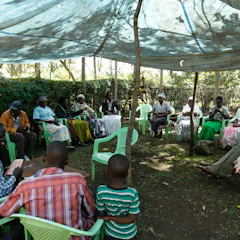
A powerful Super El Niño is looming. Africa has learned hard lessons from past climate disasters that could help the world prepare.

Well-run institutions are more resilient to financial instability and better positioned to attract long-term partnerships.
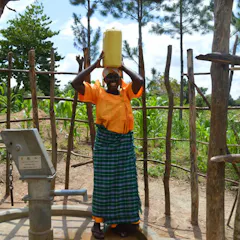
Solutions for food systems exist; scaling them is where the challenge lies.

From roadside plots to community gardens, urban farmers in Alexandra township, South Africa are growing food, earning income and coping with climate change.
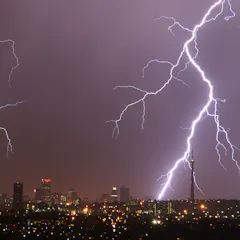
Citizens don’t just respond to disasters. They also respond to how governments manage them.

The economic and social conditions in which anti-migrant sentiment has exploded in South Africa include high joblessness and a collapse of government services.

Most states know that without widely understood and accepted international laws and principles it would be harder to resolve their disagreements peacefully.
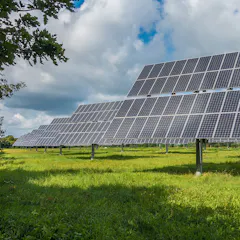
Africa is rapidly expanding electricity generation, but new research shows energy planning must also account for water scarcity and carbon dioxide emissions.

A German loan for fixing Johannesburg’s electricity utility is unlikely to make much difference to users yet: prices will probably rise faster than inflation.

State spending has remained high despite public demands for greater fiscal discipline.
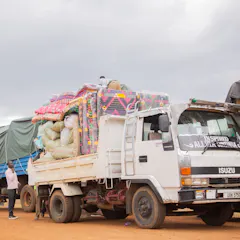
Africa does not need another grand vision. It needs to treat the vision it already has as a discipline.
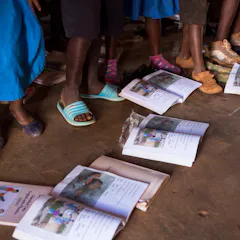
USAID’s closure, while painful and damaging, might give rise to a new arrangement beyond aid.
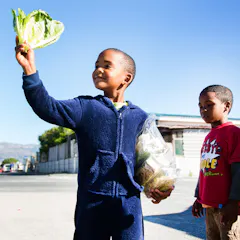
As food and living costs rise, rooftop solar and rainwater harvesting could help low income South African households save money and buy more food.
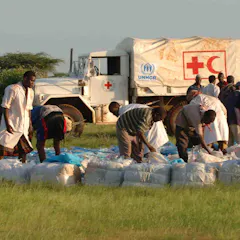
Kenya’s new refugee policy seeks to shift away from a camp-based system to one centred on inclusion into the local economy.
Top contributors
-

Post Doctoral Researcher, Graduate School of Business (GSB), University of Cape Town
-
Senior Fellow, Centre for Policy Research (UNU-CPR), United Nations University; Aston University
-
Professor/Senior Research Fellow, Centre for Advancement of Scholarship, University of Pretoria
-
Associate Professor at the Southern Centre for Inequality Studies, University of the Witwatersrand
-
Postdoctoral Research Fellow, University of Johannesburg
-
Director, Columbia Center on Sustainable Investment, Columbia University
-
Senior Researcher, Associate Professor: Economic Management Sciences, University of Pretoria
-
Researcher in Renewable Energy, University of Cape Town
-
Professor and Acting Head of Department: Department of Finance and Investment Management, University of Johannesburg
-
Research associate, University of Fort Hare
-
Researcher
-
Senior Fellow, Department of Agricultural Economics, Stellenbosch University
-
Professor Entrepreneurship and Innovation, University of Cape Town
-
Senior Lecturer in Organisational Behaviour, University of Cape Town
-
Postdoctoral Research Associate, Natural Sciences, University of Lincoln