
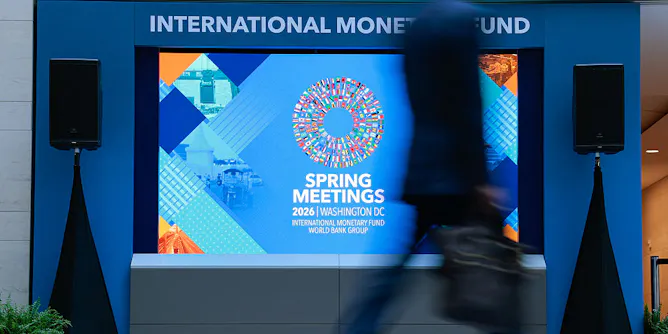
The IMF is not a neutral arbiter on any discussions relating to preferred creditor status. It is itself a direct beneficiary of the creditor hierarchy.
Articles on Development finance Africa
Displaying 61 - 80 of 109 articles
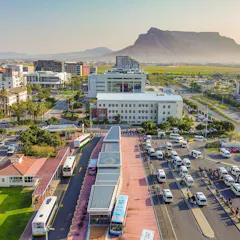
Electric taxis are a long-term climate solution whose immediate value lies in cleaner air, lower operating costs, lower noise and better urban health.

External assessors don’t always have a full view of a country’s creditworthiness.

The flaws in Standard & Poor’s Global’s report could influence investor perceptions and reinforce existing biases against Africa.

Kenya’s devolution has led to tangible improvements in everyday life in places that had long been left behind.
The sad truth is that African countries cannot avoid being harmed by the current Gulf war. But they can make efforts to emerge from the crisis in a better place.

The Infrastructure Fund’s architecture undermines the expectation of full autonomy from political and executive meddling.

Chinese-funded infrastructure projects in African cities are driven by the national elites and therefore do not necessarily lead to community-level improvements.

Africa does not lack household savings, but only a small share of these are placed in formal institutions.

In eastern DRC, a hydropower mini-grid shows how access to electricity happens through public-private partnerships and community programmes.

Carbon capture projects could provide the funds needed to restore land degraded by commercial farming and forestry.

Kenya faces extreme weather crises. Humanitarian aid must be part of the solution.
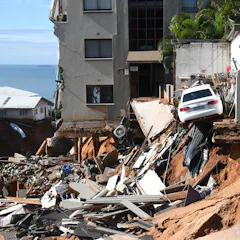
South Africa needs almost US$15 billion over a decade just to reach a basic level of climate adaptation, that protects water, food, health and infrastructure.

African countries face unfair trade rules, delayed decisions and weak support, leaving them exporting raw goods and losing out economically.

Africa holds key green energy minerals but exports them raw. If the continent had its own Green Bank, it could finance local manufacturing and green industry.

Infrastructure reflects political choices.
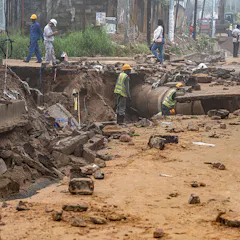
The most important thing to do is to lower the cost of capital for African countries.
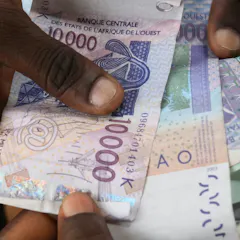
The lessons learned from this crisis must extend beyond Senegal and lead to greater debt transparency and banking supervision in the region.

Africa doesn’t need a technological breakthrough to scale EV adoption. It needs cheaper capital and supportive policy environments.

China’s zero tariff regime has the potential to boost trade between African countries and lead to better coordination.
Top contributors
-

Post Doctoral Researcher, Graduate School of Business (GSB), University of Cape Town
-
Senior Fellow, Centre for Policy Research (UNU-CPR), United Nations University; Aston University
-
Professor/Senior Research Fellow, Centre for Advancement of Scholarship, University of Pretoria
-
Associate Professor at the Southern Centre for Inequality Studies, University of the Witwatersrand
-
Postdoctoral Research Fellow, University of Johannesburg
-
Director, Columbia Center on Sustainable Investment, Columbia University
-
Senior Researcher, Associate Professor: Economic Management Sciences, University of Pretoria
-
Researcher in Renewable Energy, University of Cape Town
-
Professor and Acting Head of Department: Department of Finance and Investment Management, University of Johannesburg
-
Research associate, University of Fort Hare
-
Researcher
-
Senior Fellow, Department of Agricultural Economics, Stellenbosch University
-
Professor Entrepreneurship and Innovation, University of Cape Town
-
Senior Lecturer in Organisational Behaviour, University of Cape Town
-
Postdoctoral Research Associate, Natural Sciences, University of Lincoln