

Extreme heat and bushfires bring unique challenges for someone with dementia. Here’s how we can all play a part in helping them stay safe and cool this spring and summer.
Articles on Dementia
Displaying 201 - 220 of 565 articles

Publicly funded primary and home care should be accessible to all older adults, regardless of where they live.

We’ve all forgotten the word we need mid-sentence, and know the feeling of it being just on the tip of our tongue. But when can this be more serious?

It’s long been known that exercise helps maintain strength and agility as we age. New research points to the importance of exercise type in supporting cognitive health in the latest decades of life.

Fish oil has been promised to provide all sorts of health benefits – from boosting our heart health, protecting our brain and easing arthritis. Here’s how the claims stack up for fish and supplements.

These blood tests results need care when interpreting, and they can not they predict how the disease will affect each person.

Despite decades of starts and stops, new treatments and key genetic discoveries are giving researchers great hope for slowing or eventually preventing Alzheimer’s disease.

Dementia care in South Asian households is shaped by cultural, familial and societal forces that bring benefits and challenges.

The early Nelson comes across as a man consumed by insecurity and ambition, plagued by inner strife and anger.

Several new drugs have recently been approved in the US to treat Alzheimer’s disease. But they’re not quite the breakthrough that some are claiming.

Discrimination, isolation and stigma related to sexual orientation or gender identity likely contribute to the higher rates of depression and lower quality of life of LGBTQ+ caregivers.

While there is no guarantee of warding off cognitive decline, encouraging people to be physically, mentally and socially active could potentially keep a significant number of dementia cases at bay.
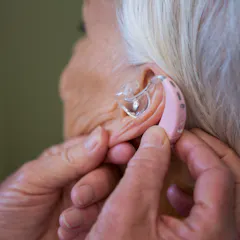
Half of care home residents with dementia and hearing loss are without any support to communicate.
The drug has been hailed as a ‘turning point’ in Alzheimer’s treatment. But keep in mind the trial only included participants with early or mild disease. And while it slowed decline, it’s not a cure.

Around one in 20 people with Alzheimer’s disease are diagnosed before the age of 65.

People living with dementia often become more confused in the late afternoon and into the night. Why, and what can we do about it?

The decision-making capacity of people under 18 would be assessed on a case-by-case basis by medical practitioners.

Chronic traumatic encephalopathy is a devastating form of dementia, which causes a decline in brain functioning and increased risk of mental illness.

Letting go of what could have been is a critical step in handling ambiguous loss.

A machine learning algorithm was able to accurately predict those with preclinical Alzheimer’s disease based on their gut microbe composition.
Top contributors
-

Professor of Biological Psychology, Loughborough University
-
PhD Candidate, Neuroscience, University of Sheffield
-
Head of Clinical Services, Dementia Support Australia, & Associate Professor of Psychiatry, Monash University
-
Research Fellow in Neuroimmunology, UCL
-
Associate Professor, Turner Institute for Brain and Mental Health, Monash University
-
Professor of Chemistry and Senior Scientist of the Krembil Research Institute, University Health Network, University of Toronto
-
Associate Professor | Deputy Director, The MARCS Institute for Brain, Behaviour and Development, Western Sydney University
-
Lecturer, School of Psychology, UNSW ; Neuroscience Research Australia
-
Senior Research Fellow in the Institute of Population Health & NIHR ARC North West Coast Social Care Theme Lead, University of Liverpool
-
Associate professor, University of Sydney
-
Host, The Conversation Weekly Podcast, The Conversation
-
Professor in Ageing and Health, University of Sydney
-
Affiliate Professor, Department of Family Medicine, McGill University
-
Professor Emeritus of Molecular Neurobiology at the University of Manchester and a Visiting Professorial Fellow, University of Oxford
-
Associate Professor in Cellular Neuroscience, University of Reading