
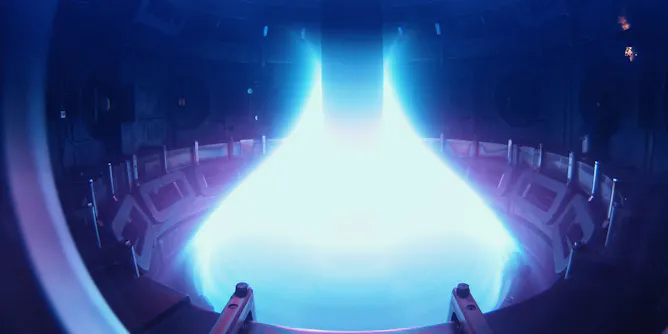
A fusion of public and private investment appears to herald a new push towards developing the ultimate clean, limitless energy source.
Articles on Decarbonisation
Displaying 101 - 120 of 223 articles
Steelmaking with green hydrogen is now a less expensive prospect relative to alternatives.
Two of the largest financial institutions are not doing enough to scale up funding for climate action.
Smaller international deals and fossil free zones point a way forward.
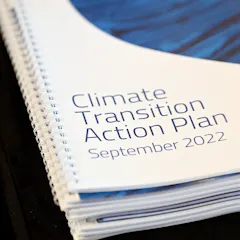
Software billionaire Mike Cannon-Brookes failed to take over AGL, but he has succeeded in getting a friendlier board of directors.
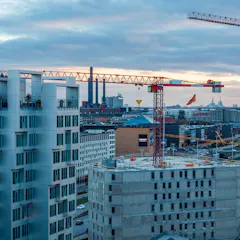
Constructing and running buildings accounts for roughly a third of global energy use and emissions. So it’s alarming that a report to COP27 shows the sector is veering off course for net zero by 2050.

Decarbonisation is not impossible, but it will be difficult to achieve through capitalism.
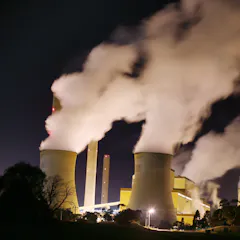
Privatising electricity assets was thought to be good for taxpayers. But it has made the transition to renewables much harder.

Vast amounts of digital data is stored on computer servers and never used.
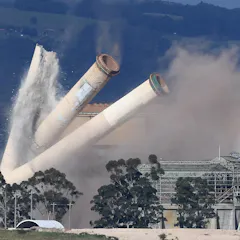
The answer? By closing a highly polluting power station - and ramping up renewables.
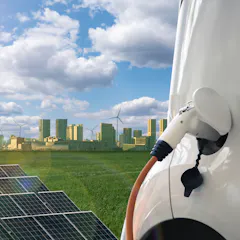
Myths about the relative costs of tackling climate change continue to hold back progress.

Fracking resonates with anxieties over deindustrialisation and decarbonisation.
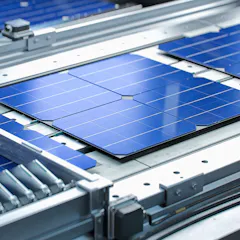
By 2025, factories are on track to churn out enough silicon to produce the equivalent of all installed solar – every year.

The Danish capital reneged on its net zero target after an incinerator failed to secure state aid.
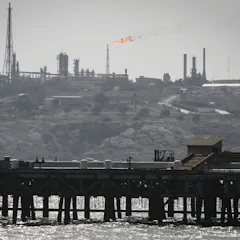
With accelerating climate change making the need to decarbonise clearer by the day, two oil-dependent countries weigh how to preserve and present their historical fossil fuel infrastructure.
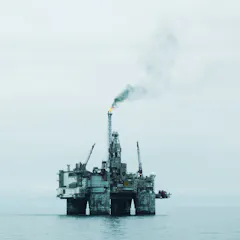
Force oil and gas companies to dispose of a tonne of CO₂ for every one they emit.

Coal plants are exiting the grid faster than expected. We’ll need to redouble efforts to add flexibility into our energy systems and build renewables and storage.
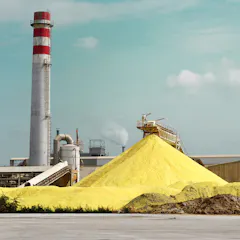
A key ingredient for a green future is currently derived from fossil fuels.
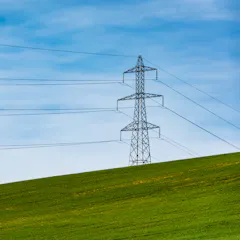
Shifting to renewables means many more high voltage powerlines. But these powerlines are seeing strong pushback from farmers and rural communities. Are there any alternatives?
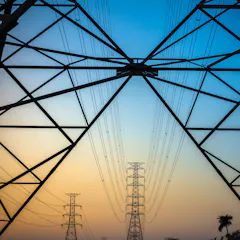
Companies are buying renewable energy certificates to meet their emissions targets, but new research suggests that the bulk of these purchases do not lead to actual emission reductions.
Top contributors
-

Associate Professor in Sustainable Development
-
Honorary Senior Lecturer in Chemical Engineering, University of Aberdeen
-
Senior Research Fellow, Collaboration on Energy and Environmental Markets, UNSW
-
Climateworks Centre Country Lead, Australia, Monash University
-
Professor, School of Economics, The University of Queensland
-
Professor in Applied Mathematics, Te Kunenga ki Pūrehuroa – Massey University
-
Professor of Engineering, Australian National University
-
Professor in Practice, Department of Engineering, Durham University
-
Professor, Crawford School of Public Policy and Director, Centre for Climate and Energy Policy, Australian National University
-
Professor of Energy Systems, UCL
-
Associate Professor, Energy Systems and Data Group, Birmingham Energy Institute, University of Birmingham
-
Professor of Climate Science and Energy Policy, University of Manchester
-
Senior Research Associate in Environmental Governance, Lancaster University
-
Senior Lecturer in Operations and Supply Chain Management, Anglia Ruskin University
-
Professor in Transport Planning, University of Westminster