

Washington’s protectionist industrial policy is fracturing trade and investment flows based on geopolitical considerations.
Articles on Decarbonisation
Displaying 81 - 100 of 223 articles

Community batteries are popular. But that doesn’t mean they’re always the right tool for the job. We have to make sure they do what we want them to do

Solar power is growing at 20% a year. That simple fact could change the world for the better in under a decade

Commitments have been made to cybersecurity, defence and certain gaps in STEM education and workforce – but much remains to be seen this year once we review the national priorities.

Two billion to subsidise green hydrogen sounds like a lot. But the world is racing ahead and we’re still at the starting line.

The government is considering blending hydrogen into the UK gas network.

Everything from ice rinks to crowded public places is a potential source of home heating.

Promising new green steelmaking techniques won’t work with our main iron ore exports. We must future proof this key industry.

Climate models embed colonial attitudes and massive inequality.

National strategies depend on natural methods to offset emissions – but acknowledge this may not be possible.
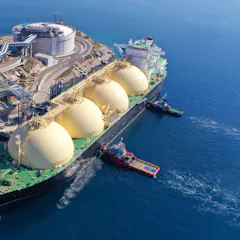
You won’t like this idea – but we may well need oil and gas companies to make green hydrogen and green chemicals a reality

Developing countries are expected to quit coal faster than any energy transition in history.
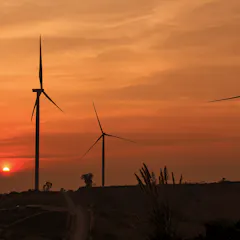
The cost of sustainability is no longer a deal breaker for some business owners, but more can be done to encourage decarbonisation efforts.
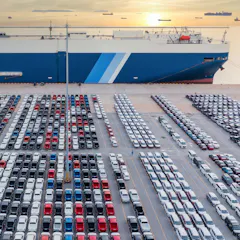
Known as parallel importing, importing goods directly from overseas suppliers lowers costs and increases supply, which is what Australia’s electric vehicle market needs to catch up with the world.
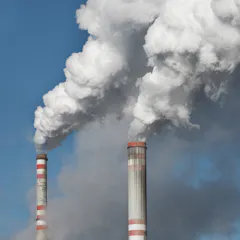
The UK is focusing on carbon capture and storage technologies but the future is uncertain.

Has climate action bogged down? Hardly. Nations are redoubling their efforts in visible and less visible ways.
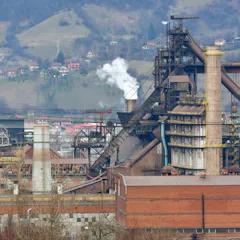
Already lacking the means to decarbonise their industry or turn to greener alternatives, poor countries could also be deprived of revenues from exports to Europe.
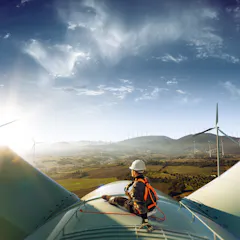
We’ll need to almost double our electricity sector workforce to build renewables as quickly as we need to. Where will the workers come from amid a skills shortage and infrastructure boom?

Existing decarbonisation measures are often unsuitable for the least efficient homes – failing to improve their performance will trap vulnerable people in fuel poverty.
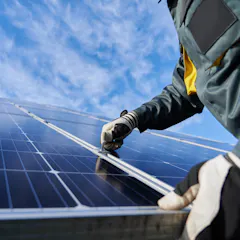
After a decade of climate wars, Australia is suddenly united – with state, territory and federal goverments aiming for net zero by 2050 for the first time
Top contributors
-

Associate Professor in Sustainable Development
-
Honorary Senior Lecturer in Chemical Engineering, University of Aberdeen
-
Senior Research Fellow, Collaboration on Energy and Environmental Markets, UNSW
-
Climateworks Centre Country Lead, Australia, Monash University
-
Professor, School of Economics, The University of Queensland
-
Professor in Applied Mathematics, Te Kunenga ki Pūrehuroa – Massey University
-
Professor of Engineering, Australian National University
-
Professor in Practice, Department of Engineering, Durham University
-
Professor, Crawford School of Public Policy and Director, Centre for Climate and Energy Policy, Australian National University
-
Professor of Energy Systems, UCL
-
Associate Professor, Energy Systems and Data Group, Birmingham Energy Institute, University of Birmingham
-
Professor of Climate Science and Energy Policy, University of Manchester
-
Senior Research Associate in Environmental Governance, Lancaster University
-
Senior Lecturer in Operations and Supply Chain Management, Anglia Ruskin University
-
Professor in Transport Planning, University of Westminster