

Spending in more considered and conscious ways can have positive effects on wellbeing.
Articles on Consumerism
Displaying 21 - 40 of 144 articles

Recent research shows that chasing money and high-end goods can lead people to demand more from their loved-ones.
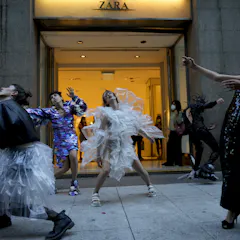
In a world dominated by fast fashion, building a slower wardrobe is the key to living more sustainably, saving money and standing out among the crowd.

With inflation finally starting to stabilize in Canada, a new type of consumer has emerged, marked by value consciousness, digital savviness and a preference for experiences over material goods.
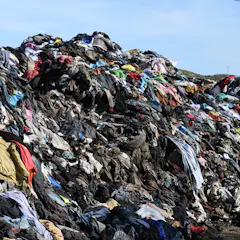
Resources from the United Nations Educational, Scientific and Cultural Organization can help marketing programs embed sustainability concerns into marketing education.

Commerce, culture and heritage mix in rather strange and sometimes unsettling ways in South Africa, especially when the struggle for freedom is commemorated.

Trust in brands may be eroded as awareness of misinformation increases according to new research.
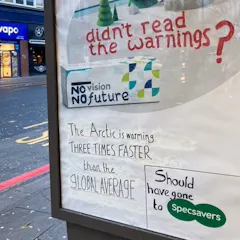
Spoof advertising, rooted in environmental concerns, use humour and poetry to grab attention.

The excesses Christmas promotes are still underpinned by the idea that generosity, compassion and empathy are values that matter.

These days people prefer to simply have access to goods and services, rather than outright owning them. But what does this mean for the future of consumerism?

What does Karl Marx have to say about climate change? Quite a lot, according to a new book.
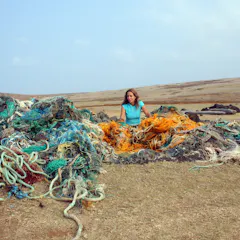
Pam Longobardi collects and documents ocean plastic waste and transforms it into public art and photography. Her work makes statements about consumption, globalism and conservation.

Clive Hamilton’s memoir of 40 years in activism is most of all a narrative of ideas in action. He argues for the power of provocation – and against the left, the right and China.

Fashion has a notorious environmental footprint, and long-standing fast fashion marketing practices are exaggerating this further.

New research shows that humans don’t necessarily have unlimited wants, and that an ‘ideal life’ costs less than you might think.

Sustainable fashion collaborations show that living an eco-friendly life can be fun - here’s how popular shows can help dismantle consumerism altogether.

Apple’s emphasis on innovation, couples with its customer-centric vision, has enabled it to become a “way of life” in the modern world. This gives it an edge over its fin-tech competitors.

In a process called ‘reverse socialisation’, children can help their elders become more green - but eco education is key.

Films like Princess Mononoke, My Neighbour Totoro and Nausicaä created by Hayao Miyazaki explore the perils of neglecting nature.
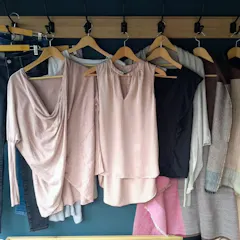
‘Fashion fasts’ are a great way of challenging fast fashion by helping us question how many clothes we really need and reducing fashion consumption.
Top contributors
-

Professor of Consumer Psychology, Anglia Ruskin University
-
Academic Director, School for International Training, The University of Melbourne
-
Senior Lecturer in Marketing, Cardiff University
-
Professor of Consumer Research, University of Bristol
-
Lecturer of Marketing in the Lazaridis School of Business and Economics, Wilfrid Laurier University
-
Senior Lecturer in Marketing, The Open University
-
Associate Professor of History and Environmental Studies, Bowdoin College
-
Marketing Professor
-
Assistant Professor, Faculty of Business, University of New Brunswick
-
Professor of Work and Organisation, University of Essex
-
Assistant Professor of Art History, Miami University
-
Assistant Professor of Interior Architecture and Design, George Washington University
-
Senior Lecturer in Marketing, Sheffield Hallam University
-
Professor Emeritus of International Management and Marketing, Vienna University of Economics and Business
-
Assistant Director of the Global Systems Institute, University of Exeter