
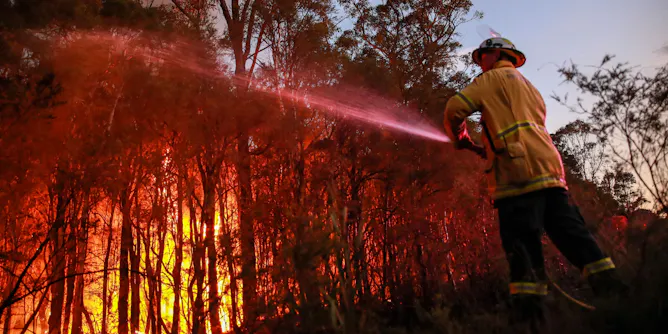
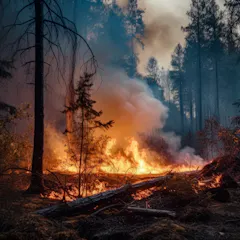
It’s clear – climate change is supercharging the world’s wildfires in unpredictable and devastating ways.
Articles on Carbon dioxide (CO2)
Displaying 21 - 40 of 374 articles
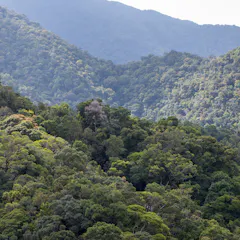
The woody biomass of Australia’s tropical rainforests has already switched from carbon sink to carbon source – and the reason is climate change.

Breaking free of the dangerous pretence that current efforts suffice demands a fundamental rethink of the UK’s climate policy consensus.
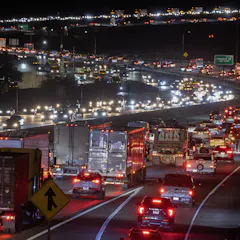
Carbon dioxide emissions trap heat in the atmosphere, warming the planet. Too much of it can disrupt the climate and oceans.

From the wave-lashed surface to the deep sea, the Southern Ocean Time Series is a crucial tool for scientists to keep the pulse of this important region of Earth.
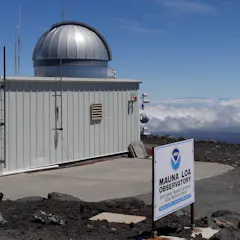
Cutting data climate collection – as the Trump administration is now trying to do – is like breaking a thermometer to avoid knowing you’ve got a fever.

The Trump administration is pulling back billions of dollars in industrial development money for carbon capture and storage projects. That may force industries to actually cut emissions instead.
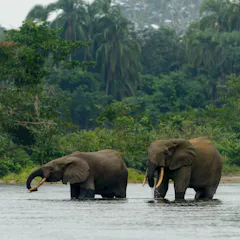
Setting up the world’s biggest giant tropical forest reserve in the Congo Basin is a step towards conserving the area and creating jobs for local communities.
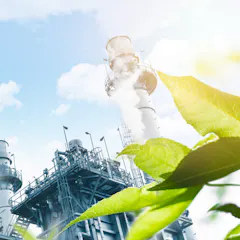
Atmospheric CO₂ concentrations are surging, even as emissions level out. Natural carbon sinks are showing signs of faltering as we continue to emit CO₂.
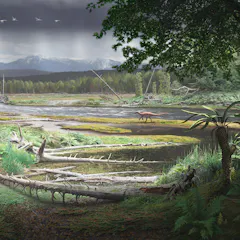
The new study shows what the polar regions might look like in the future as the planet warms.

In the battle to slow climate change, local and state governments, as well as citizens, have taken to the courts. Their results have varied, but the cases keep coming.
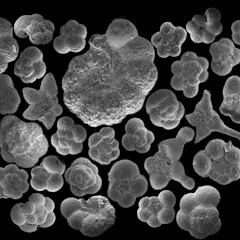
Foraminifera have lived almost everywhere in the ocean for millions of years. Their fossilised remains hold a record of Earth’s past.
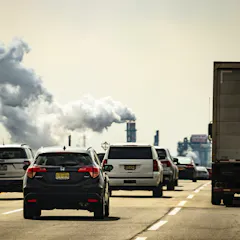
Carbon capture and removal can produce ‘negative’ carbon emissions.
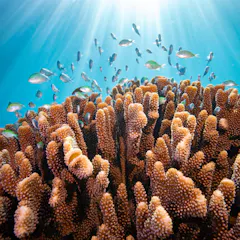
‘The kind of hypoxic stress response we saw in our experiment could go under the radar.’

Organic soils, one of the pillars of Québec’s food self-sufficiency, could disappear within 50 years. Fortunately, the application of straw or wood chips could regenerate these soils.

Rising carbon dioxide levels in the air are making plants grow larger and faster, but diluting their nutritional content. This could threaten the health of herbivores worldwide.
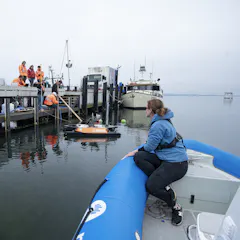
Efforts to reduce emissions and decarbonise industry must be combined with new technology that removes carbon dioxide from the atmosphere. Australia can build an industry around this service.
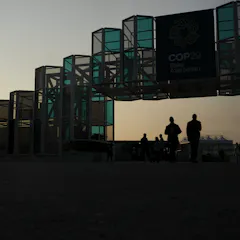
Net zero is not as simple as planting a tree. The first step is understanding that tackling climate change, and reaching true net zero, requires returning carbon to the ground.
Removing enough carbon to offset emissions would require vast tracts of inhabited land.
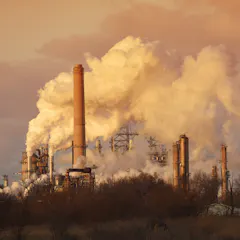
As world leaders gather at COP29 to consider reducing emissions, the latest global carbon budget shows CO₂ emissions from fossil fuels are still going up, not down, despite some promising signs.
Top contributors
-

Chief Research Scientist, CSIRO Environment; Executive Director, Global Carbon Project, CSIRO
-
Research Group Leader, CSIRO
-
Royal Society Research Professor of Climate Change Science, University of East Anglia
-
Honorary Fellow, CSIRO
-
Senior Researcher, Center for International Climate and Environment Research - Oslo
-
Senior Researcher, Center for International Climate and Environment Research - Oslo
-
Professor, Department of Earth System Science, and Chair of the Global Carbon Project, Stanford University
-
Chair, Mathematical Modelling of Climate, University of Exeter
-
Professor and Climate Scientist, Department of Geography, Planning and Environment, Concordia University
-
Professor of Chemical Engineering and Chemistry, University of Sheffield
-
Professor of Atmospheric Sciences, Climate Change Research Centre, UNSW
-
CO2Chem Network Manager, University of Sheffield
-
Senior Research Scientist, CSIRO
-
Head of Atmospheric, Oceanic and Planetary Physics, University of Oxford
-
Géochimiste, chargé de recherche CNRS au Centre de recherches pétrographiques et géochimiques de Nancy, Université de Lorraine