

A new study reveals what unsustainable construction practices are costing our climate – and what must change.
Articles on Carbon
Displaying 1 - 20 of 177 articles
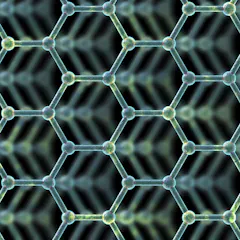
Turns out, changing the way atoms and molecules are arranged in a substance can give it new and fascinating properties.

Blue carbon involves more than just counting carbon. It requires governance, finance, policy, and practice. Ultimately, success hinges on people and their skills.
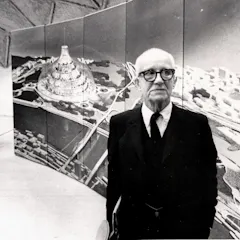
Few 20th-century scientific figures are as hard to classify as Buckminster Fuller.
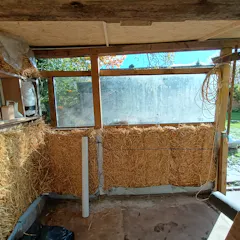
Straw bales are a cheap building materials and they are great for insulation.
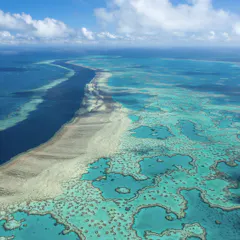
Coral reefs have shaped Earth in much deeper ways than we usually appreciate.
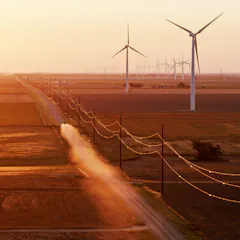
A fast drop in coal use played a big role, but there was more, as these charts show.
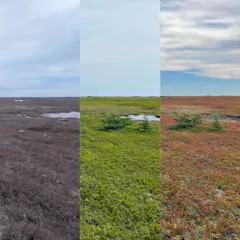
The PeatPic Project used over 3,700 smartphone photographs from 27 peatlands in 10 countries to gather data about how climate change is impacting them.
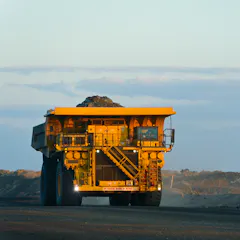
The foundations of our economic boom are shifting. Australia needs to position itself at the centre of new green industries.
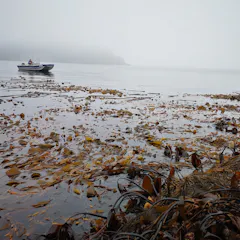
Highly productive kelp forests are being touted as a natural climate solution, but do we know enough to count them as such?
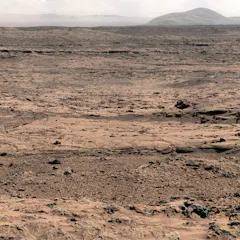
NASA’s Curiosity rover has spotted carbon-containing minerals that can tell scientists more about what ancient Mars’ atmosphere may have looked like.
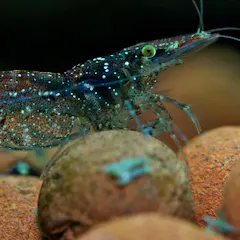
In a Queensland river where natural gas seeps up through the water, many living creatures have come to depend on it for their carbon.
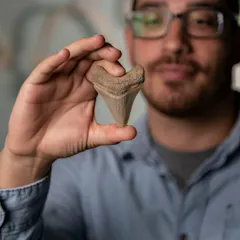
Sharks have ruled the Earth’s oceans for 400 million years. Recent research on fossil shark teeth has discovered an innovative method for dating ancient sediments.
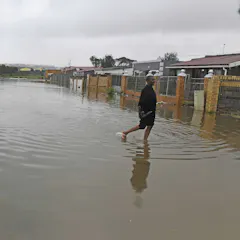
Sub-Saharan African countries should be given more financial and technical support to cope with climate change disasters, so that they can continue to spend funds on economic development.

Organic soils, one of the pillars of Québec’s food self-sufficiency, could disappear within 50 years. Fortunately, the application of straw or wood chips could regenerate these soils.
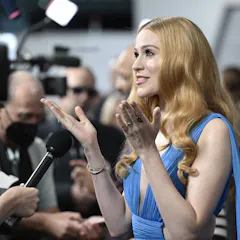
How people feel about AI’s involvement in social interactions as depicted in science fiction can help shape policy governing AI in public spaces, including AI for environmental learning.
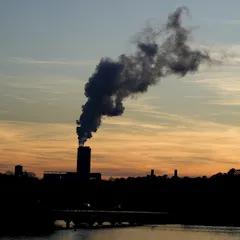
The time has come to develop Canada’s participation in international carbon markets.

The leaves of evergreen species acquire carbon over the long term and improve nutrient conservation, whereas short-lived leaves favour rapid carbon acquisition.
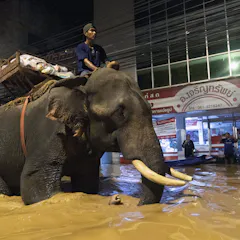
While poorer nations face more severe climate impacts, their ‘social cost of carbon’ remains disproportionately low, reflecting deeper economic inequities that complicate global climate action.
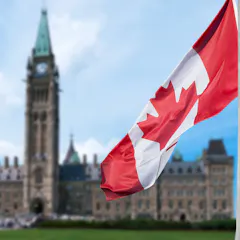
Utilizing carbon contracts for difference mechanisms could help the federal government maintain its climate policies. But overly relying on these tools brings its own risks.
Top contributors
-

Adjunct professor, Carbone boréal, Université du Québec à Chicoutimi (UQAC)
-
Chief Research Scientist, CSIRO Environment; Executive Director, Global Carbon Project, CSIRO
-
Professor and Climate Scientist, Department of Geography, Planning and Environment, Concordia University
-
Professor Emeritus of International Environmental Policy, Tufts University
-
Distinguished Professor of Climate Science, Simon Fraser University
-
Professor - Industrial ecology and climate change mitigation, Université du Québec à Chicoutimi (UQAC)
-
Royal Society Research Professor of Climate Change Science, University of East Anglia
-
Professor of Environmental Policy and Associate Pro-Vice-Chancellor (Interdisciplinary Research), University of Leeds
-
Professor of Communication, Public Policy & Urban Affairs, Northeastern University, Northeastern University
-
Professor, School of Economics, The University of Queensland
-
PhD candidate and research Fellow in the Economics of Climate Smart Cities research programme, University of Leeds
-
Professor of Science Communication and Chemistry, University of Hull
-
Associate Professor of Ecology, School Of Biological Sciences, University of Utah
-
Géochronologue et paléoclimatologue, chargé de recherches CNRS - Centre de recherches pétrographiques et géochimiques (Nancy) et Laboratoire de glaciologie (Bruxelles), Université de Lorraine
-
Distinguished Professor of Marine Science, King Abdullah University of Science and Technology