
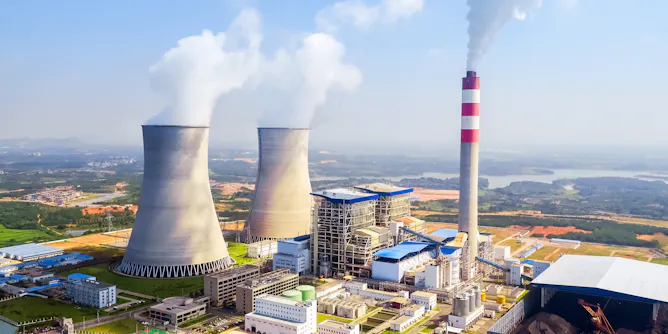
Carbon dioxide removal is different to carbon capture, utilisation and storage. It’s easy to confuse the two processes but they tackle different problems.
Articles on Carbon capture and storage
Displaying 1 - 20 of 145 articles
Three researchers take stock of different Union-wide policy approaches to removing and storing carbon emissions in the heavy industry sector.

Carbon capture projects could provide the funds needed to restore land degraded by commercial farming and forestry.
To reduce emissions put into the atmosphere, Google is using carbon capture and sequestration. But not all CCS projects are the same.

Farming seaweed, changing ocean chemistry, breeding corals and restoring mangroves could help fight climate change – if assessed and managed responsibly.

The Trump administration is pulling back billions of dollars in industrial development money for carbon capture and storage projects. That may force industries to actually cut emissions instead.
Carbon capture and removal can produce ‘negative’ carbon emissions.
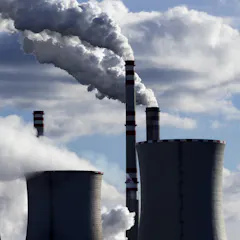
CCS needs scrutiny – but it also needs to work.
Funding for carbon capture and storage is likely to prolong the fossil fuel era.
Surpassing 1.5°C of warming can be undone at a later date – using tech, land and resources that don’t exist.
A climate scientist says there are better things to invest in.
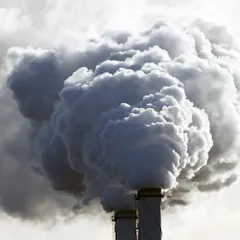
Environmentalists have long been sceptical of carbon capture and storage, which began in the oil and gas industry. But there’s nothing else like it for storing emissions from industry.
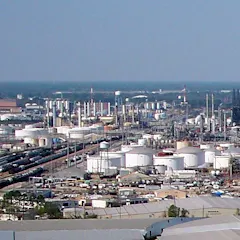
Carbon capture is turning the oil and gas industry into a critical player for mitigating climate change – while its products continue to heat up the planet.
The combination of the source of the CO₂ and its end use determines its environmental and economic benefits or consequences.
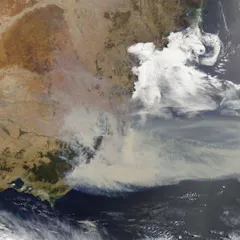
The most comprehensive Australian carbon budget assessment completed to date shows the nation flip-flops from source to sink of carbon emissions, depending on the prevailing conditions.
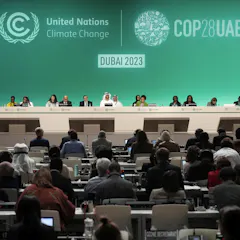
Does the science support the need for a fossil fuel phase out to reach 1.5 C? The answer depends on whether we believe that carbon capture and removal technologies can be deployed safely at scale.

Carbon capture and sequestration can play a role in limiting warming but the nuances of its application are far more complicated than just planting trees. Getting it wrong could make warming worse.
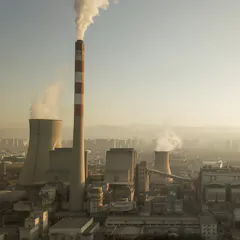
Record emissions are fast shrinking the remaining amount of carbon dioxide we can emit if we are to limit global warming. At current rates, we’ll use up the budget for a 1.5°C outcome in seven years.

Some geoengineering techniques are better understood than others. The US is investing in capturing carbon dioxide from the air, but ideas to block the Sun’s rays are raising big concerns.
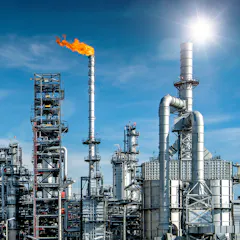
The 142 fossil fuel producers collectively exceeded the limits on coal, gas and oil production required to achieve the Paris Agreement goals by between 63% and 70%.
Top contributors
-

Head of Atmospheric, Oceanic and Planetary Physics, University of Oxford
-
Former Visiting Fellow, SPRU, University of Sussex Business School, University of Sussex
-
Associate Principal (Global Sustainability) and Director Research Centre for Carbon Solutions (RCCS), Heriot-Watt University
-
Professor, Crawford School of Public Policy and Director, Centre for Climate and Energy Policy, Australian National University
-
Professor, School of Economics, The University of Queensland
-
Assistant Director of the Global Systems Institute, University of Exeter
-
Chief Research Scientist, CSIRO Environment; Executive Director, Global Carbon Project, CSIRO
-
Professor of Environmental Economics, University of Oxford
-
CEO, Cooperative Research Centre for Greenhouse Gas Technologies
-
Lamont Research Professor, Columbia University
-
Honorary Associate Professor, UNSW
-
Senior Research Engineer, Massachusetts Institute of Technology (MIT)
-
Chair of ARC Centre of Excellence for Quantum Biotechnology, The University of Queensland
-
Deputy Director, Centre for Advanced Nanomaterials; Associate Professor; ARC Future Fellow, Adelaide University
-
Honorary Senior Lecturer in Chemical Engineering, University of Aberdeen