

Brain tumours are rare, but their early signs are easy to mistake for stress, tiredness or the menopause. Researchers explain what to look for – and why it matters.
Articles on Brain
Displaying 81 - 100 of 731 articles

Modern life bombards our brains with stimulation, through scrolling feeds, video games, email pings and sugary snacks. Can going without for 24 hours help?

Recent studies show that it’s possible to maintain good cognitive health as we age with certain leisure activities and pursuits that stimulate the brain.
When sleep is disrupted, the brain feels the consequences – sometimes in subtle ways that accumulate over years.

Can musical training rewire the brain to resist pain?

Do we need to change the way we think about consciousness?
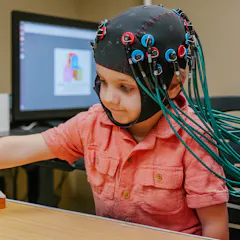
Kids with good executive function tend to grow up to be financially stable, healthy, productive adults. Past attempts to teach these skills have flopped. New brain research on language may change that.
Better sleep may help clear toxins associated with dementia from the brain.

New study finds that the stubborn brain refuses to forget lost limbs.

The risk is very small, but for people who do become infected, this illness is nearly always fatal.

We fed people milkshakes containing 130g of fat to see what it did to their brains.

The New York City shooter who sought to attack NFL offices said he had a degenerative brain disease, called chronic traumatic encephalopathy, thought to be related to playing contact sports like football.

Whether reading a book or listening to a podcast, the goal is the same: understanding. But these activities support comprehension in different ways.
Chronic pain affects millions of people in the US. Targeting an oft-overlooked brain receptor could one day offer relief.
The insulin discovery we forgot.

Current treatments for alcohol abuse are limited in their effectiveness and come with side effects. Precisely targeting the neurons involved in binge drinking could lead to better options.

Your brain processes the pleasure of everyday behaviors like eating and drinking similarly to the pleasure of using drugs. Disentangling them requires understanding how memories are formed.

Left and right brains hear speech differently, yet how this divide forms was unclear − until mouse studies showed each hemisphere runs on its own developmental clock.

Health influencers – perhaps including Health Secretary RFK Jr. – are promoting the chemical as an elixir that improves memory and focus. But evidence for these claims is thin.

Cerebrospinal fluid can sometimes leak or collect in the brain without an identifiable cause, leading to symptoms that can be difficult to diagnose.
Top contributors
-

Professor of Clinical Neuropsychology, University of Cambridge
-
Postdoctoral Research Associate, Cognitive Neuroscience, University of Cambridge
-
Professor of Science and Technology for Brain-Inspired Intelligence/ Computer Science, Fudan University
-
Senior Research Fellow, The Perron Institute for Neurological and Translational Science, and Faculty of Health Sciences, Curtin University
-
Professor of Music Psychology, Durham University
-
Postdoctoral Researcher in Cognitive Neurosciences, The University of Queensland
-
Penn State
-
Professor of Anatomy, Lancaster University
-
Senior Lecturer (Adjunct), Nutritional neuroscientist, Adelaide University
-
Lead, Cognition and Consciousness Imaging Group, Division of Anaesthesia, University of Cambridge
-
Professor of Chemistry and Senior Scientist of the Krembil Research Institute, University Health Network, University of Toronto
-
Researcher, The University of Melbourne
-
Postdoctoral Researcher in Neuroscience, University of Sussex
-
Professor of Behavioral Neuroscience, University of Richmond
-
Professeur agrégé de neurosciences computationnelles et neurophysiologie, L’Université d’Ottawa/University of Ottawa