
The answer is more nuanced than it’s ever been.
Articles on Batteries
Displaying 1 - 20 of 181 articles

People who have extra funds, suitable homes and a desire to be self-sufficient may consider disconnecting from the grid.

Tighter regulation and careful planning will ensure our public chargers actually work.
Hydrogen makes it possible to store renewable energy for longer – but has its limitations.
Four experts explain why the design of your home matters more than the size of your home battery.
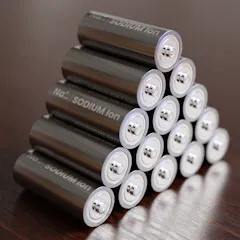
Sodium-ion batteries use more abundant raw materials but don’t currently perform as well as those made with lithium.
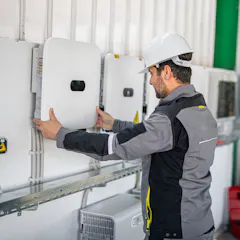
Like solar, the first households to embrace home batteries have been wealthy. We need to move away from first-come, first-secured schemes.

Two engineers explain how data center design, construction and operation can help the facilities support their communities.

A recent report into the federal government’s Cheaper Home Batteries Program found major problems with safety and compliance.

Research suggests a shift to electric mobility is technically and economically feasible.
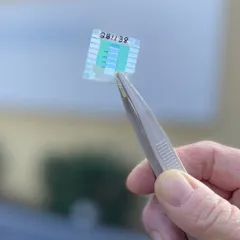
In quantum batteries, subunits take collective action to charge faster.
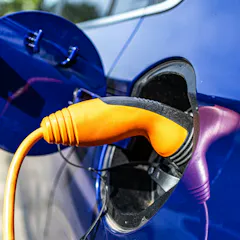
Solid-state batteries offer a promising new solution for electric vehicles, reducing the risks of spontaneous combustion when batteries are damaged or overheating.
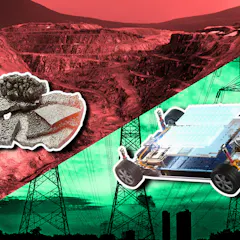
Big batteries used in electric vehicles and grid storage have long relied on metals with tarnished supply chains. But this is changing.

Batteries are typically held together by chemicals that don’t easily degrade. However, some marine animals have evolved remarkable natural ways to attach themselves to wet, slippery surfaces.
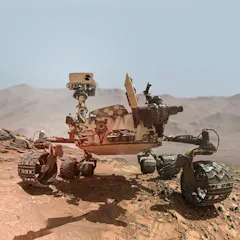
As plans for Moon bases gather pace across the globe, battery science may decide whether humans can live beyond Earth.
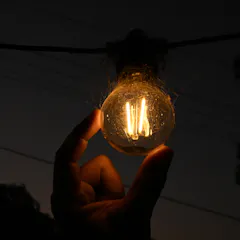
Australians are installing home batteries at record rates. They could be used not just to cut bills but as a backup after a natural disaster.
Changes to the Cheaper Home Batteries Program are a step in the right direction, but more are needed to make it fair.
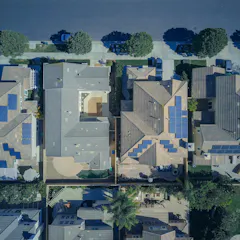
Early warnings about the Cheaper Home Batteries Program have come true. But there are ways to fix it.
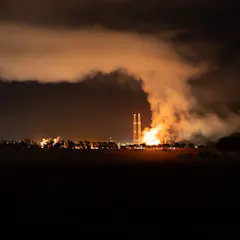
The Moss Landing battery fire became an unintended experiment – showing how burning lithium-ion cells scattered nickel, cobalt and manganese over a protected marsh.

Could container ships ever go electric? The best option might be a fleet of attendant battery vessels to power these giants directly.
Top contributors
-

Director of Energy Lancaster and Professor of Physical Chemistry, Lancaster University
-
Co-Founder at Relectrify | Graduated PhD in Battery Storage, The University of Melbourne
-
Research Group Leader & Senior Research Scientist, CSIRO
-
Professor of Energy and Environmental Economics and International Affairs, Penn State
-
Senior Lecturer, Department of Economics, Macquarie University
-
Professor of Sustainability, Curtin University
-
Associate Professor in Energy and Power Systems; Co-Director - Future Energy, University of Tasmania
-
University of Southern Queensland
-
Research Fellow, Curtin University
-
Professor, Kyoto University
-
Associate Professor of Mechanical Engineering, Carnegie Mellon University
-
Ph.D. Candidate in Mechanical Engineering, Carnegie Mellon University
-
Professor of Science Communication and Chemistry, University of Hull
-
Senior Research Fellow, College of Engineering and Computer Science, Australian National University
-
Researcher, National Renewable Energy Laboratory