

Battery researchers are seeking options with better performance, improved environmental sustainability and lower cost than lithium-ion batteries.
Articles on Batteries
Displaying 21 - 40 of 181 articles

The EU energy label for these devices now includes scores aimed at drawing consumers to products that are easier to fix.
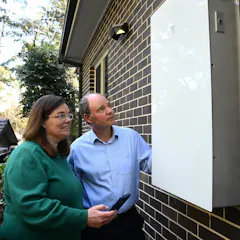
Moving a home or car battery from Melbourne to Perth can require multiple permits. Australia and New Zealand need smarter standards – or we’ll all pay the price.

Power grids could likely handle the surge of demand, but all that light would pollute dark zones nearby.
Four battery researchers talk about the future of power storage on The Conversation Weekly podcast.

‘Zonal pricing’ failed to win the government’s support, but Britain has other options.

The agreement with the Innu comes at a time when Québec seeks to develop its battery industry. The resources required for this production are often located on Indigenous territories.

The EU is vulnerable to shortages of materials that are required for clean technologies.

Electric bike batteries can be particularly dangerous and tricky to dispose of.

Even the best batteries fall far short of animal metabolism for energy storage. Fueling robots with ‘food’ could narrow the gap.
Consumers in Britain are paying for clean power that was never actually generated or used.
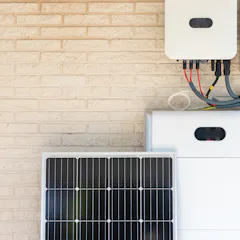
Labor’s promised subsidies for home batteries have to be well targeted. If not, they could simply make rich households richer.

When a spacecraft is too far from the Sun to use solar panels, it needs a different reliable source of power.
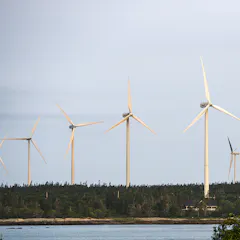
Aqueous redox flow batteries may be able to store and release renewable energy for decades.

Discovering new materials could drive forward areas such as green technology and advanced electronics.

Researchers found the stop-start way we drive actually prolongs battery life.

Flow batteries can feed energy back to the grid for up to 12 hours – much longer than lithium-ion batteries, which only last four to six hours.

Natural curiosity, developing motor skills, and a limited understanding of risk make for a dangerous combination.

Sub-Saharan Africa is lagging behind in the transition to electric cars and motorbikes. Investment in local manufacturing, renewable energy and storage systems to supply charging stations is needed.
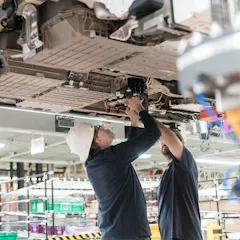
The future of these job-generating gigafactories, many of them in Republican states, could be at risk if the next president tries to wipe out the programs that made them possible.
Top contributors
-

Director of Energy Lancaster and Professor of Physical Chemistry, Lancaster University
-
Co-Founder at Relectrify | Graduated PhD in Battery Storage, The University of Melbourne
-
Research Group Leader & Senior Research Scientist, CSIRO
-
Professor of Energy and Environmental Economics and International Affairs, Penn State
-
Senior Lecturer, Department of Economics, Macquarie University
-
Professor of Sustainability, Curtin University
-
Associate Professor in Energy and Power Systems; Co-Director - Future Energy, University of Tasmania
-
University of Southern Queensland
-
Research Fellow, Curtin University
-
Professor, Kyoto University
-
Associate Professor of Mechanical Engineering, Carnegie Mellon University
-
Ph.D. Candidate in Mechanical Engineering, Carnegie Mellon University
-
Professor of Science Communication and Chemistry, University of Hull
-
Senior Research Fellow, College of Engineering and Computer Science, Australian National University
-
Researcher, National Renewable Energy Laboratory