
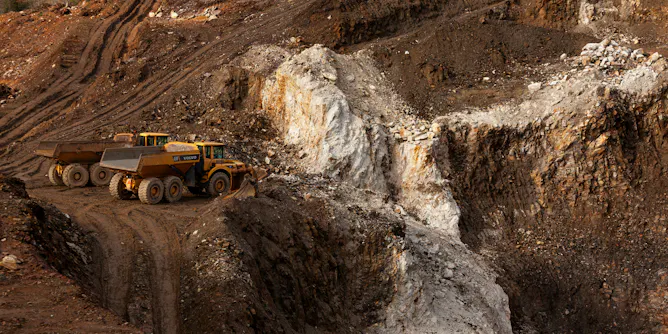
Armed groups in the Sahel are finding new ways to profit from the rapidly expanding lithium trade.
Articles on Lithium
Displaying 1 - 20 of 82 articles
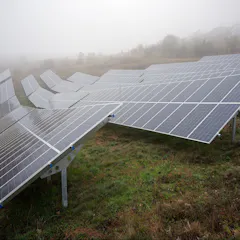
Solar energy is associated with intermittency issues, as it only generates electricity when the sun shines. Certain PV systems can provide cost-effective power reserves for storing electricity.

The minerals needed for clean energy are driving widespread forest loss across Africa, much of it far beyond the mine itself and largely preventable.
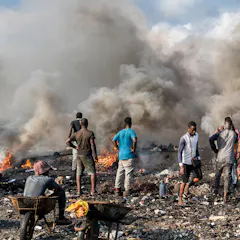
In Agbogbloshie, Ghana, thousands of young women and men burn electronic waste to extract minerals at a cost to their health. They need more protection.
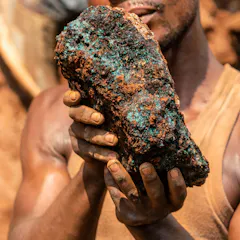
The rapid expansion of critical mineral extraction is trading away human and ecological well-being for technological breakthroughs. There are ways to fix this.
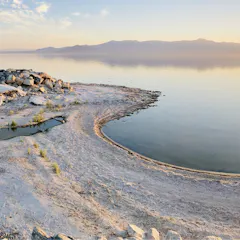
A new study reveals how the lake bed’s toxic dust impairs lung development in children living nearby.

Interest in lithium’s effects on the brain is growing, but the science behind low-dose use and supplements is far from settled.

Africa holds key green energy minerals but exports them raw. If the continent had its own Green Bank, it could finance local manufacturing and green industry.

China accounts for more than 80 per cent of global battery production. It’s highly unlikely the U.S. can reduce China’s role in the production and processing of critical minerals.
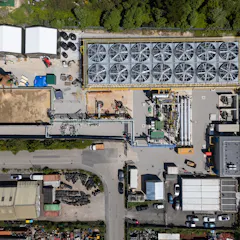
Unlike wind and solar which are weather-dependent sources of renewable energy, geothermal heat can produce energy steadily, day and night, all year round.
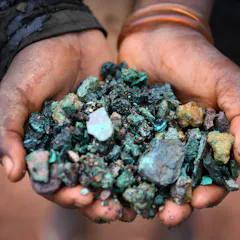
The supply of critical minerals like lithium faces serious risks because of the failure of community approval.

Native American lands contain 30% of the nation’s coal, 50% of its uranium and 20% of its natural gas, as well as copper, lithium and rare earth elements.
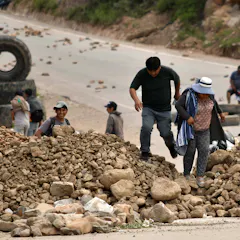
Bolivia’s new government has buried 20 years of socialist rule with reforms promising ‘capitalism for all’.

Lithium waste from electric vehicles could become a vital ingredient in low-carbon concrete, say researchers testing a new environmental solution.

New technologies could transform the way we mine – and recycle – critical minerals.

In advance of the release of the 2025 UK critical minerals strategy, the excitement for onshoring mining cannot ignore local experiences.

A new study has found lithium acts as a natural defender against the harmful proteins that are linked with cognitive decline.

Access to water is one reason why China sees control over Tibet as increasingly important.

The agreement with the Innu comes at a time when Québec seeks to develop its battery industry. The resources required for this production are often located on Indigenous territories.
Australia’s plan to build strategic reserves of critical minerals makes sense as the US and China vie for control of the minerals which will shape the future.
Top contributors
-

Lecturer in Chemical Engineering, Sustainable Energy and Resources, Edith Cowan University
-
Professor in Engineering, Stellenbosch University
-
Professorial Fellow, University of Canberra
-
Ph.D. Candidate of Energy Policy, Boise State University
-
Lecturer in International Studies, University of Washington
-
Professor, Co-Founder, Critical Minerals Consortium, and Australia-India Critical Minerals Research Hub, Monash University
-
Chair professor - Circular Economy, The University of Melbourne
-
Professor, Kyoto University
-
Research Professor of Geology, University of California, Riverside
-
Researcher, National Renewable Energy Laboratory
-
Senior Lecturer in Critical and Green Technology Metals, University of Exeter
-
Professor, School of Engineering, RMIT University
-
Professor of Work and Labour Studies, York University, Canada
-
Professor of Geosciences, Université Grenoble Alpes (UGA)
-
Senior research associate, Lancaster University