
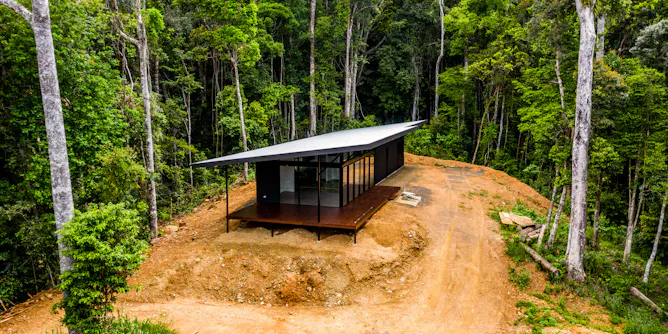
People who have extra funds, suitable homes and a desire to be self-sufficient may consider disconnecting from the grid.
Articles on Solar power
Displaying 1 - 20 of 385 articles

South Africa’s new electricity pricing policy reflects some changes but fails to guarantee more free power for millions who need it.
In South Africa and Kenya, some green energy projects have deprived local communities of land and livelihoods instead of sharing the benefits.
Solar energy is associated with intermittency issues, as it only generates electricity when the sun shines. Certain PV systems can provide cost-effective power reserves for storing electricity.

Solar farms can bring jobs, but the story of one South African community shows that rural residents who give up their land need more say in how benefits are shared.

Gender-based violence responses must include energy access as a structural intervention, not an add-on.

South Africa is struggling to move to renewable energy because of: Eskom’s dominance, weak planning, a poor grid, failing municipal networks and unused solar.
Africa is rapidly expanding electricity generation, but new research shows energy planning must also account for water scarcity and carbon dioxide emissions.
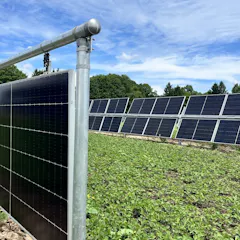
In Canada, agrivoltaics could produce enough electricity to eliminate the need for fossil fuels on the grid entirely, using less than one per cent of the country’s agriculture land.
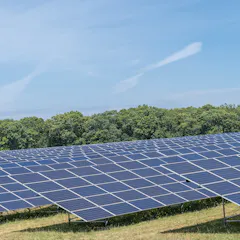
Generating solar power requires a lot of land – but which land should it be? And what else can be done on that land?
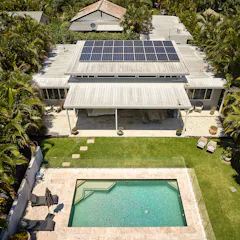
Three hours of free power isn’t a giveaway – it’s meant to help the grid use floods of cheap solar. To succeed, the new scheme has to be fair.
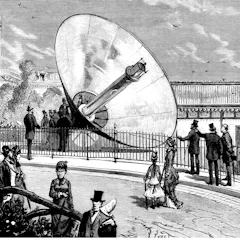
William Adams was convinced that solar energy could change the world. The problem was, he needed more sun to demonstrate it.
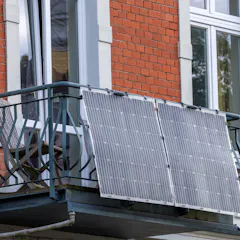
Small-scale solar panels usable by renters and without rooftop installation can boost renewable energy use and reduce the effects of high electricity prices.

Solar energy can cut costs and pollution for South African households, but fear of theft holds people back. Shared mini-grids offer a safer, affordable alternative.
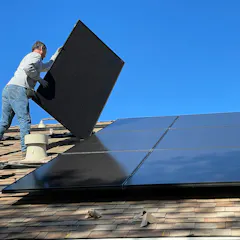
Council staff said human resources and time are essential, with one noting: ‘We have to go through a fair amount of information to explain how solar works.’

Research suggests a shift to electric mobility is technically and economically feasible.
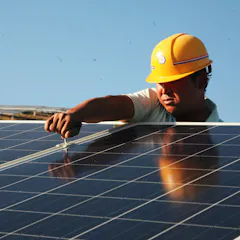
Australia has built millions of mini power stations on detached homes. The next challenge is ensuring people in apartments, units and townhouses can benefit too.

Africa holds key green energy minerals but exports them raw. If the continent had its own Green Bank, it could finance local manufacturing and green industry.

Kenya’s electricity instability is not one problem – it’s an interaction between network capacity and system reliability.

In Nepal, local shareholding in a hydropower project changed how communities regarded it.
Top contributors
-

Professor of Engineering, Australian National University
-
Professor Emeritus, Macquarie Business School, Macquarie University
-
Senior Research Associate, Renewable Energy & Energy Systems Analyst, UNSW
-
Honorary Associate Professor, UNSW
-
Professor of Physics, University of Johannesburg
-
University of Southern Queensland
-
John M. Thompson Chair in Information Technology and Innovation and Professor, Western University
-
Senior Industry Fellow, Environment and Planning, RMIT University
-
Professor of Sustainability, Curtin University
-
Emeritus professor, Australian National University
-
Lecturer in Energy Storage Systems Dynamics, Lancaster University
-
Research Fellow, Stephenson Institute for Renewable Energy, University of Liverpool
-
Professor in International Relations / International Political Economy, UNSW
-
Research Scientist, The University of Texas at Austin
-
Assoc Prof. Renewable Energy, Monash University