
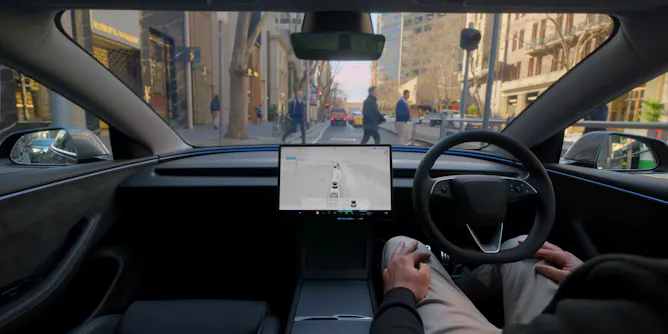
Autonomous vehicles work much better than many people think – and much worse. Some simple changes to our roads could make them safer.
Articles on Autonomous vehicles
Displaying 1 - 20 of 169 articles
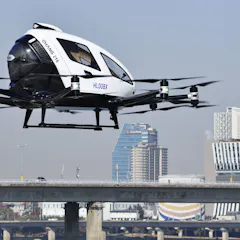
Vivid Sydney’s drone disaster shows why ensuring autonomous aircraft can perform safe, emergency landings must be a priority.

Bees may have tiny brains but they can make rapid and accurate choices.
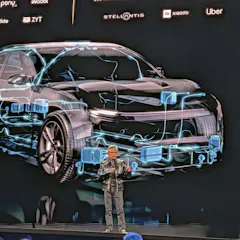
Nvidia’s new AI system, Alpamayo, could prove a major step to making autonomous cars a common sight on our roads.
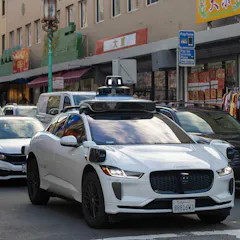
Confusion could be a big threat to accepting autonomous vehicles.

Autonomous shuttle buses are planned for the Italian city of Trento that would pick people up at their homes.
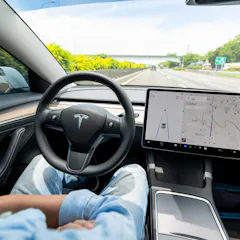
Cars that mostly drive themselves – but where a human is required to continuously supervise – fall between the cracks of existing law.
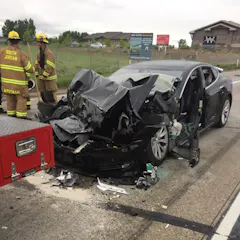
AIs are notoriously opaque, even to the people who build them, which makes it hard to know why they fail. A new tool aims to reveal their inner workings at the moment they went off the rails.
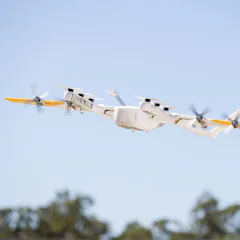
Residents of drone delivery trial sites say the initial novelty has worn off and concerns about long-term impacts are growing
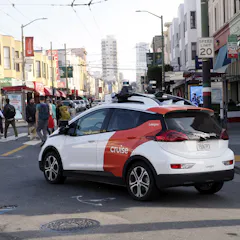
Roughly half of people surveyed support the development of autonomous vehicles. But a third were undecided about many aspects and will need to be convinced about their safety and other benefits.

Artificial intelligence systems that can handle the pressure of high-speed auto racing could lead to driverless vehicles that can safely manage the morning commute.

An air traffic safety expert explains why humans will remain central to managing the nation’s airports and airspace even as AI promises to improve air traffic control.
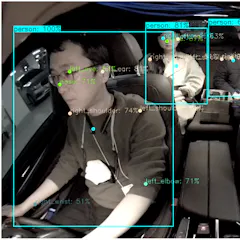
Your car’s safety technology takes you into account. But a lot of that technology helps car companies collect data about you. Researchers are working on closing the gap between safety and privacy.
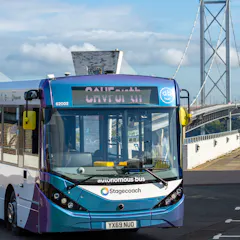
Amid bus route cuts and rail strikes, can the answer to our future public transport needs be found in the hi-tech prototypes being trialled around the UK?
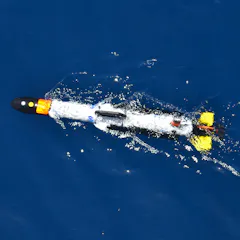
Dramatic improvements in computing, sensors and submersible engineering are making it possible for researchers to ramp up data collection from the oceans while also keeping people out of harm’s way.
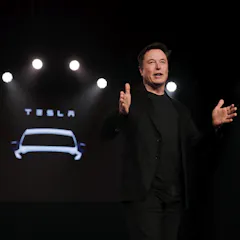
The autonomous vehicle revolution was, according to its proponents, meant to have transformed daily travel by now. But they underestimated the task of developing a safe, truly driverless vehicle.
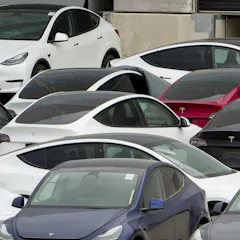
Consumers need to be aware that none of the vehicles on the market today are actually self-driving — vehicles still require active supervision from a human driver.
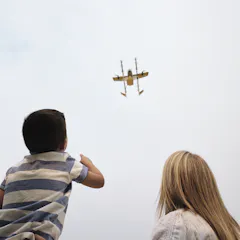
In a few Australian suburbs, a cup of coffee or toothpaste can now arrive via the air. But that doesn’t mean drones are going to be widespread – for now.
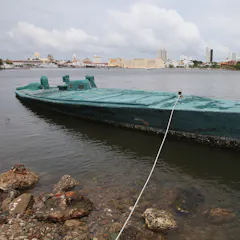
International and Australian laws need to be updated to cope with the newest drug-trafficking technique threatening maritime security: remote-controlled narco-drones.

Consumers are still unsure whether fully autonomous vehicles are safe and worth buying. Brands play an important role in influencing their decision.
Top contributors
-

Professor in Robotics, Queensland University of Technology
-
Professor, Director of the Centre for Robotics, Queensland University of Technology
-
Honorary Professor of Planning, The University of Queensland
-
Professor of Sustainability, Curtin University
-
Professor of Transport Technology and Sustainability, Swinburne University of Technology
-
Professor of Advanced Technology Transitions, Arizona State University
-
Associate Professor, Human Systems Labs, University of Windsor
-
Adjunct Senior Lecturer, Applied Ethics and CyberSecurity, Griffith University
-
Professor of Psychology, Civil and Environmental Engineering, and Industrial Engineering and Management Systems, University of Central Florida
-
Associate Professor in Mechanical Engineering, Texas A&M University
-
Professor of Transport Strategy, The Open University
-
Senior Research Scientist, Texas A&M Transportation Institute, Texas A&M University
-
Associate Professor in Urban Planning, The University of Queensland
-
Honorary Professor of Transport Studies
-
Associate Professor in Urban Planning, The University of Melbourne