
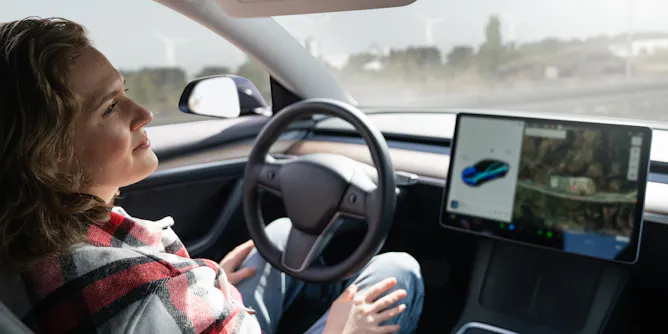
The minicabs will include a ‘safety driver’, but as human skills turn from doing to watching, driving expertise can deteriorate.
Articles on Driverless cars
Displaying 1 - 20 of 140 articles

Communication interfaces using text and lights could signal the cars intentions to deaf road users.
A virtual proving ground can help improve the ability of self driving cars to handle rare events on the road.
Nvidia’s new AI system, Alpamayo, could prove a major step to making autonomous cars a common sight on our roads.
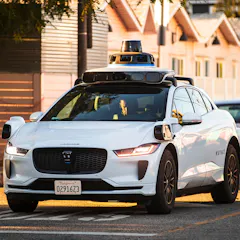
It seems humans aren’t ready to hand over the keys just yet.

Chatbots are much better than traditional driverless car technology at dealing with complex, previously unknown scenarios.

Artificial intelligence systems that can handle the pressure of high-speed auto racing could lead to driverless vehicles that can safely manage the morning commute.
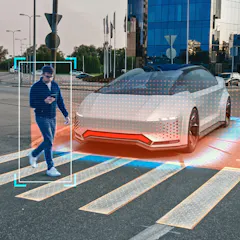
Self-driving cars still perceive what’s going on very differently to how humans do.
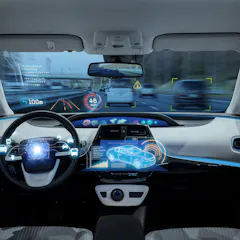
Autonomous driving technology needs to be able to think and behave more like a human.
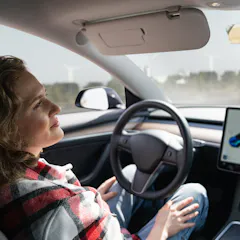
People with disabilities are concerned about breaking down or having accidents when alone in driverless cars.

With fine-tuning, the approach correctly balances the risks with the need to encourage innovation.
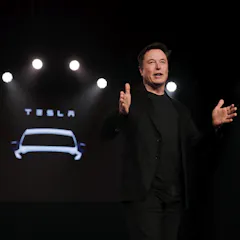
The autonomous vehicle revolution was, according to its proponents, meant to have transformed daily travel by now. But they underestimated the task of developing a safe, truly driverless vehicle.
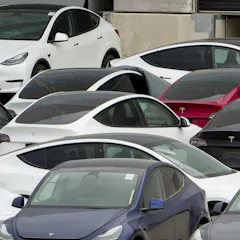
Consumers need to be aware that none of the vehicles on the market today are actually self-driving — vehicles still require active supervision from a human driver.

Trials in US cities of self-driving taxis could have implications for road users around the world.
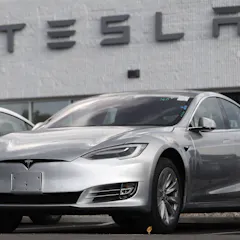
The promise of self-driving cars remains unfulfilled, as the technology still requires drivers to co-pilot the vehicles to avoid collisions.

Consumers are still unsure whether fully autonomous vehicles are safe and worth buying. Brands play an important role in influencing their decision.
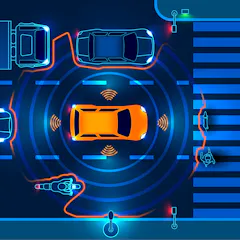
Between driverless cars, autonomous weapons and AI-powered medical diagnostic tools, it seems there will be no shortage of ethically-complex situations involving AI in the future.
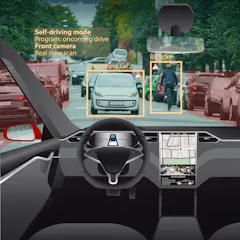
As self-driving cars increase in popularity, the question of legal liability remains. The driver, automobile manufacturer and software designers all have a role to play.
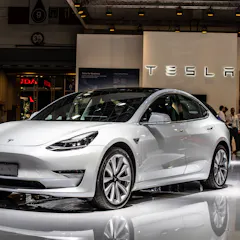
Despite what Elon Musk says, there are numerous challenges to overcome in creating completely self-driving cars that work in the real world.
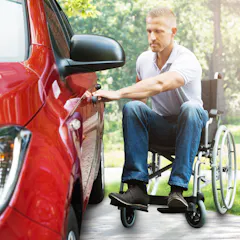
Driverless cars create an opportunity for more inclusive design – so why aren’t more companies using it?
Top contributors
-

Professor, Director of the Centre for Robotics, Queensland University of Technology
-
Associate Professor, Human Systems Labs, University of Windsor
-
Honorary Professor of Planning, The University of Queensland
-
Professor of Sustainability, Curtin University
-
Professor in Robotics, Queensland University of Technology
-
Professor of Advanced Technology Transitions, Arizona State University
-
Senior Research Scientist, Texas A&M Transportation Institute, Texas A&M University
-
Associate Professor in Urban Planning, The University of Queensland
-
Director, Assuring Autonomy International Programme, University of York
-
Honorary Professor of Transport Studies
-
Associate Professor, University of Leeds
-
Professor of Transport Technology and Sustainability, Swinburne University of Technology
-
Professor of Human Geography, The University of Queensland
-
Associate Professor in Urban Planning, The University of Melbourne
-
Professor of Systems Security, Coventry University