
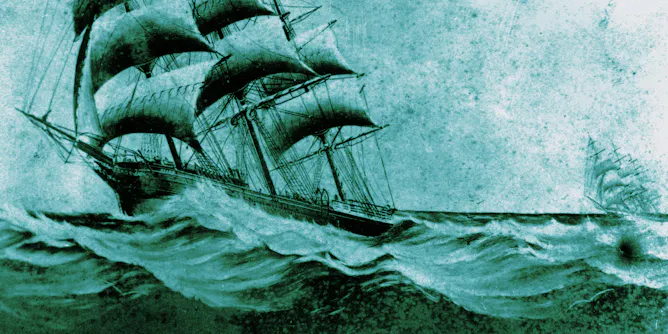
Gail Jones has written a richly evocative novel that warrants attention, both for its fascinating subject-matter and for its outstanding writerly qualities.
Articles on Australian literature
Displaying 101 - 120 of 333 articles
Marion Halligan wrote novels that are compulsively readable and full of ideas.
Georgia Blain’s final, posthumous collection offers clear-eyed, calm compassion – and a capacity to live with, and alongside, damage, trauma and unspeakable loss, and a way of staying human.
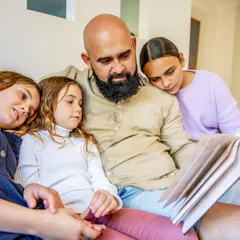
The owner of Robinsons Bookshop has listed several kinds of books ‘missing’ from its shelves, including ‘kids picture books with just white kids on the cover’.
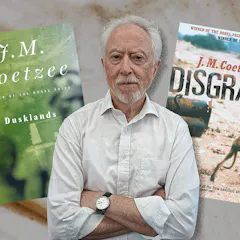
The fiction of J.M. Coetzee is always formally daring, brave in its social critique and its refusal to play by the rules.
Politica is set in an unnamed town where past is ever present, and the present is barely tolerable in the absence of a hopeful future.
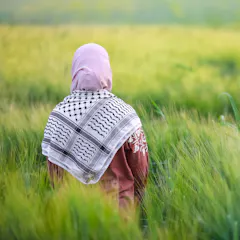
In her prose and her poetry, Sara M. Saleh renders unique the ways people resist, transcend, adapt, make the best of things, compromise, endure, and lose hope and faith.

Research suggests the act of creative writing can have therapeutic benefits.
Alex Miller is a man of humble origins, adventurous journeys, and a slow-burning but ultimately impressive literary career.
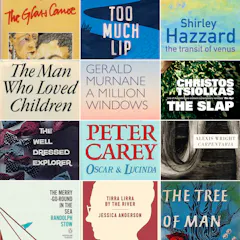
A major new history of the Australian novel is shaped by the recent renaissance in Indigenous writing, but there are some notable omissions.
Amanda Lohrey’s new novel, The Conversion, poses questions that matter to how we read, write and live now – through a couple’s renovation of a church into a home.

Pi O is known for his wit and irreverence. His anarchism, reflexive anti-Americanism and anti-capitalism are all part of the deal.
In Question 7, Richard Flanagan writes of the contingencies of history, and troubles the distinction between truth and fabrication.

Despite its neglect, Australian horror is alive and kicking – and crawling on the floor, frightfully howling at the moon, and swimming with creepy serpents in a lake.
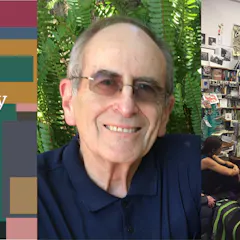
Melbourne writer Alex Skovron has been recognised with a national award at 75. Alongside his own work, Skovron’s quiet impact on poets and poetry in Melbourne has been immense.
In The Idealist, the machinations of the Australian government become a sinister backdrop to what seems to be a story of liberation.

Paradise Estate is a good-humoured depiction of the travails of share-house living, with a political edge.
The latest books by Gretchen Shirm and Briony Doyle are preoccupied with the aftermaths of recent deaths.
The aura of a major literary prize will inevitably fade. What we are left with is the work itself.

Verity Laughton’s stage adaptation of Pip Williams’ best-selling book is a a very clever realisation.
Top contributors
-

Distinguished Professor Emerita of Creative Practice, Faculty of Arts and Design, University of Canberra
-
Professor, Chair of Australian Literature, The University of Western Australia
-
Professor in Politics and Journalism, University of Notre Dame Australia
-
Dean of Research (Creative), Adelaide University
-
Associate Professor in Literary Studies, RMIT University
-
Professor of English Literature, University of Southern Queensland
-
Senior Lecturer in English Literature, Charles Sturt University
-
Emeritus Professor of Creative Writing, The University of Melbourne
-
Director of Creative Writing, Macquarie University
-
Associate Professor of English, Australian National University
-
Associate Professor, Creative Writing and Literary Studies, Victoria University
-
Director of AustLit, Associate Professor in Digital Cultural Heritage, The University of Queensland
-
Professor of Writing and Literature, Deakin University
-
Associate Professor in Literary Studies, Monash University
-
Senior Lecturer, Creative Writing and English, Edith Cowan University