

Fiona Wright’s genre-defying social satire will ring bells for people who are locked out of the housing market, and those who care about inequality.
Articles on Australian literature
Displaying 21 - 40 of 333 articles
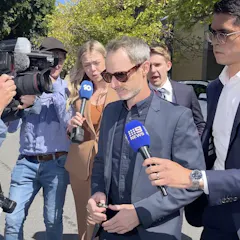
What do we tell a young person asking why their favourite book has disappeared – or why it hasn’t? A children’s writer wrestles with how to handle Craig Silvey’s books.
Journey to the End of Time is a celebration of all forms of love – romantic love, friendship, parental and filial attachment, compassion for others.
As an accomplished novelist, poet and essayist, David Malouf possessed a rare ability to work across genres with flair and elegance.

We live in an era that increasingly seeks to cancel authors for their political views, even when these views are not reflected in their creative works.
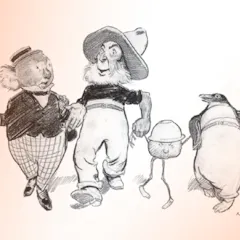
The Australian way of life displayed in The Magic Pudding revolves around the life of the belly, not the life of the mind.
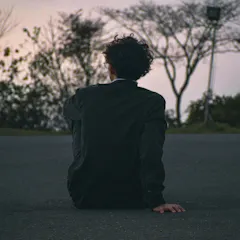
The flaw of child heroes is their vulnerability, their trust in the adults in their lives, their tendency to look to them for guidance.

In her latest novel, Claire Thomas spotlights the significance of the Swiss Alps to a wide range of authors, scientists, historians and artists.
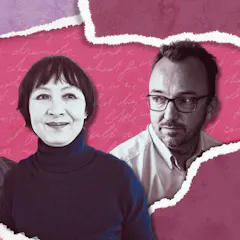
Each of these poetry collections brings imagination to bear on material objects and places, on works of art, documents and archives.
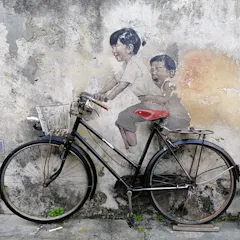
The tension between the novelistic attention to psychology and detail and the epic tendency to breadth of scale and form makes – and unmakes – this book.

In The Hiding Place, the hollow ethics of Kate Mildenhall’s characters are exposed as exploitative and mercenary.
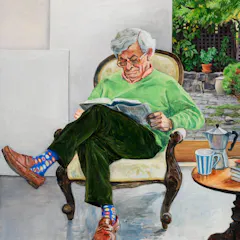
Chris Wallace-Crabbe was one of Australia’s best-known poets. Generations of students and colleagues benefited from his wisdom and generosity.
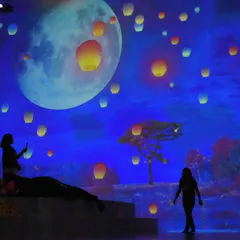
In her latest novel, Merlinda Bobis envisions the past not as a grand narrative, but an organic process – entangled, living and mutable.
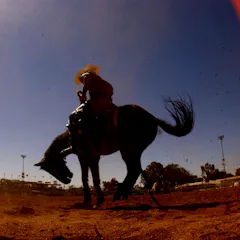
At the centre of this novel is a lonely man, the son of a Greek migrant cafe-owning family, who finds a home in a newsroom at a time of turbulence.
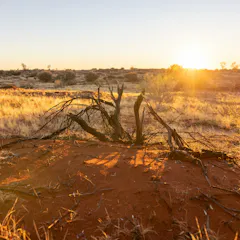
Jane Harper’s novels do not include any significant First Nations characters or perspectives. Nor do they acknowledge the deeper meaning and consequence of their Gothic conventions.
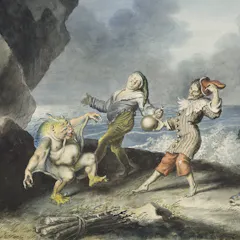
The Rot is haunted by complicity, and haunting in its insistence on remembering every betrayal.

The Underworld showcases Sofie Laguna’s tremendous ability as a writer. But it’s hard not to want the novel to risk more and ask more.
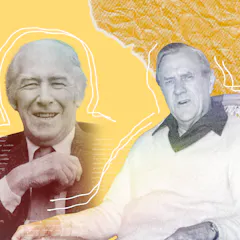
David Brooks, winner of the 2024 Prime Minister’s Literary Award for Poetry, recalls his friendship with AD Hope and recounts falling in love with Patrick White.
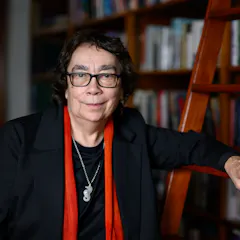
Alexis Wright’s work expresses a sovereign Aboriginal worldview, but owes a debt to a pantheon of authors from around the globe.
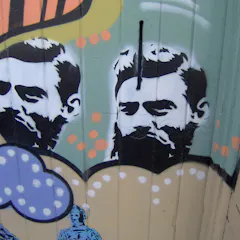
Written in Kelly’s vernacular, this Booker Prize- winning novel is a masterclass in mimicry. But in exploring injustice, there are telling erasures.
Top contributors
-

Distinguished Professor Emerita of Creative Practice, Faculty of Arts and Design, University of Canberra
-
Professor, Chair of Australian Literature, The University of Western Australia
-
Professor in Politics and Journalism, University of Notre Dame Australia
-
Dean of Research (Creative), Adelaide University
-
Associate Professor in Literary Studies, RMIT University
-
Professor of English Literature, University of Southern Queensland
-
Senior Lecturer in English Literature, Charles Sturt University
-
Emeritus Professor of Creative Writing, The University of Melbourne
-
Director of Creative Writing, Macquarie University
-
Associate Professor of English, Australian National University
-
Associate Professor, Creative Writing and Literary Studies, Victoria University
-
Director of AustLit, Associate Professor in Digital Cultural Heritage, The University of Queensland
-
Professor of Writing and Literature, Deakin University
-
Associate Professor in Literary Studies, Monash University
-
Senior Lecturer, Creative Writing and English, Edith Cowan University