

In Mine, Adam Ouston reveals the contradictions between Tasmania’s conception of itself and its history of human and environmental devastation.
Articles on Book reviews
Displaying 1 - 20 of 950 articles
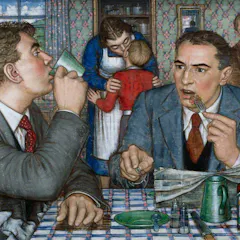
An exploration of why the English eat the way they do, and what those habits reveal about English society.
In The Twilight Before the Storm, global strategist Viktor Shvets charts the shift from the fractured 1930s to today’s crisis culture.

Bake Off is back and Nigella is judging. We’re also recommending a host of books from non-fiction on British food history to a fiction book about gay Jamaicans.
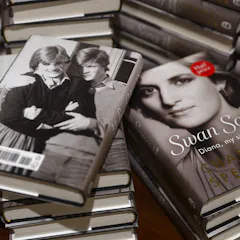
Charles Spencer’s book is as much about him as about the sister he claims to speak for. Beneath the score-settling, it’s a story of a brother still grieving.
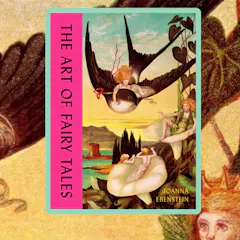
Fairy tales continue to nourish artistic invention because their characters embrace continual metamorphosis, discovering yet another possibility within an old story.

There is a ‘deep disquiet’ within liberal democracies: a feeling, manifested on both sides of politics, that the conventional order has failed and is beyond reform.
Neha Kale’s A Foreign Return: on art and habitation is an unusual blend of memoir and art criticism, spanning continents and time.

Emily St John Mandel’s new novel presents divergent visions of our world and future – particularly of the US as a state at a crossroads.
Searing writing that seeks to bear witness to the violent reality of queer Jamaicans.

Two new books, End Times Fascism and Nerd Reich, take a hard look at fascism today – and its intersections with big tech.

In a stubbornly male dominated field, how brilliant did a woman have to be to succeed?

New books by George Megalogenis and Paul Strangio consider 21st century Australia: a time of rapid social change with many politicians stuck ‘in a white-bloke past’.

Alice Duncan-Kemp’s books drew on a childhood in intimate contact with Mithaka people. Historian Tom Griffiths’ book, Alice’s dreaming, reminds us of her work.

Grand Ambition: Paul Keating’s Global Vision for Australia is based on deep archival research – and author James Curran’s access to Keating, with his personal papers.

Democracy demands that citizens are treated equally under the law. The tax avoidance practices of the ultra-rich violate that principle, a new book argues.
Sylvie feels like her radical world only exists in the past and as she gets older her choices and world are shrinking.
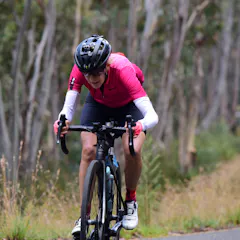
Saskia Beudel’s Peaking is a thoughtful account of what it means to inhabit a changing body while continuing to test its limits.
Life of M bleeds fact into fiction, but it requires much more of the reader than a simple guessing game of who’s who.

How did our politics become so personal? Performance Politics considers 70 years of books and documentaries, from the Whitlam era to now.
Top contributors
-

Distinguished Professor Emerita of Creative Practice, Faculty of Arts and Design, University of Canberra
-
Dennis Altman is a Friend of The Conversation.
Vice Chancellor's Fellow and Professorial Fellow, Institute for Human Security and Social Change, La Trobe University
-
Adjunct Researcher, English and Writing, University of Tasmania
-
Professor in Politics and Journalism, University of Notre Dame Australia
-
Adjunct Professor, Australia-China Relations Institute, University of Technology Sydney
-
Emeritus Professor of Creative Writing, The University of Melbourne
-
Professor, Chair of Australian Literature, The University of Western Australia
-
Senior Lecturer, Writing, Department of Media and Communication, Swinburne University of Technology
-
Senior Lecturer, Discipline of English and Writing, University of Sydney
-
Professor of Communication, Deakin University
-
Professor of Psychology, The University of Melbourne
-
Professor of English Literature, University of Southern Queensland
-
Senior lecturer, Canberra School of Government, University of Canberra
-
Senior Lecturer in Humanities, University of Southern Queensland
-
Deputy Director, Institute for Ethics, Governance & Law, Griffith University