
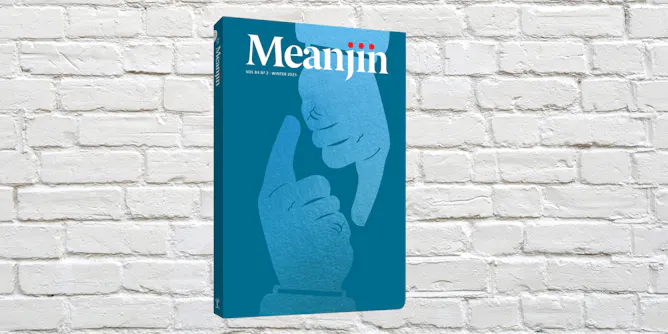
The decision to close Meanjin is the latest in a string of recent decisions that suggest universities are not safe harbours for priceless cultural institutions.
Articles on Australian literature
Displaying 41 - 60 of 333 articles
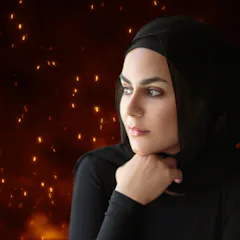
The genre of migrant autofiction, especially coming-of-age work, is blooming, but Raaza Jamshed’s book stands out.

The explosion of urban writing set in the cities and towns of Australia allows us to walk amid history, subcultures and alternative visions of urban places.
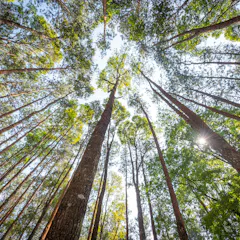
In his thoughtful new novel about people turning into trees, Rhett Davis puts postmodernism and myth through the figurative woodchipper.
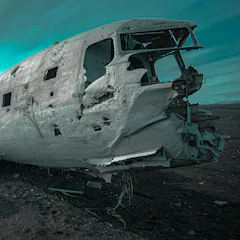
In Desolation, inexplicable elements, often in the form of coincidence, disrupt and distort causal chains. Dreams and imagination have a subversive role.
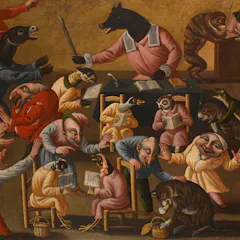
The inventive fictions of Michael Farrell, Lucy Nelson and Alex Cothren display flashes of brilliance and humour.
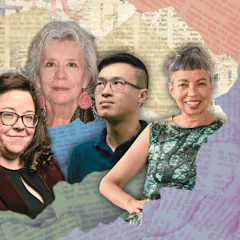
The six inventive books shortlisted for the 2025 Miles Franklin explore ideas of identity, self and nationhood – and play with both ideas and form.
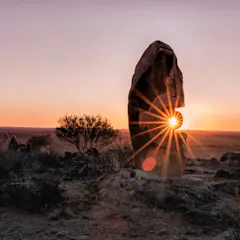
The Name of the Sister begins in classic genre territory: a young woman is found stumbling down an outback road, without the power of speech and without an apparent identity.
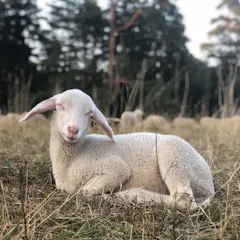
Barry Hill’s new poetry collection Lamb blends insightful, impatient and powerful commentary with grandfatherly reflections on birth and love.
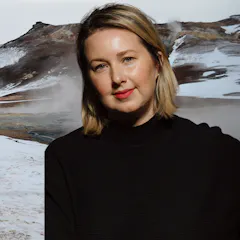
In Always Home, Always Homesick, Hannah Kent reveals how Iceland defines and divides her identity as a writer.
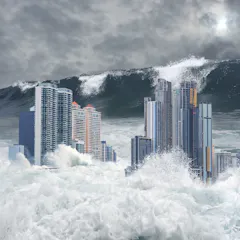
Landfall is a haunting and propulsive crime novel, set in 2050s Sydney, that weighs the value of a human life on an ecologically ravaged planet.

Writers’ concerns about AI are not only about payment; they are about consent, trust and the future of their profession.
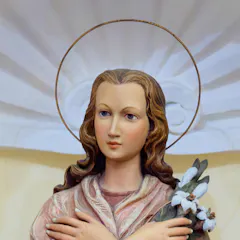
The inexorable passage of an incorruptible body gives this strange, spare story its shape.
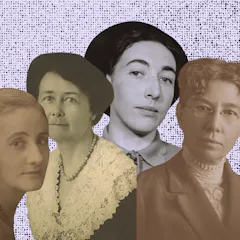
Each of these writers, in their own way, modelled what it is to be an ‘inconvenient’ woman – something we need now, perhaps more than ever.
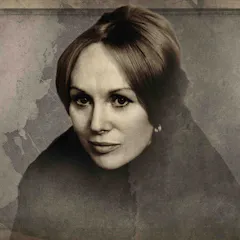
When Georgia Rose Phillips’ inner poet takes centre stage, The Bearcat rises to great heights. But the novel contains some anachronisms.
Andrea Goldsmith’s handling of the alignment between domestic abuse, coercive control, cults, brainwashing and terror is subtle, yet powerful.
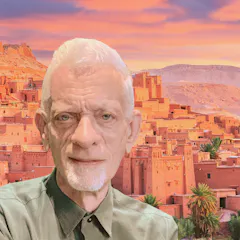
There is no definitive answer in Chameleon, only the conflicts and inconsistencies in which Dessaix invites us to revel.
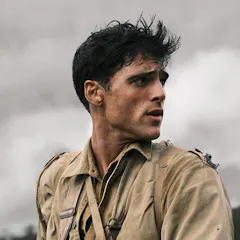
Richard Flanagan’s novel is about to hit screens. How do its depictions of heroism and valour land in 2025? And were the raves right – or the pans?
Kerry Greenwood’s novels are provocations to care about social justice. Her legacy is a wealth of entertainment with a heart.
Yumna Kassab’s vignettes and fragments present a kaleidoscopic view of contemporary society.
Top contributors
-

Distinguished Professor Emerita of Creative Practice, Faculty of Arts and Design, University of Canberra
-
Professor, Chair of Australian Literature, The University of Western Australia
-
Professor in Politics and Journalism, University of Notre Dame Australia
-
Dean of Research (Creative), Adelaide University
-
Associate Professor in Literary Studies, RMIT University
-
Professor of English Literature, University of Southern Queensland
-
Senior Lecturer in English Literature, Charles Sturt University
-
Emeritus Professor of Creative Writing, The University of Melbourne
-
Director of Creative Writing, Macquarie University
-
Associate Professor of English, Australian National University
-
Associate Professor, Creative Writing and Literary Studies, Victoria University
-
Director of AustLit, Associate Professor in Digital Cultural Heritage, The University of Queensland
-
Professor of Writing and Literature, Deakin University
-
Associate Professor in Literary Studies, Monash University
-
Senior Lecturer, Creative Writing and English, Edith Cowan University