

A new book designed to interest potential and beginning readers also offers plenty of new ideas to interest well-versed Murnanians.
Articles on Australian literature
Displaying 121 - 140 of 333 articles
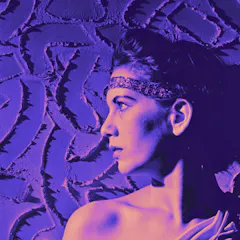
Australian writer Charmian Clift was born 100 years ago today. One rivetting photograph of Clift captures the existential yin and yang explored in her work.
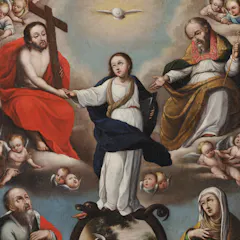
Some fairy tales tell the brutal truth, others offer the hope of a happy ending. Immaculate raises the possibility of both.
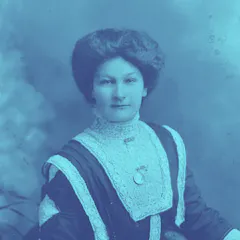
Family memoir and reimagined history dovetail beautifully in Kate Grenville’s latest novel.

Jessica Zhan Mei Yu’s witty, ‘effervescent’ debut novel follows a Sylvia-Plath-loving young Malaysian-Australian writer’s journey to ‘the heart of empire’ in the UK.
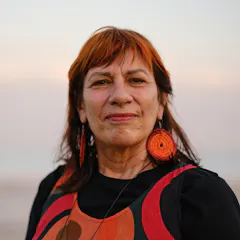
Ali Cobby Eckermann’s first book since winning the Windham Campbell Prize may well prove her most enduring.
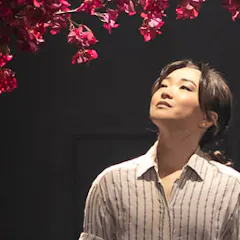
The Sydney Theatre Company’s adaptation of the book is both more poignant and more life-affirming from the dry bones of the original.

In the 1957 worldwide bestseller, Australia is – briefly – the last habitable place on earth, following a nuclear world war. One character asks, as they wait to die: ‘Why did all this happen to us?’
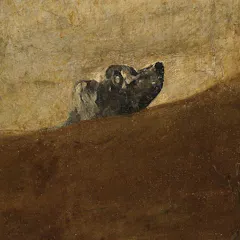
The Pole and Other Stories explores familiar Coetzeean themes of love, death, ageing, art and human-animal interaction.
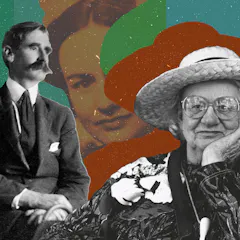
Henry Lawson said deafness was ‘in a great measure responsible for my writing’. Wright said hers was ‘part of the conditions I live under’. Their disability was inherent to their creativity.
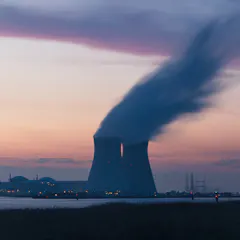
In speaking to the moment, poets are bringing the apocalypse to Australian literature.
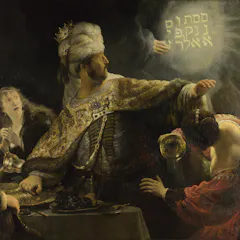
Jen Craig’s new novel Wall confirms she is an ambitious writer in the best sense: she wants to convey deeply conflicted and even contradictory states of being in the world.
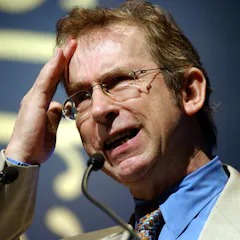
In her latest book, Sarah Krasnostein goes straight for the soul of Peter Carey’s writing.
Call Me Marlowe is a cosmopolitan novel that that challenges our commitments to national stories.
The Anniversary is a clever reflection on the relationship between art and life.
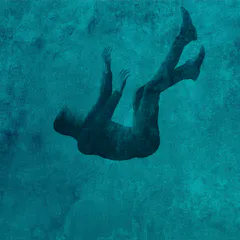
A new poetry collection takes falling as its unifying theme, but the contents suggest something more horizontal and glitchy.
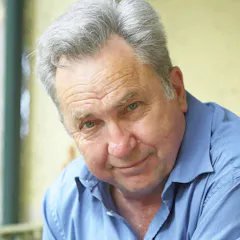
John Tranter’s poetry was defined by his relentless desire to experiment.
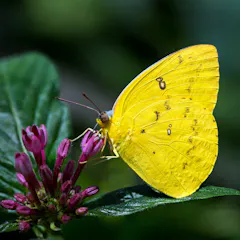
Alexis Wright’s latest novel is an elegy and an ode to Aboriginal law and sovereignty: innovative, visionary, and volcanic in its rage.
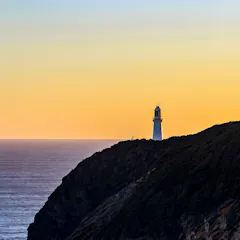
In his latest novel, Gregory Day forces the reader to slow down and attend to the ecology of place.
Crime fiction’s place-specific exploration of justice seems ideally suited to Indigenous authors wanting to explore historical and contemporary issues.
Top contributors
-

Distinguished Professor Emerita of Creative Practice, Faculty of Arts and Design, University of Canberra
-
Professor, Chair of Australian Literature, The University of Western Australia
-
Professor in Politics and Journalism, University of Notre Dame Australia
-
Dean of Research (Creative), Adelaide University
-
Associate Professor in Literary Studies, RMIT University
-
Professor of English Literature, University of Southern Queensland
-
Senior Lecturer in English Literature, Charles Sturt University
-
Emeritus Professor of Creative Writing, The University of Melbourne
-
Director of Creative Writing, Macquarie University
-
Associate Professor of English, Australian National University
-
Associate Professor, Creative Writing and Literary Studies, Victoria University
-
Director of AustLit, Associate Professor in Digital Cultural Heritage, The University of Queensland
-
Professor of Writing and Literature, Deakin University
-
Associate Professor in Literary Studies, Monash University
-
Senior Lecturer, Creative Writing and English, Edith Cowan University