
Plagiarism can feel like a personal deception, but there is something tragic about it too.
Articles on Australian literature
Displaying 141 - 160 of 333 articles
Paul Dalgarno’s latest novel is a meditation on the sorrows that rip a family apart and a celebration of the love that threads it back together.
Set in the northern suburbs of Melbourne, Shirley switches between psychological realism and playful satire.
Reading, as the Prime Minister has reminded us, got many of us through lockdowns. And there are some major initiatives for writing and publishing in the new national cultural policy.
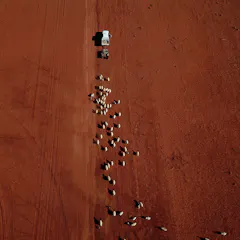
The concept of a national poet laureate has a long history. The establishment of an official Australian position represents an unmissable opportunity.
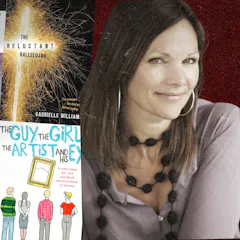
Simmone Howell pays tribute to the life and work of ‘kind and hilarious gem’ Gabrielle Williams, acclaimed Australian author of young adult fiction, who died on Saturday.
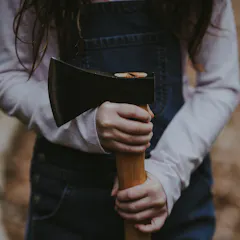
Edwina Preston tells why her favourite literary heroine is Seven Little Australians’ Judy Woolcot and her ‘bone-true authenticity of self’ – beating fellow tomboys Jo March and Anne Shirley.
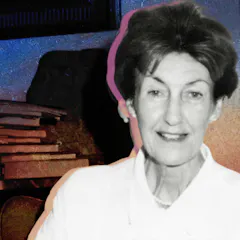
An exceptionally talented writer, Shirley Hazzard is cherished for her novels The Great Fire and The Transit of Venus. Her life defends the right to be unfashionable and the value of learning.
The winners of the Prime Minister’s Literary Awards have been announced. The awards are contentious – but are fought over precisely because of their symbolic and enduring cultural function
In her essay on the work of Tim Winton, Geraldine Brooks is looking for a punch-up with academics and critics.
Kim Mahood understands that frontiers have always been places of interchange, where overt power disparities often come disquietingly undone.
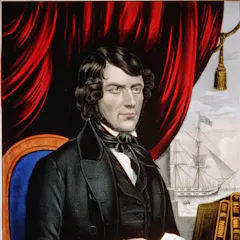
The question behind Tom Keneally’s latest novel is how a political idealist striving for his country’s freedom could end up supporting slavery.
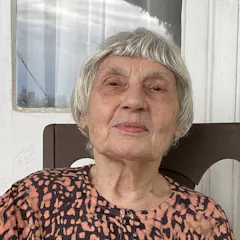
Antigone Kefala’s brilliant fiction, memoir and poetry is written in a new revived English.

With its lovingly rendered characters and sharp aphoristic prose, Sweeney and the Bicycles is a study in radical self-absorption.
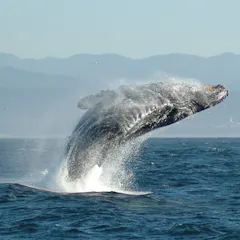
Robbie Arnott’s third novel, Limberlost, is an exquisitely written tale of human and ecological destruction, with a thread of hope.
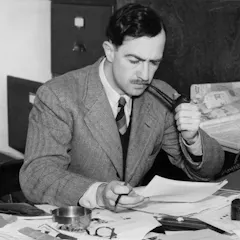
In Emperors in Lilliput, Jim Davidson examines legacy of Clem Christesen and Stephen Murray-Smith.
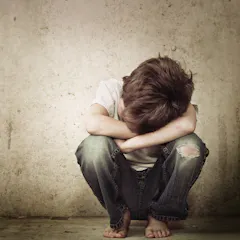
A story of ‘falling upwards’, Childhood examines the author’s painful memories with detachment and unsparing honesty.
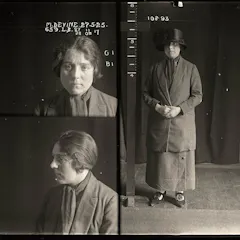
A panoramic tale and an in-depth character study, Iris immerses its readers in a world of impoverishment and struggle.
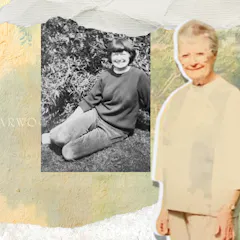
The public image of Gwen Harwood as a suburban housewife is belied by the raw sensuality of her erotic poetry. And in her personal life, she claimed her right to move – and love – where she would.
Shaun Prescott’s second novel is a gothic tale of skin-crawling, psychological dysfunction.
Top contributors
-

Distinguished Professor Emerita of Creative Practice, Faculty of Arts and Design, University of Canberra
-
Professor, Chair of Australian Literature, The University of Western Australia
-
Professor in Politics and Journalism, University of Notre Dame Australia
-
Dean of Research (Creative), Adelaide University
-
Associate Professor in Literary Studies, RMIT University
-
Professor of English Literature, University of Southern Queensland
-
Senior Lecturer in English Literature, Charles Sturt University
-
Emeritus Professor of Creative Writing, The University of Melbourne
-
Director of Creative Writing, Macquarie University
-
Associate Professor of English, Australian National University
-
Associate Professor, Creative Writing and Literary Studies, Victoria University
-
Director of AustLit, Associate Professor in Digital Cultural Heritage, The University of Queensland
-
Professor of Writing and Literature, Deakin University
-
Associate Professor in Literary Studies, Monash University
-
Senior Lecturer, Creative Writing and English, Edith Cowan University