
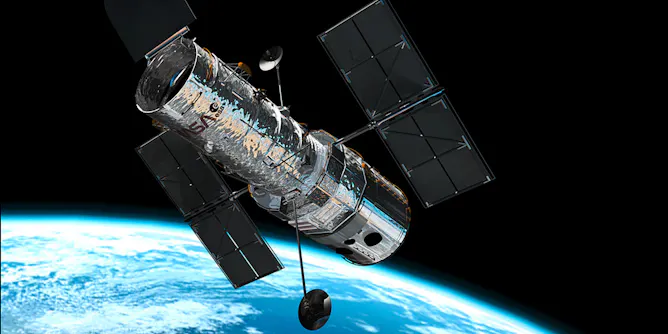
Ground-based telescopes are getting bigger and better while still being cheaper than space telescopes. But the vital scientific contributions made by Hubble demonstrates why we need both.
Articles on Astrophysics
Displaying 221 - 240 of 285 articles
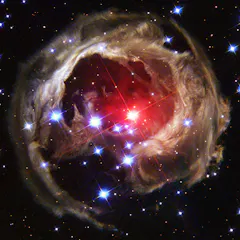
An unremarkable speck in the sky was transformed into an unique astronomical object – and Hubble was there to capture it.
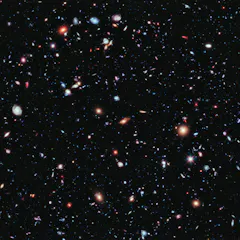
Hubble’s Deep Field images are the next best thing to a time machine, revealing details of galaxies from the early universe, 13 billion years ago.
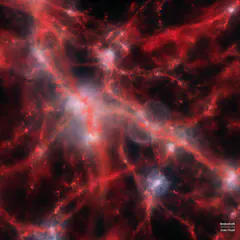
Dark matter’s mysteries are being steadily unravelled by new studies of remote galaxies.
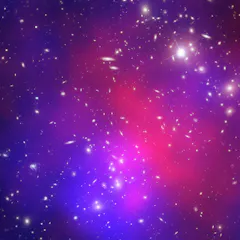
Scientists know so much about dark matter apart from what it is exactly. But are they getting any closer?
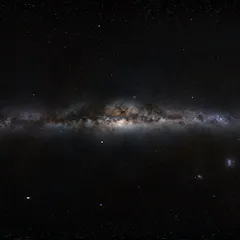
Every 30 mil years, Earth has to deal with more comet crashes from space and more intense geological activity from within. Dark matter may be the culprit in these episodes that can cause mass extinction.
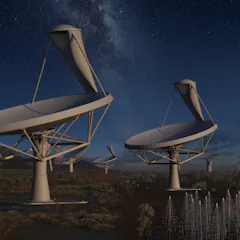
Telescopes have come a long way since the days when they were all about lone astronomers watching the night sky through their upstairs windows. Today teams of astrophysicists build and use much more modern…
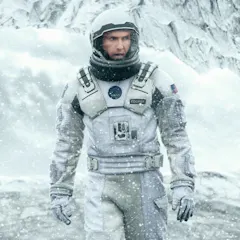
Interstellar’s protagonists spend a significant portion of the movie’s 169-minute running time giving mini-lectures – sometimes with props and a little whiteboard – on theoretical physics. The characters…
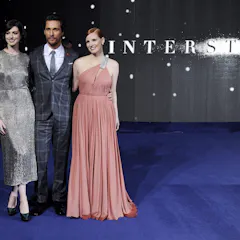
Poor old Richard Branson. SpaceShipTwo has only just stopped smouldering after struggling to get more than 20km from the Earth and there’s the Nolan brothers getting Matthew McConaughey and Anne Hathaway…
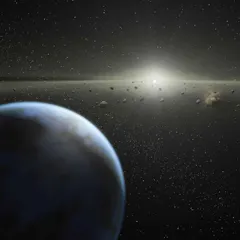
Millions of asteroids of all shapes and sizes are littered throughout the inner solar system. In the past three decades, scientists have spotted as many as 500,000 but many more remain unseen. Many of…
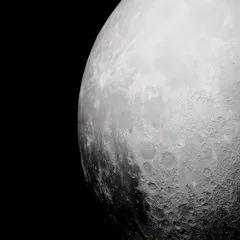
One of the main aims of the Apollo missions of the 1960s was to determine whether the moon had any water on it. If man were to build a colony on the moon, having water present would make living there easier…
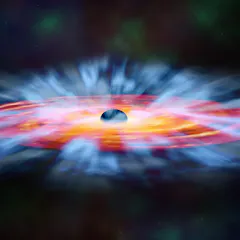
Katherine Mack, astrophysicist at the University of Melbourne, answered questions posed by the public on Reddit. The Conversation has curated the highlights. Dark Matter How do you explain dark matter…
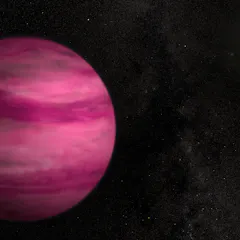
Astronomers didn’t know, 20 years ago, whether planets existed around any stars other than the Sun. All that changed in 1995 with the discovery of an exoplanet orbiting the star 51 Pegasi. And by the beginning…
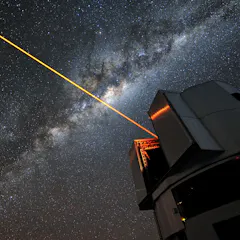
Would physics be “far more interesting” if the Higgs boson had not been found? Stephen Hawking thinks so. He made this bold claim, possibly with his tongue slightly in his cheek, at the opening of a new…
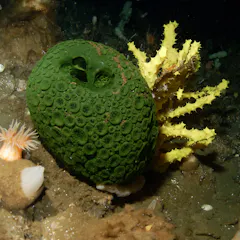
The history of biology is peppered with invaluable contributions by physics and physicists. Even if we leave aside the argument that it’s all just physics anyway, theoretical and practical biology leans…
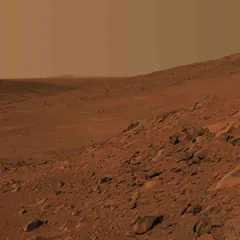
The Observer has published what it regards as the top 20 questions in Science. Number one on the list is the question of what the universe is made of. Specifically the 95% of the universe that we cannot…
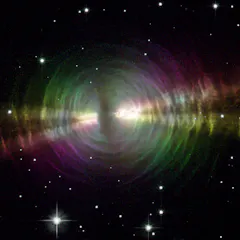
It was written in the stars all along, but we’ve just found out: a whopping 70% of stars in a widely-studied cluster die before reaching old age which, for stars, is the most productive stage of their…
Astrophysicists from Monash University have found that stars with a high sodium content die before reaching their final life…
University of Auckland scientists have proposed a new way to find planets like Earth. The research strategy includes the…
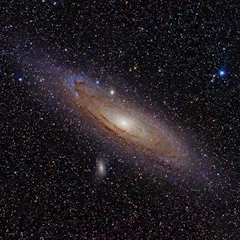
Deep images of the sky reveal that the universe contains billions of galaxies. Some, such as our own Milky Way, are immense, containing hundreds of billions of stars. Most galaxies, however, are dwarfs…
Top contributors
-

Professor (Astrophysics), University of Southern Queensland
-
Professor of Astrophysics, University of Sydney
-
University Distinguished Professor of Astronomy, University of Arizona
-
Associate Dean of Innovation and Engagement, Swinburne University of Technology
-
ARC Laureate Fellow, Swinburne University of Technology
-
John Curtin Distinguished Professor (Radio Astronomy), Curtin University
-
Emeritus Professor, ARC Centre of Excellence for Gravitational Wave Discovery, OzGrav, The University of Western Australia
-
Professor of Physics, Penn State
-
Professor, Radio Astronomy, University of Sydney
-
ARC Australian Laureate Fellow, School of Physics, The University of Melbourne
-
Professor of Astrophysics, UNSW
-
Professor of Astrophysics, Macquarie University
-
Senior Lecturer and ARC Future Fellow, Monash University
-
Reader in Astrophysics, Keele University
-
Pro Vice-Chancellor Flagship Initiatives, Swinburne University of Technology